Our 15 year old map showed the route from the top of South Uist down to Barra as being pretty much single track ‘passing places only’, and it was right. What it also showed was that the ferry to Barra needed to go by the tiny island of Eriskay.
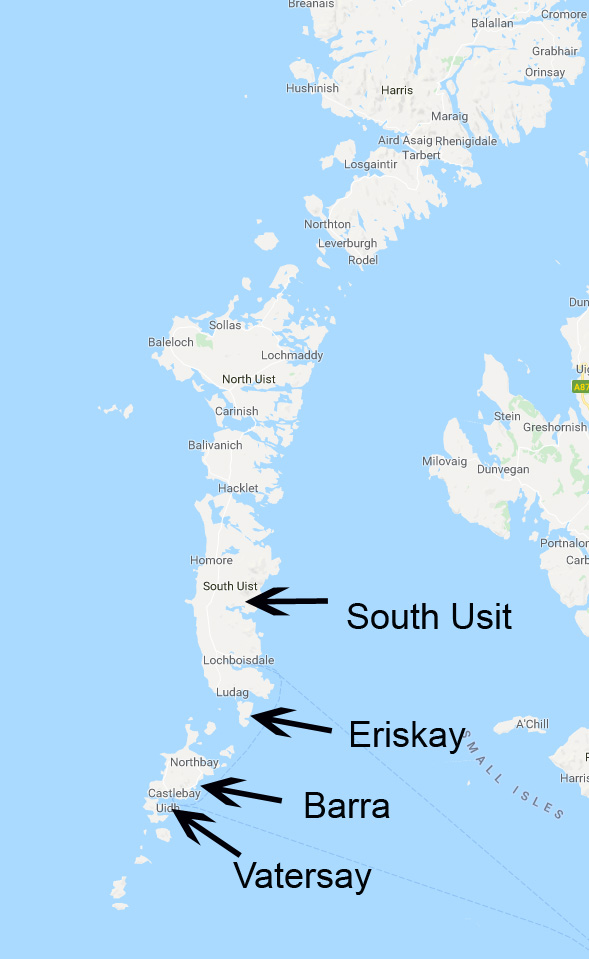
Joy upon joys, the map did not show that a new causeway had been constructed connecting these two and that it was possible to get straight to Eriskay by road. Half an hour [at least] saved.

Disaster 1
Above: Causeway view of a seagull and tiny island – centre – that was the exact location of the grounding of SS Politician in 1941. Many ships have perished in these waters, but this went into folklore as the ship’s cargo contained 250,000 bottles of malt whisky and thousands of pounds in English banknotes. The ship was ‘relieved’ of much of its cargo before government officials could intervene. Whisky came ashore by the case-load – much of it never to be seen again.
So was borne the story [and later film] Whisky Galore!
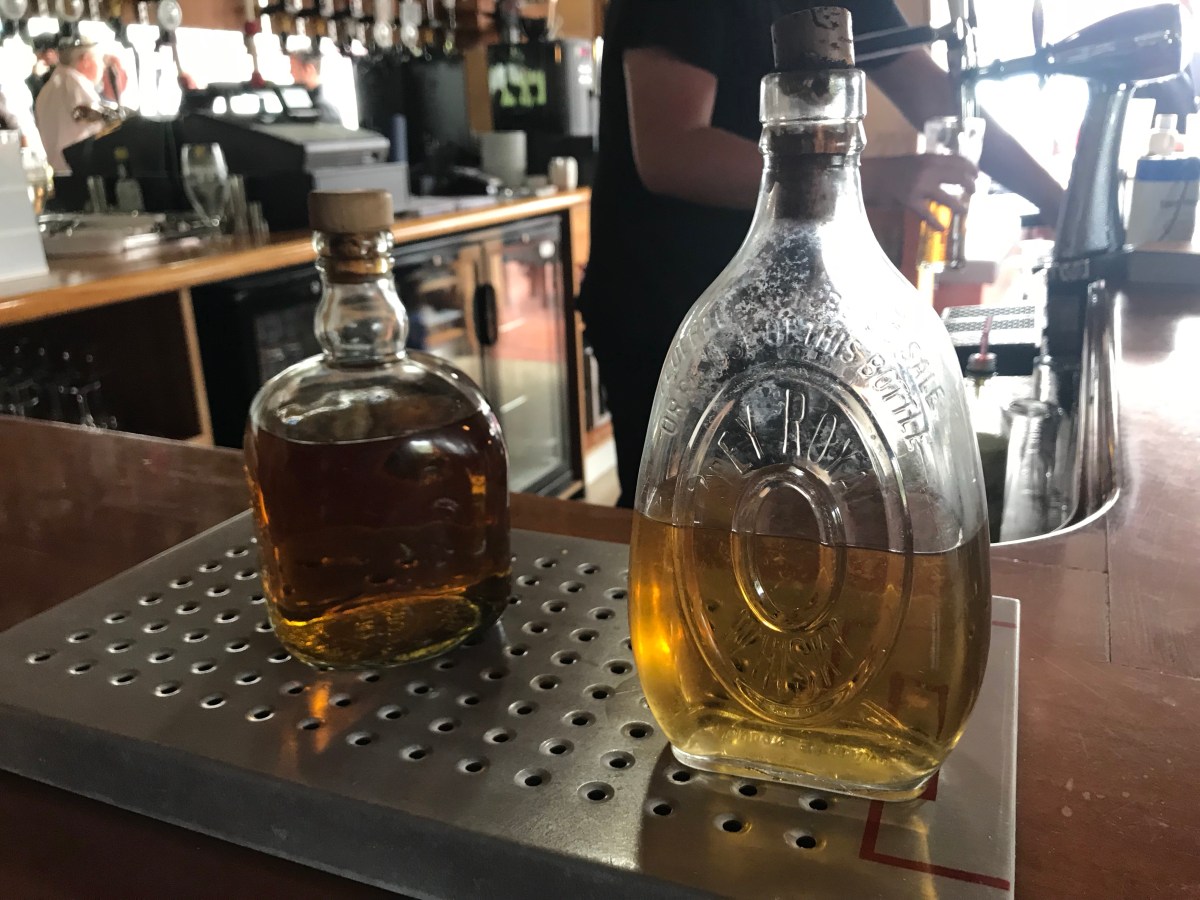
2 of the original bottles in the only pub in these parts. ‘The Politician’
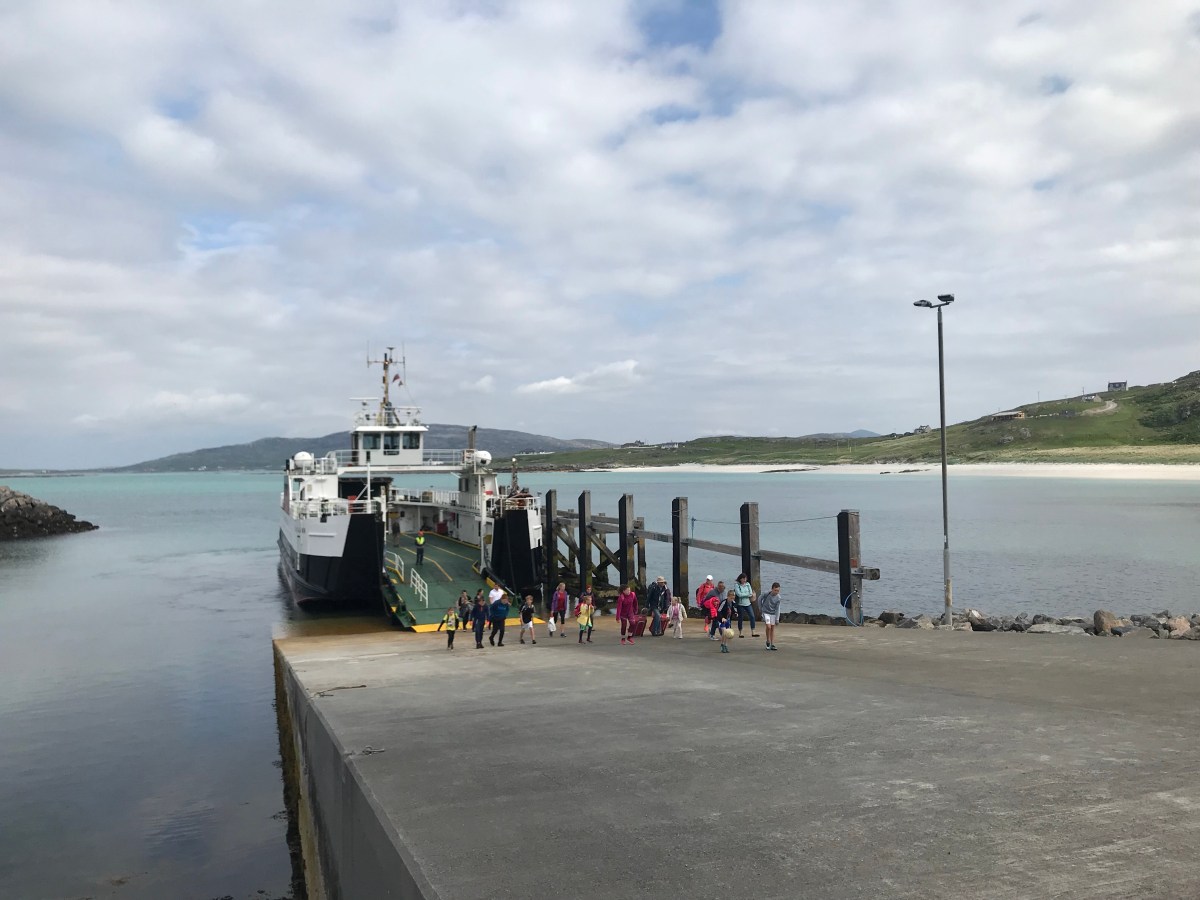
The Barra to Eriskay ferry arrives on a Saturday morning. Releasing children eager to spend the day on the ‘Big’ island.

Departure from Eriskay. Yards from the dramas of ‘Whisky Galore’, Prince’s Strand is visible as we sail out. It was here that Bonnie Prince Charlie first set foot in the Highlands at the start of the 1745 uprising.
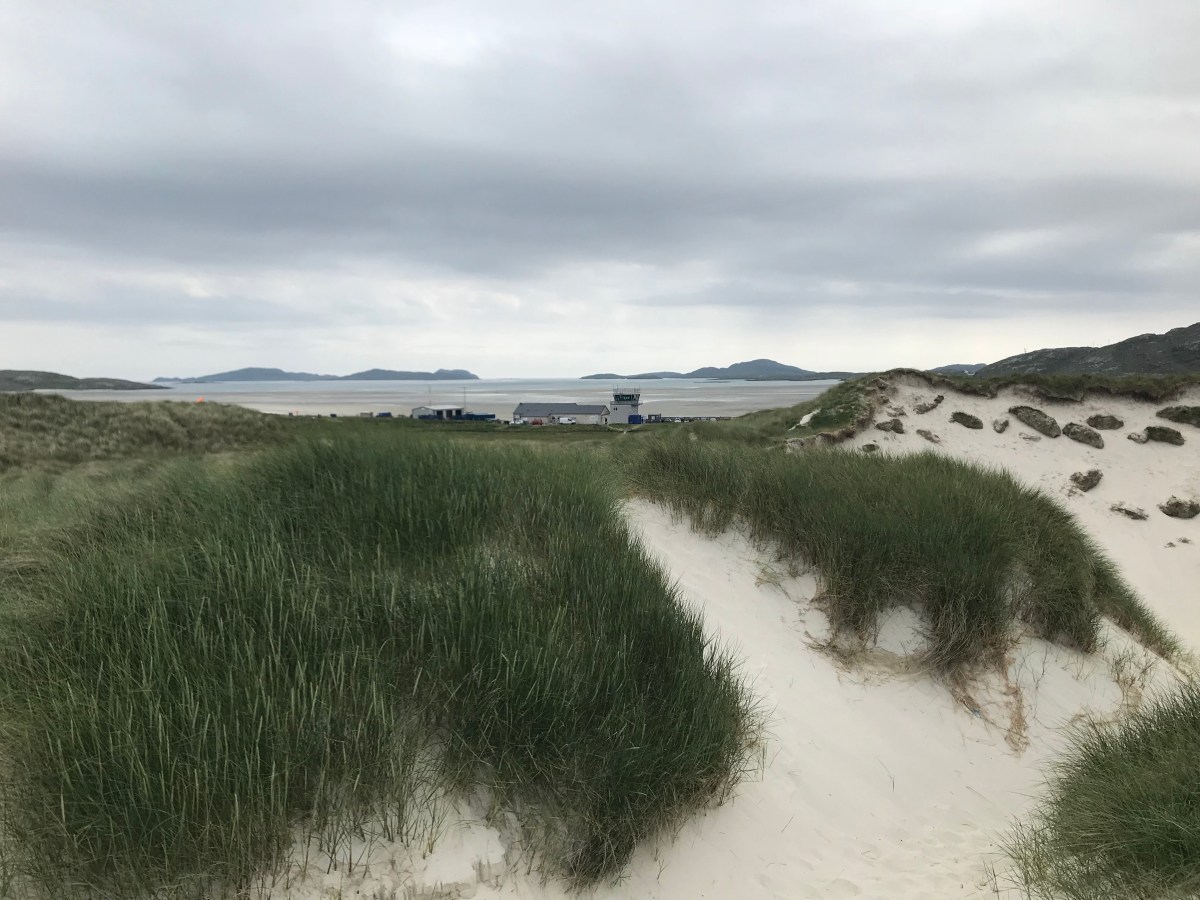
The Airport in the Dunes – Barra Airport. The world’s only official airport – code BRR – that uses a beach for its runway.
 Genuine thing – the departure lounge in the airport cafe. Passengers are weighed carefully. The beach is checked for birds. Schedules are kept according to the tides. Obviously.

The 11.20 to Glasgow.
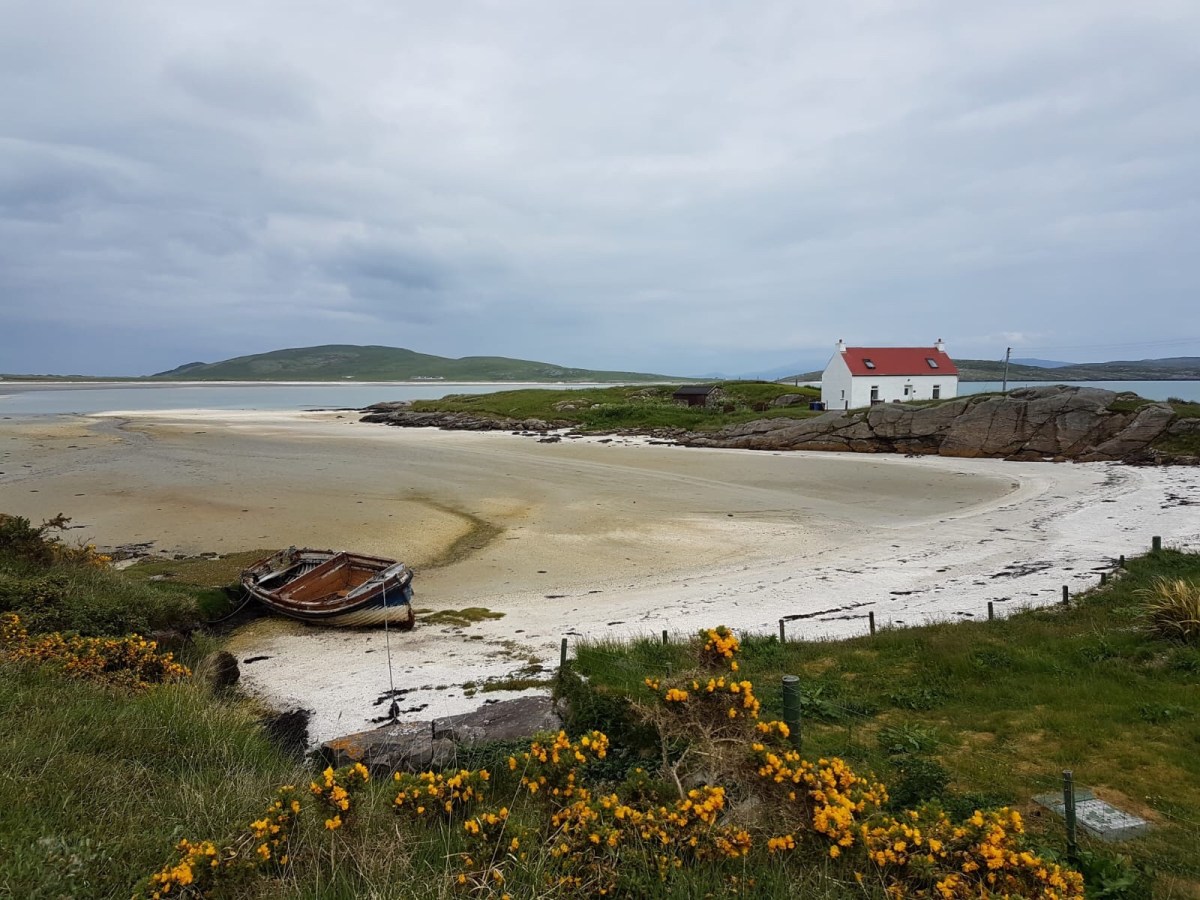
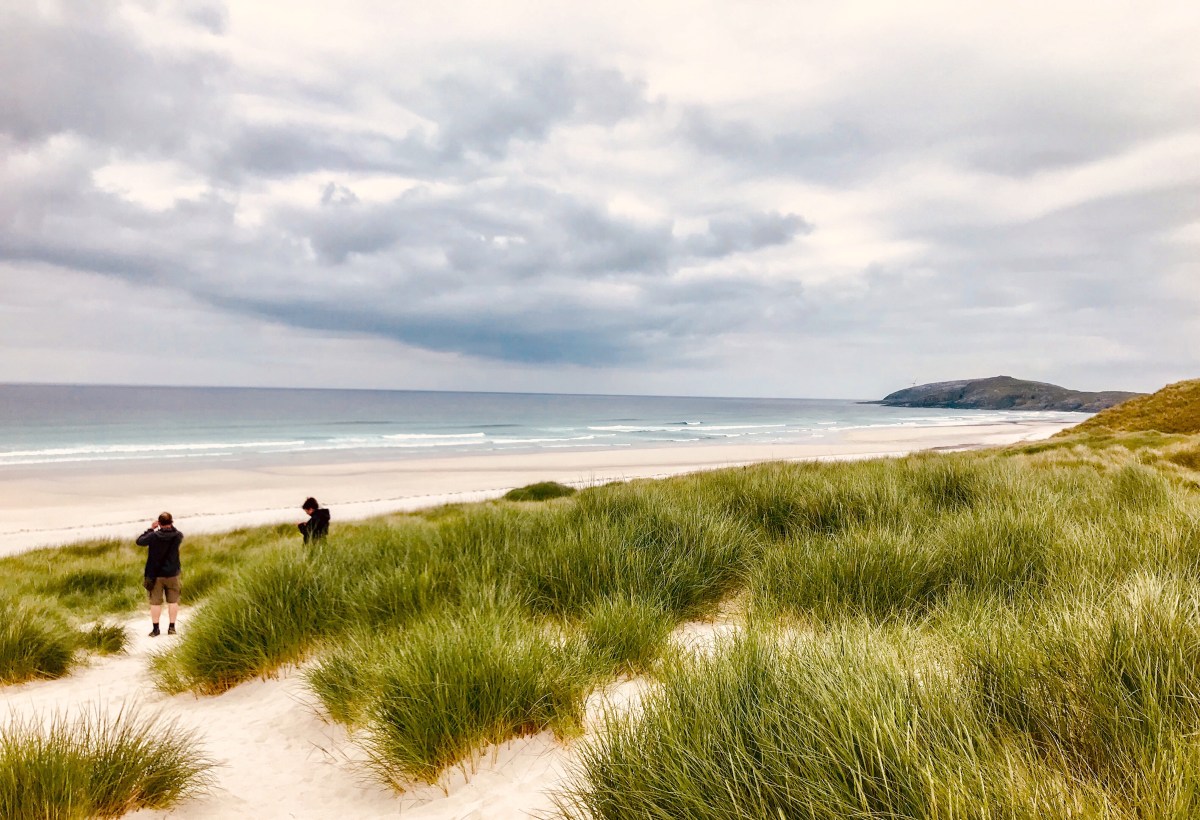
Beaches East and West on Barra
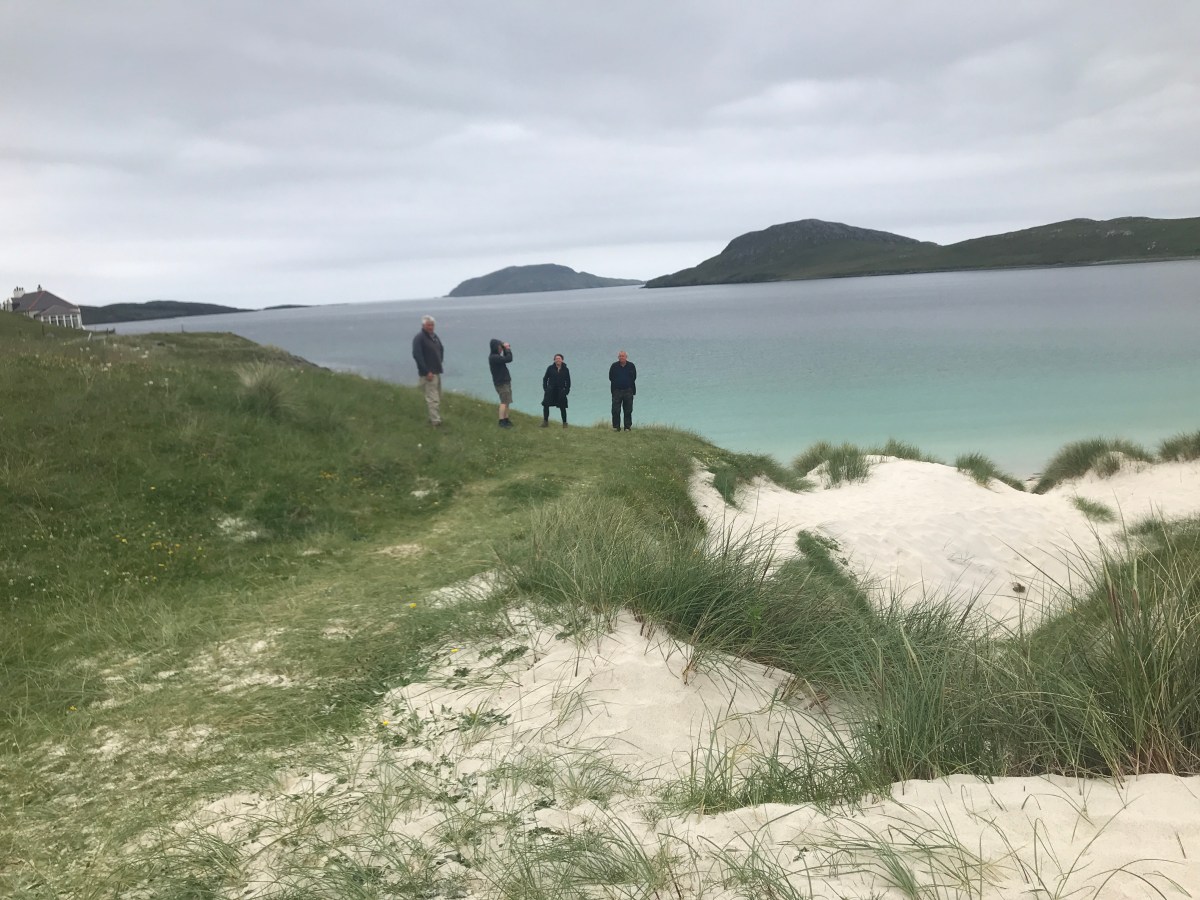
South of Barra lies the tiny island of Vatersay. Now connected by a 200 metre causeway, this Hebridean outpost is the most southerly and smallest of the inhabited islands. A few grey houses, no shops, and a winding single track road that ended in what looked like a deserted council estate in a nuclear winter. No-one was about, but the monument in the dunes at the head of the beach made solemn reading.
Disaster 2
This was the spot where the ship ‘Annie Jane’ was wrecked one night in September 1853. Having set sail from Liverpool bound for the New World, the three-master broke up in a violent storm at the entrance to the bay. Of the 450 known passengers on board, only 102 were accounted for the following morning. Vatersay, then populated by a handful of Gaelic-speaking farmers, had to deal with the consequences of creating a mass grave in the dunes at the head of the beach. Helped by the fit survivors, they buried as many as were found beneath this simple memorial.
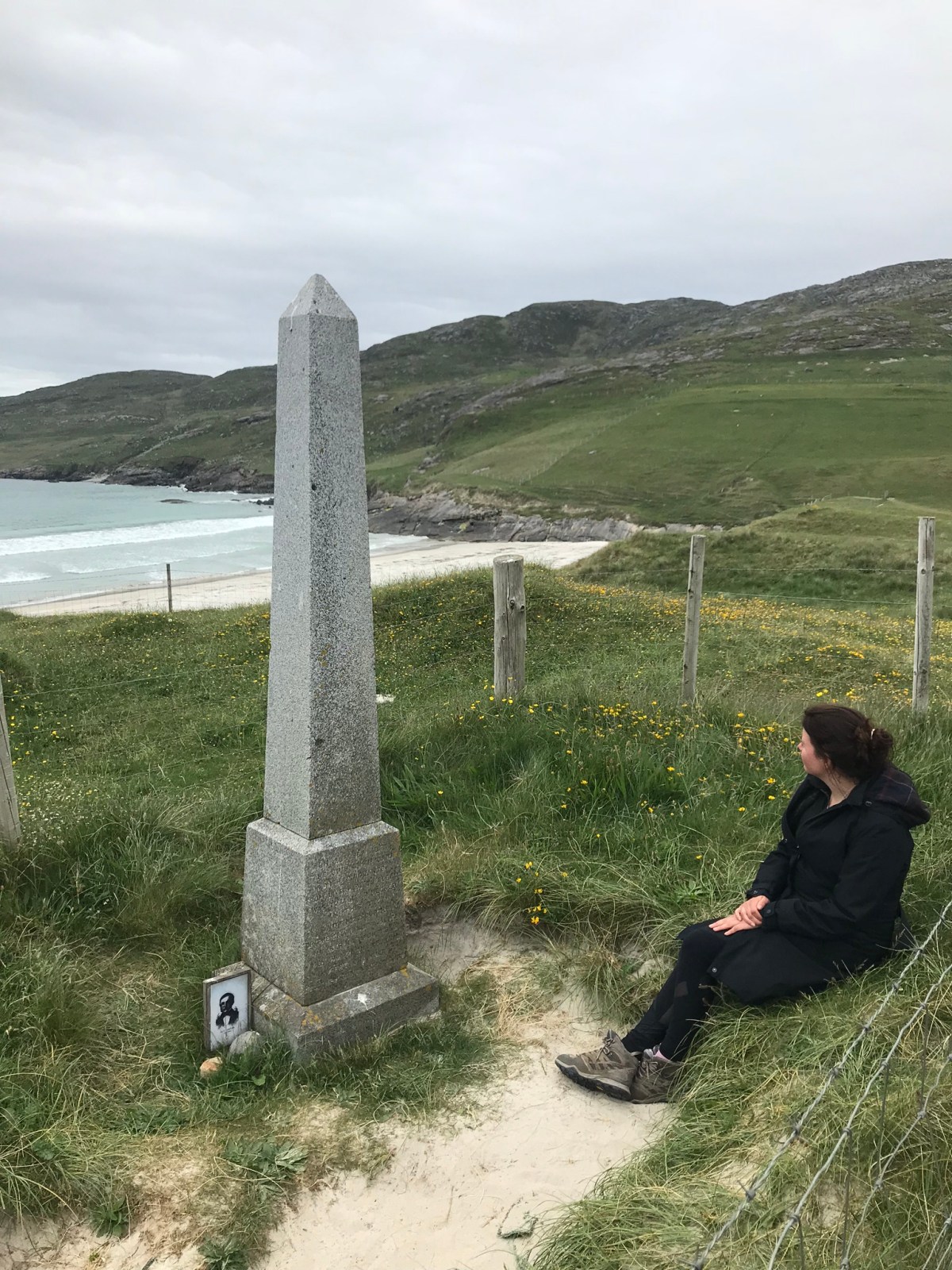
Much is written about the disaster [the most extreme in the region’s history], as the ship’s manifest records the names of all of those on board. Today, descendants from all over the world still make their their way to this spot curious to see the sandy grave in which their forebears lie.
Disaster 3 – May 1944

The final resting place of RAF Catalina JX273
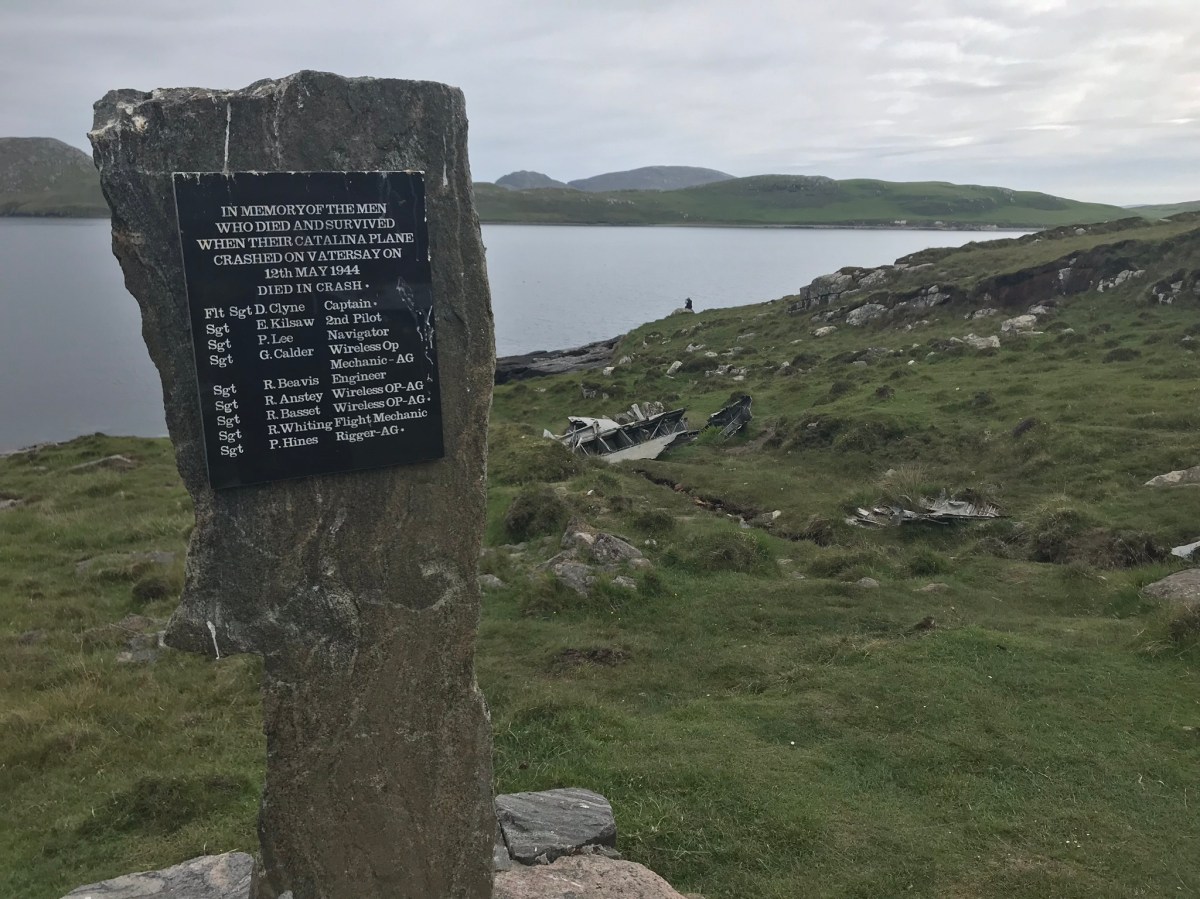
An account is as follows:
‘… on the evening of the crash, the Catalina took off from Oban on the west coast of Scotland, fully loaded and with depth charges under each wing. The aircraft was on a night training exercise with a complement of nine persons, including the pilot and co-pilot.
The intended course was via Barra Head. However, the aircraft was flying well off-course, and was no longer above the sea, as the pilot believed. Realising the navigational error, the pilot endeavoured to gain height. However, when he had reached about 213m (700ft), the Catalina—which, by now, was over higher ground—crashed into the side of Heishavel Beag on Vatersay.’
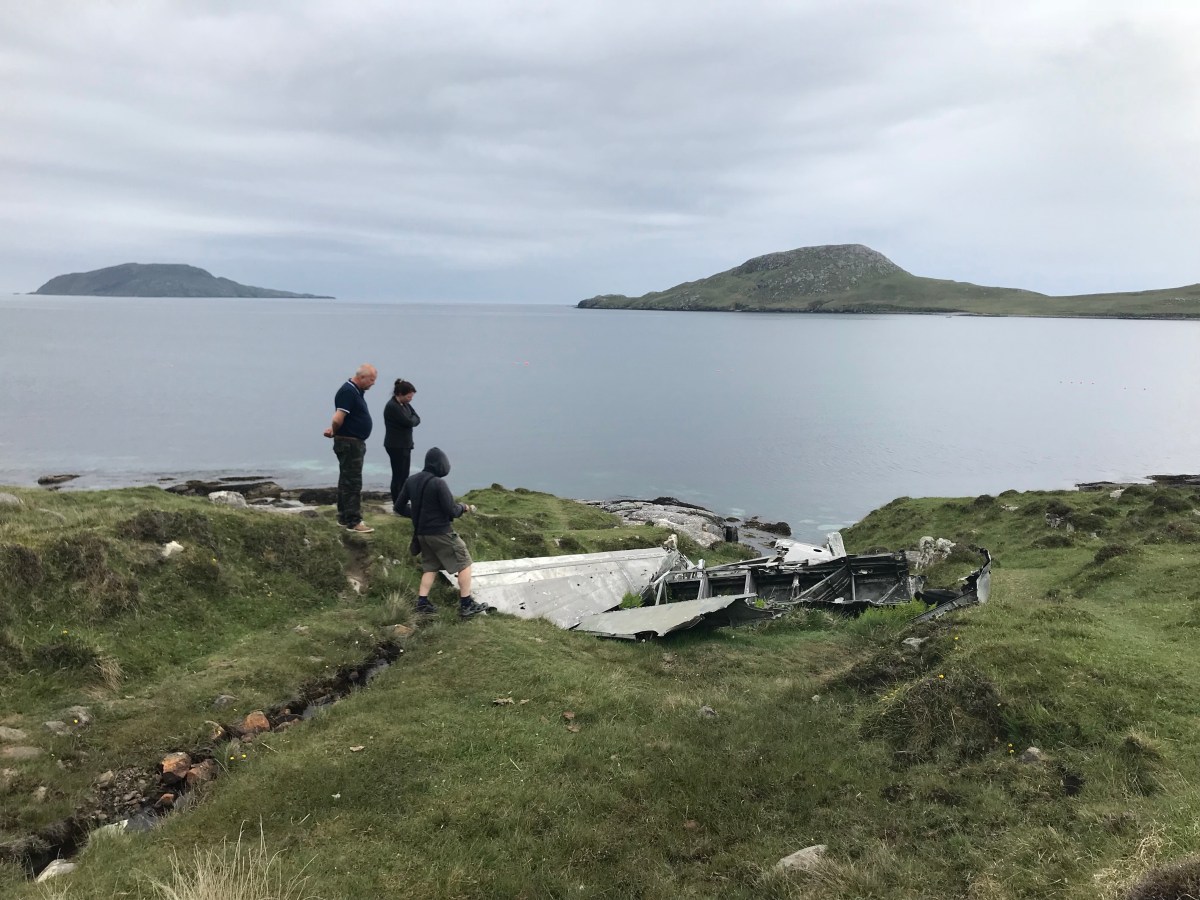
Aluminium parts of JX273 remain on the site of the crash.
Heading back from tiny Vatersay to Barra feels like arriving back on ‘dry land’. It was; we found a curry house [much rated by local blogs and guidebooks alike]; and to our surprise had an extremely tasty meal served by the all women staff. As the meal went on we surmised that they were all ‘friends’ and it was a bit of a laugh to be gay in this tiny place. Less of a joke for the group of young local lads who came in and slouched around with bottles of Kingfisher ogling at the women. Such are the challenges of living in a small place where smelling of fish probably hardly matters.


I wondered if a local dating website had the stipulation ‘Must speak Gaelic…’

A long since abandoned K6 phonebox – a 1930’s model. Sadly gone and not replaced with a good signal.
So it was; we had spent the day on the southernmost point of the Outer Hebrides. Heading back on the ferry to South Uist we must have felt slightly like those children we had seen rushing up the slipway hours before.
Earlier, I had chatted to a remarkably gung-ho man who was touring the islands on his beast machine. A new retiree, dear old Mr John Cross had spent his money on the rig below [from eBay], and stuffed his camping gear into the sidecar. His wife apparently didn’t fancy it. Nothing was going to stop him touring the islands he said.
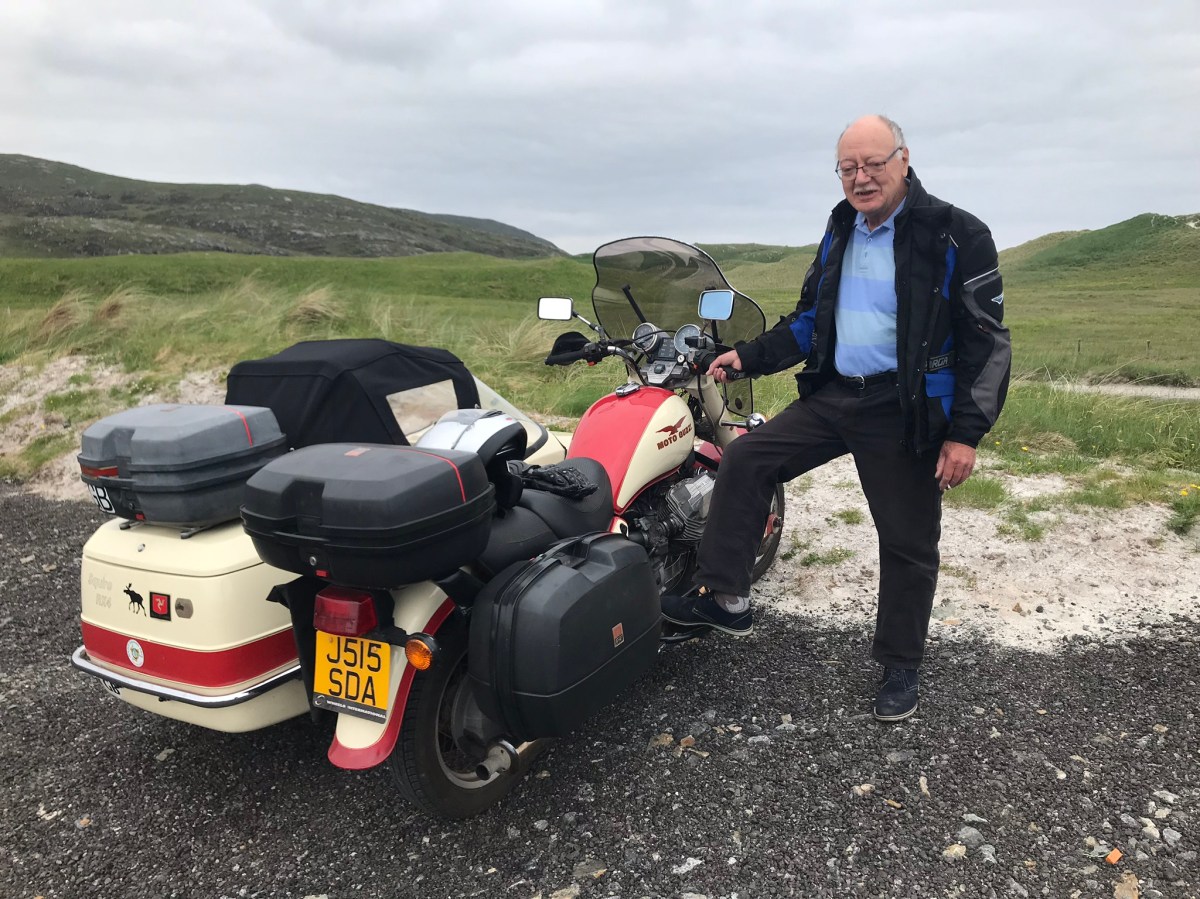
With him I wondered what chances there were for Disaster 4.
 jimsoccasionalblog