 40 or so years ago my family and I came to Corfu for our summer holidays. In the 1970s we felt relatively intrepid in that we managed to book flights and find a villa to our liking. No internet, just brochure browsing around Christmas and Dad filling in a booking form and probably paying a £25 deposit. The first time we did it, we really had no idea where we were going and what to expect. Brochures were crammed with badly printed pictures of bougainvillea-clad villas and summer temperature charts, all, in those days, adding to the excitement.
In 1972 it didn’t matter where you were on the island – tourism was nascent and big hotels few and far between. In any case we had a rental car and were more than happy to explore. And that we did – much I admit encouraged by me originally, as the youngest member of the family and totally inspired by the schoolboy (to me) book ‘My Family and Other Animals’. I could not have been more excited by this, and as a budding entomologist, fashioned most of our family sorties into excursions that included hovering around places [with my new Pentax camera] that seemed to have escaped Summer drought and could possibly support things of interest beyond the deserted beaches and solitary tavernas. Gerald Durrell could have been my specialist subject.

The White House – the Durrell House of the 1930s in Kalami
The little bay of Kalami – now clearly painted up a bit to go with the fame and attention it draws from those that have followed the real Durrell story or the recent TV series. A quaint setting but it’s now hardly imaginable what it must have looked like 80 years ago.
But the point about this little story is not entirely about Corfu, not about creature spotting, but the distant and enigmatic lands that that lie just across the water from magical Corfu. A strong and lasting boyhood memory was that of gazing across from the little beaches on the North East coast of the island. Sitting there in front a glassy sea and almost [at times] being deafened by the constant ‘ratcheting’ sound of cicadas.
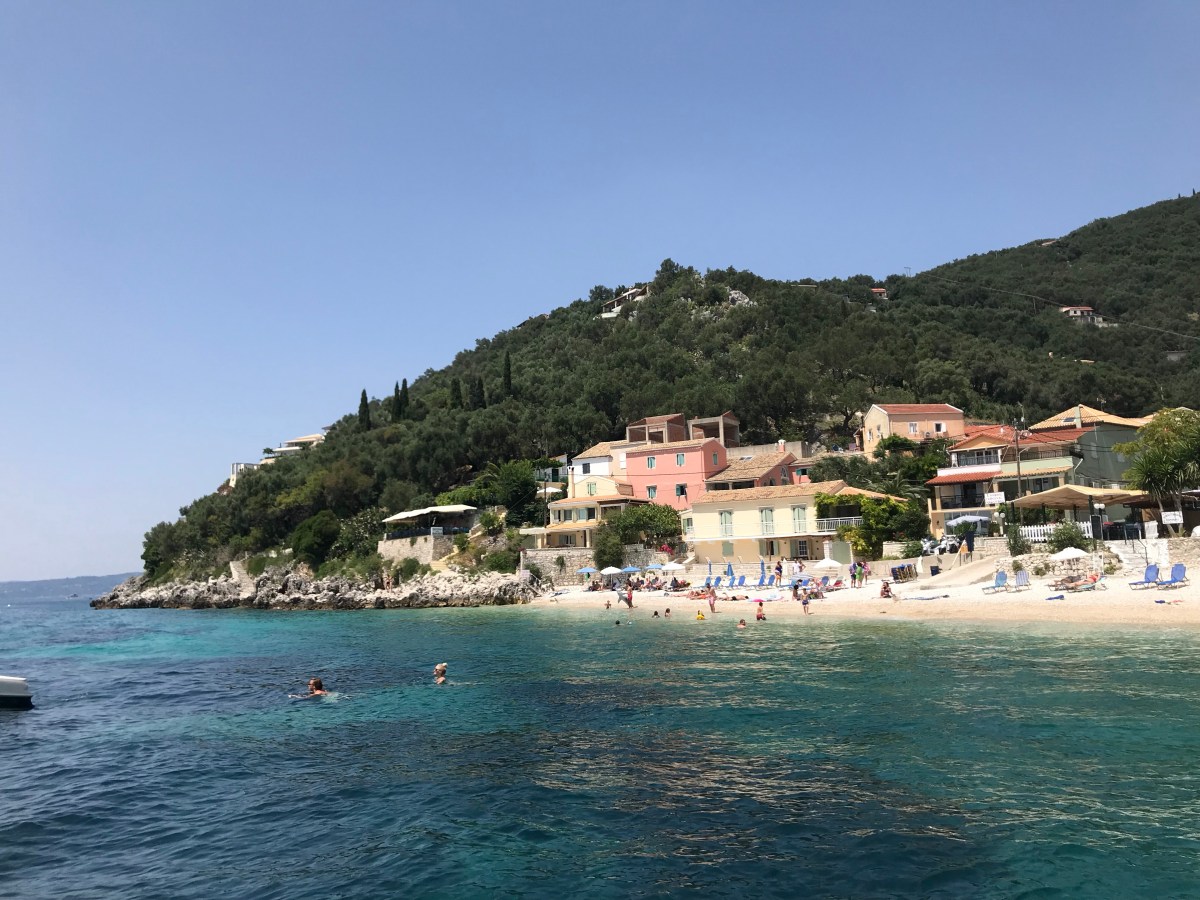
Above: The beach on which we often sat. Kaminaki as it is called today, but 44 years ago it didn’t seem to have a specific name – just ‘Kouloura’ which then was the general name for the whole promontory. The only building there in the 70s was the ‘Rock Taverna’, seen on the left, and as its name suggests, sitting on the rocks.
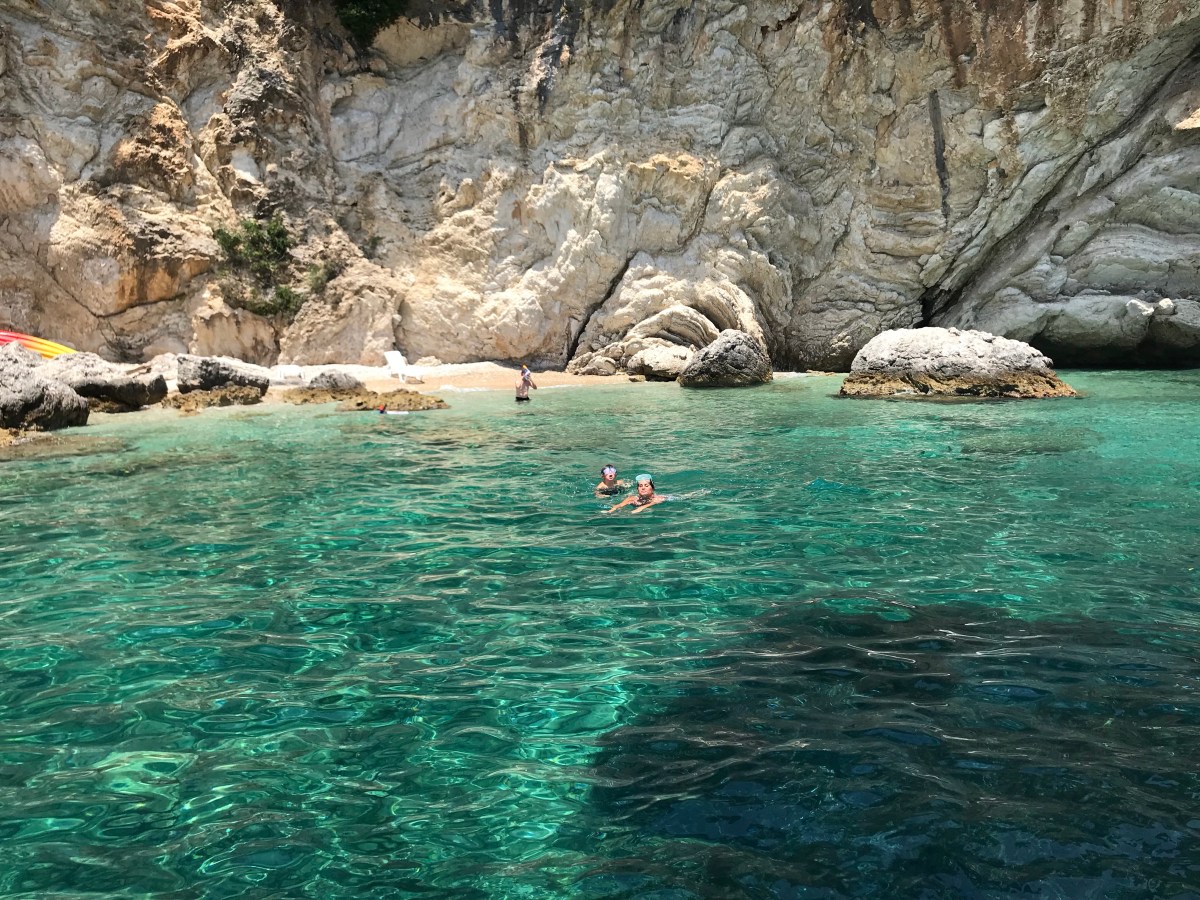
Round the corner: a favourite cove only reached by boat or swimming

Olives or tourists?
At the back of the beach there was an olive grove that must have boasted its age by having trees that were huge and gnarled – all providing a thick canopy in this airless little cove. I remember camping there on one occasion – uncontested as there was no-one around, and listening to the mysterious and hardly seen Scops owl messaging its neighbours metronomically throughout the night. Movement in the moonlit branches sometimes meant an Owl! – or more likely you had glimpsed a squirrel of some kind, but they were gone before you could really rally any serious attention.
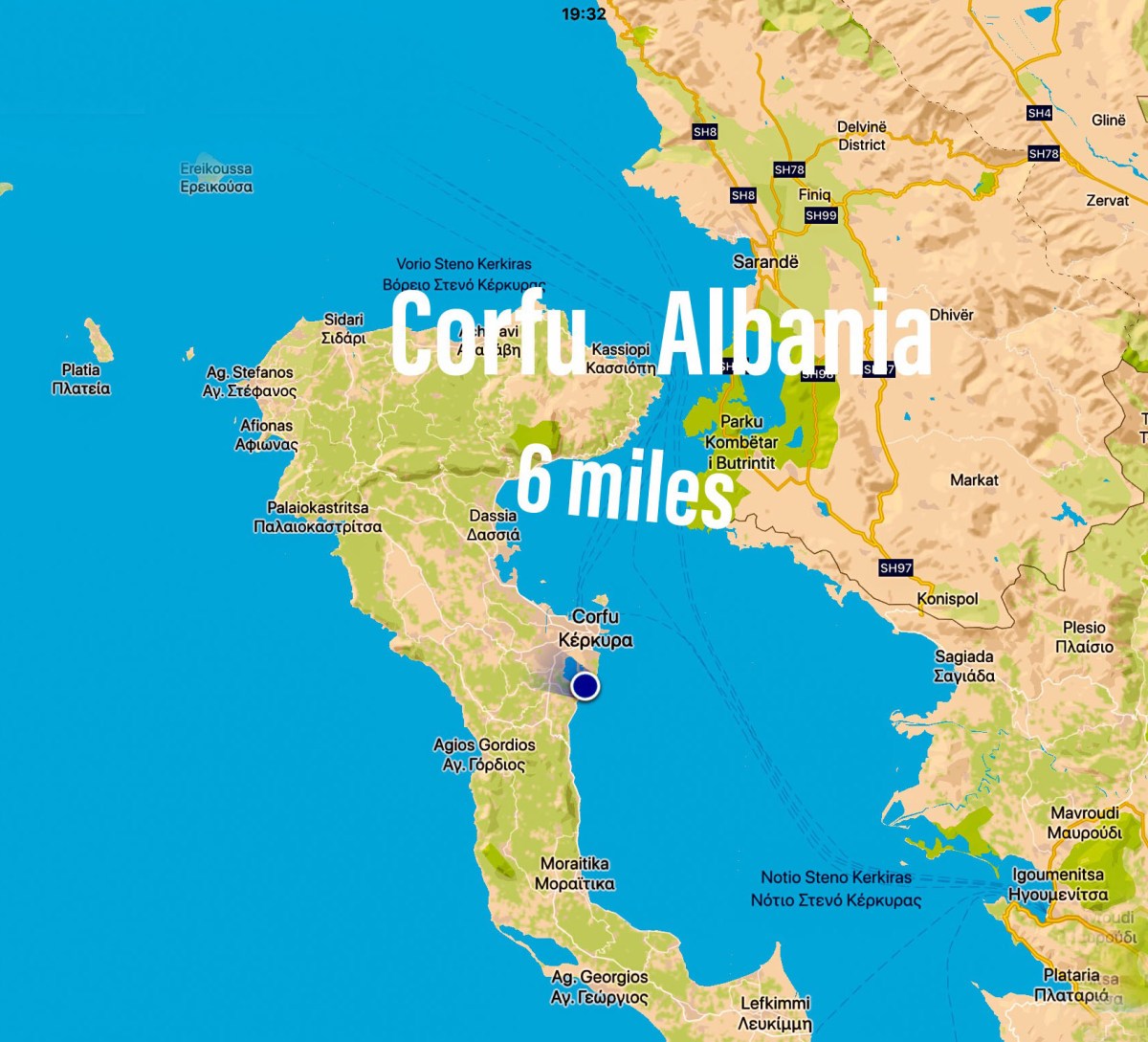
The lands over the water were the barren wastes of the mainland – always caught in the afternoon light, which made them look ever hot and lifeless. Across the Ionian Straits lay the mysterious country of Albania.

Mainland Greece and Albania seen from our 4 seater boat
As we poached on that little pebbly beach – one that I recall was quite a favourite, we’d ask ourselves unanswerable questions about the landmass 6 miles away. There was Albania, the country that, in those days, was firmly shut off from the outside world and uncomfortably tucked in under the wing of communism.
Sitting on that same beach today, you’d have encyclopaedic knowledge about every aspect of this pocket in the Balkans. All of coastal Greece seems to be with the times and 4G signal is available and our discussions would be fed with fact and figure.
 Momentous events throughout Europe in the 80s, 90s and more recently, have seen all those Communist shackles go; but Albania was donkey-cart late in the matter. Dear old Mr Hoxa kept these Greek cum Turkish cum Balkan people firmly under lock ‘n’ key.
Albania’s history – reliably ‘citation free’ in Wikispeke is no simple matter and hardly a 2 minute read. What Dad Nichols knew about the country and the Balkans would have been different to our feelings today. No doubt an Edwardian mistrust stemming from post war sentiments towards another ‘powderkeg’. People of that generation always seemed to refer to the explosive subject of powderkegs in such a way as to describe anything that was beyond the realms of normal post-war diplomacy.
I’m not chatting this out for any other reason than 44 years on I’m here ‘en-famile’ and gawping at those same rocky mountain bits and wondering. Only this time I’m looking at a coast that’s open to business, because sometime in the last 20 years the mantle of Communism was sloughed off and Albania wanted a place at the table.
Today there are daily ferries that make the 70 minute crossing from Corfu Town to Sarandë; a smallish town dubbed Albania’s most vibrant Riviera destination.
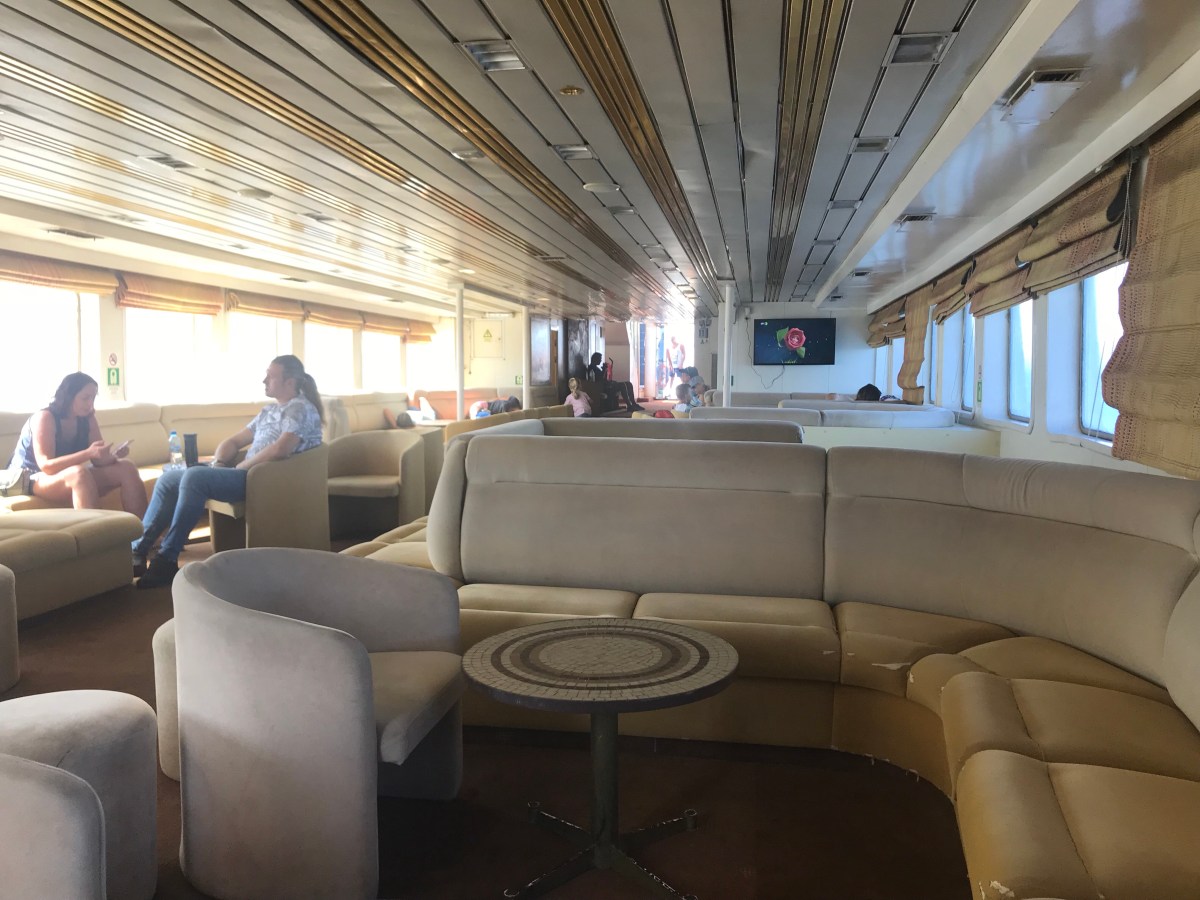
I couldn’t wait. The rest of the family could, and so solo I took the Ionian Cruise for a day trip. 47 Euros, proper Customs, and a boat-load of like-minded travellers. Most of these seemed to be Polish, and I did wonder what thrill they were after as they noisily entertained themselves without a care for anyone else. Were they going because Albania might make them seem better off? I wondered.
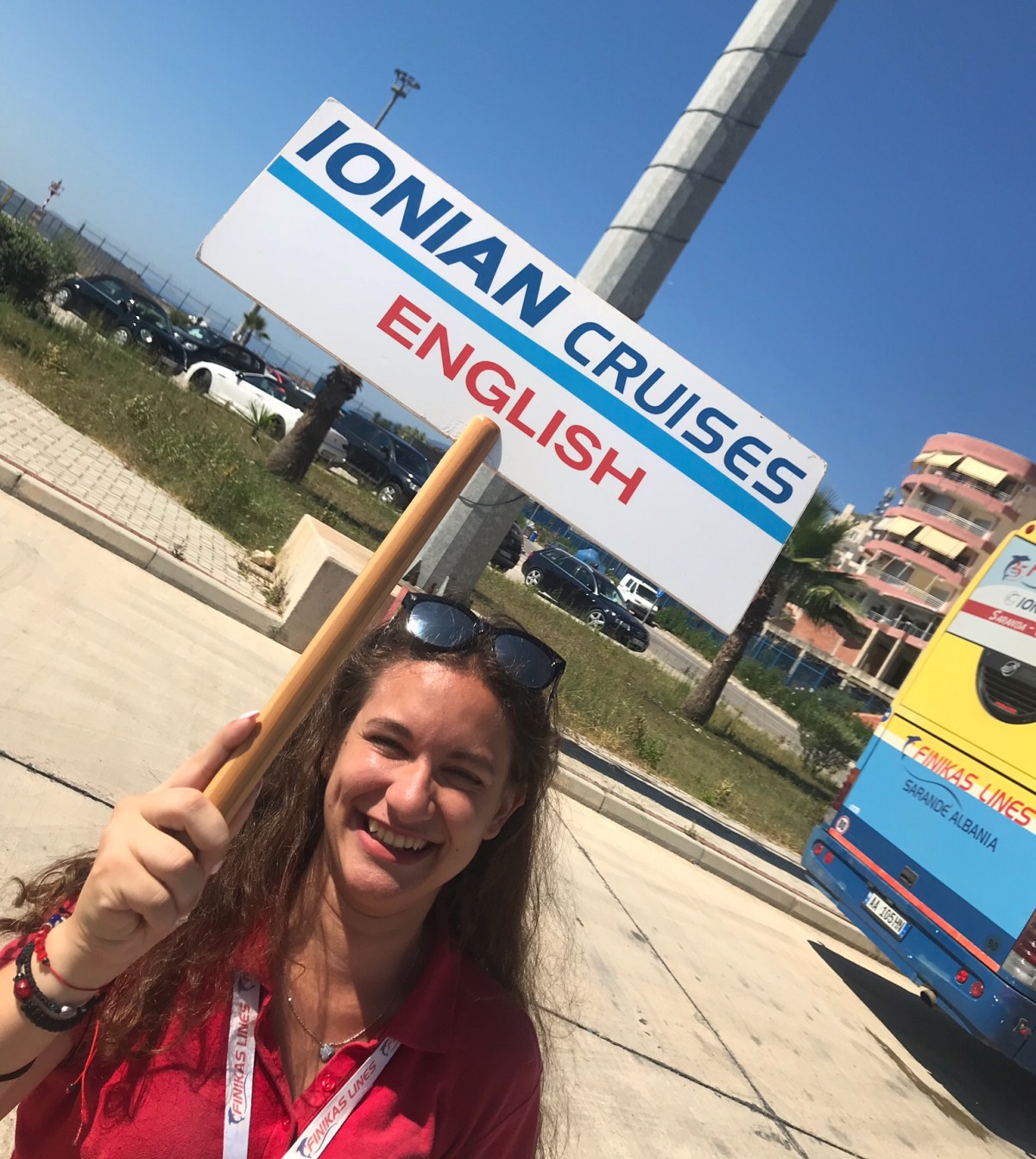
The main selling point for this day trip – and there had to be one beyond just visiting Albania, was to go to the Archeological site of Butrint. Butrint has a history that dates back in stages from Ancient Greece, Ancient Rome, the Byzantine Period to Ottoman and Venetian. It’s been designated a UNESCO site of huge importance, and attracts thousands of visitors daily.
Our coach whisked us swiftly from the busy streets around the Port of Sarandë along the coast to the nearby gem of confusing archaeological ruins. Stones and more stones.

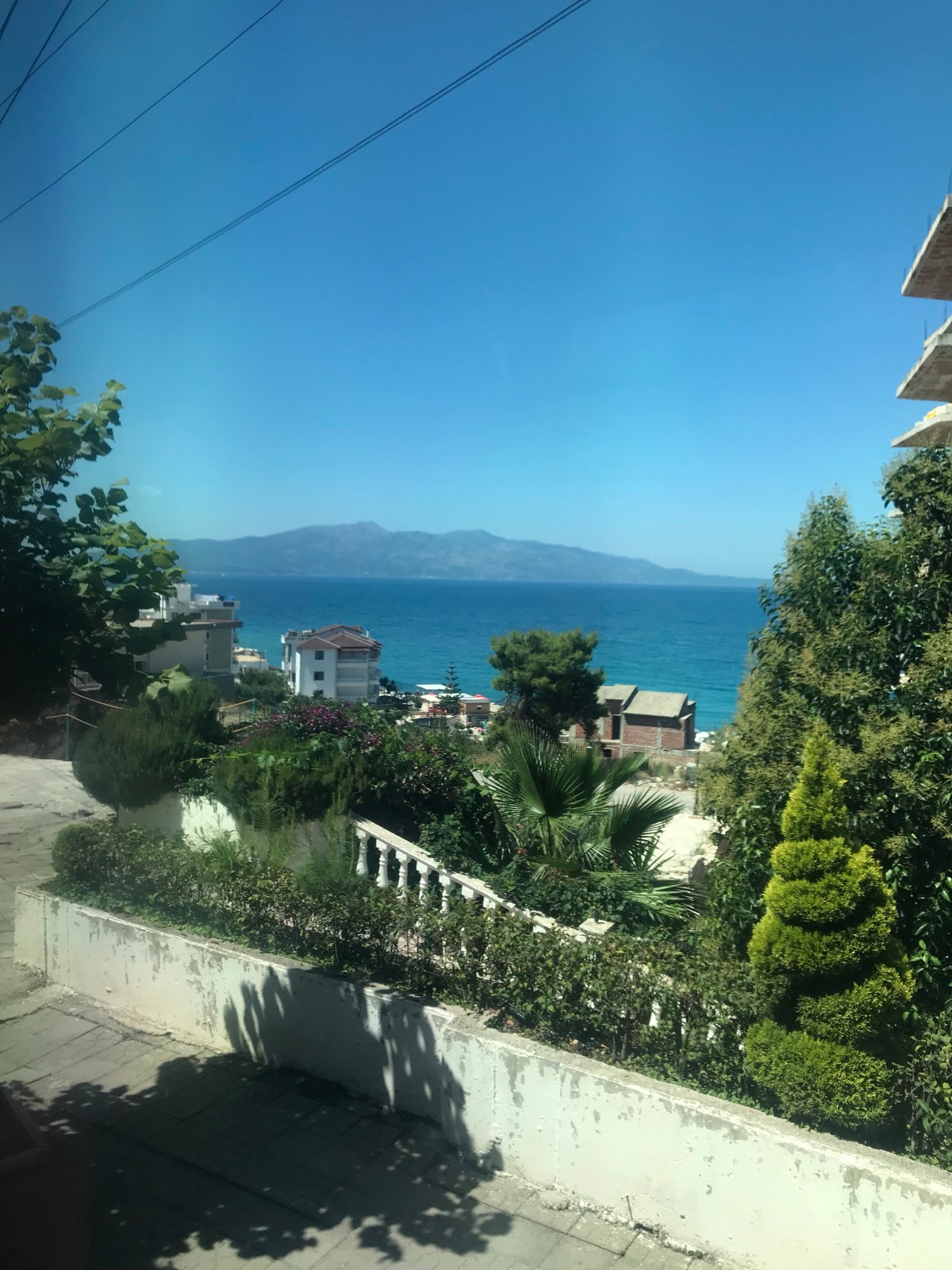
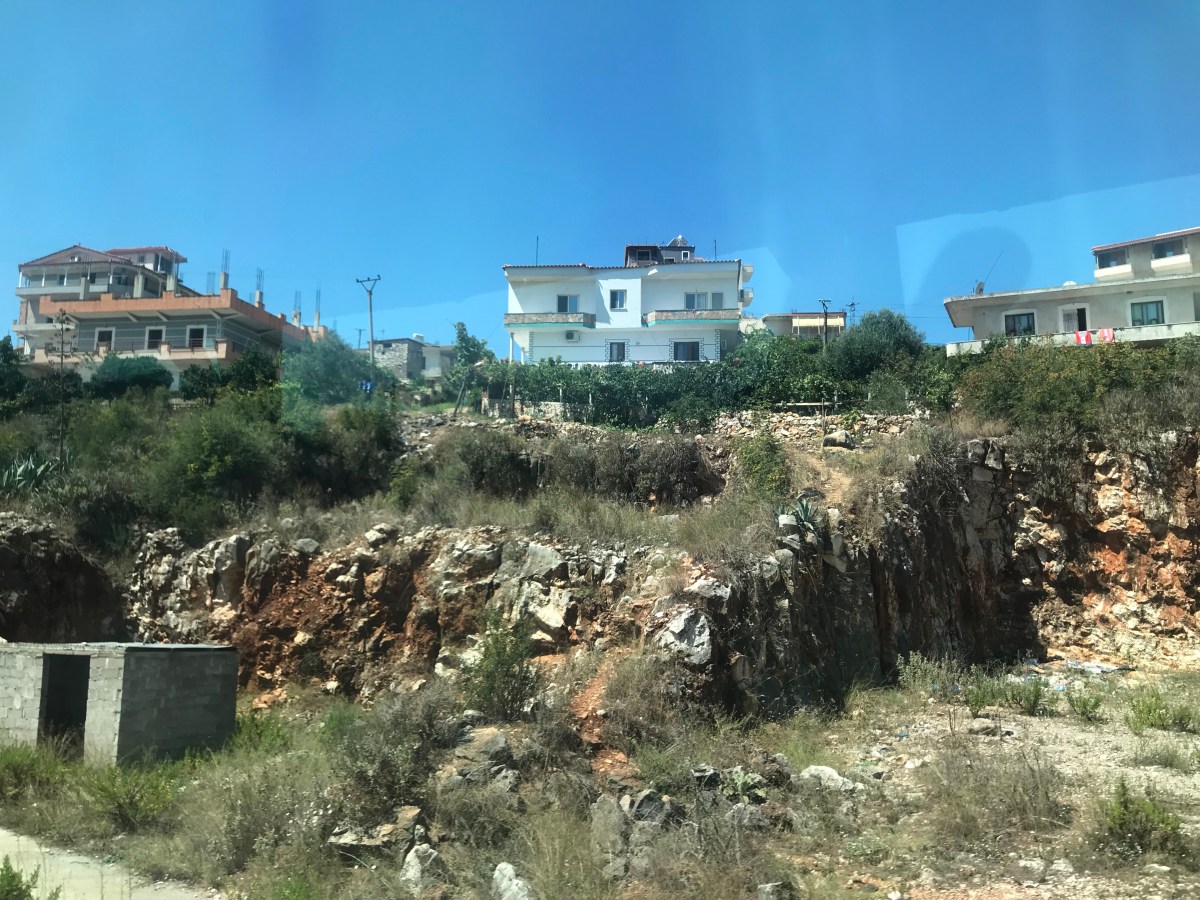
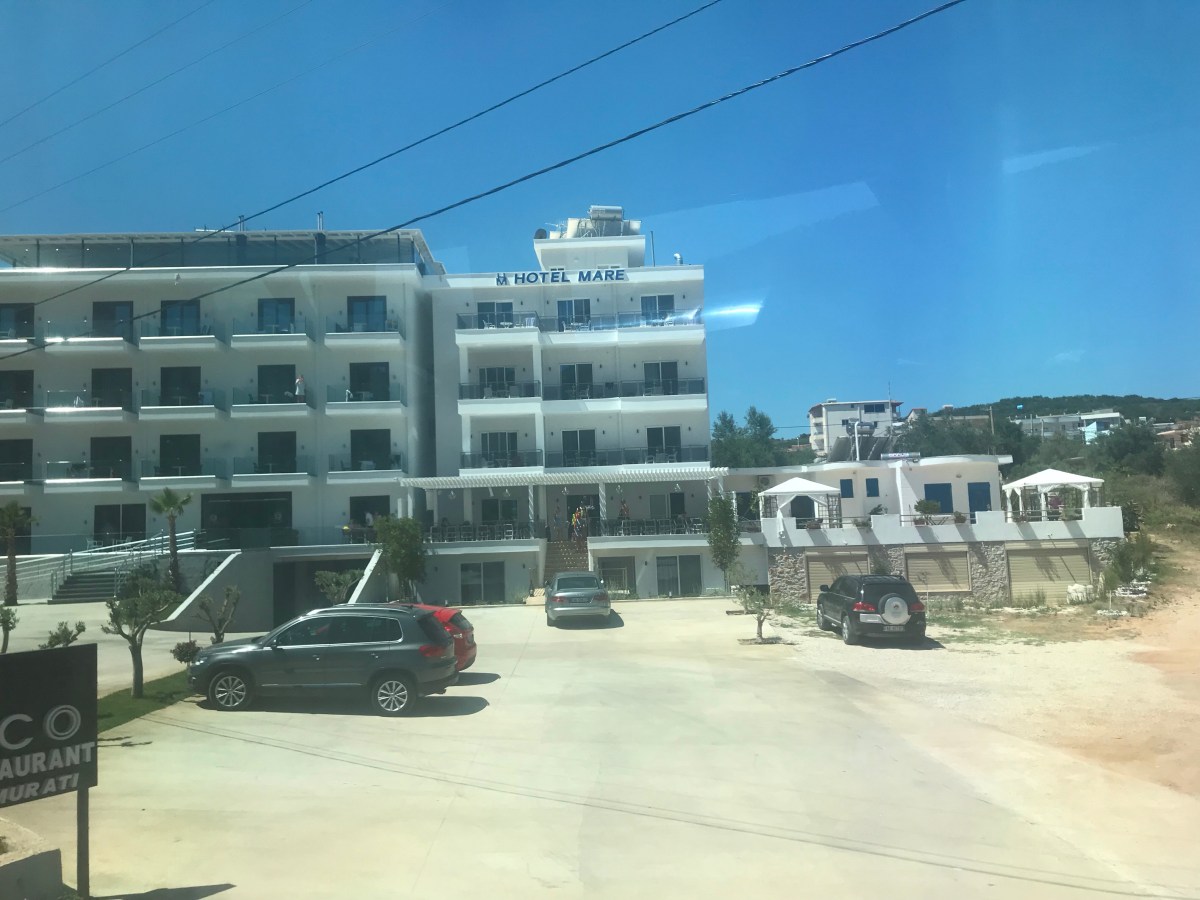
Views from along the way. A shortish journey through a series of suburbs and outlying villages along a road scarcely fit for a full-sized coach.
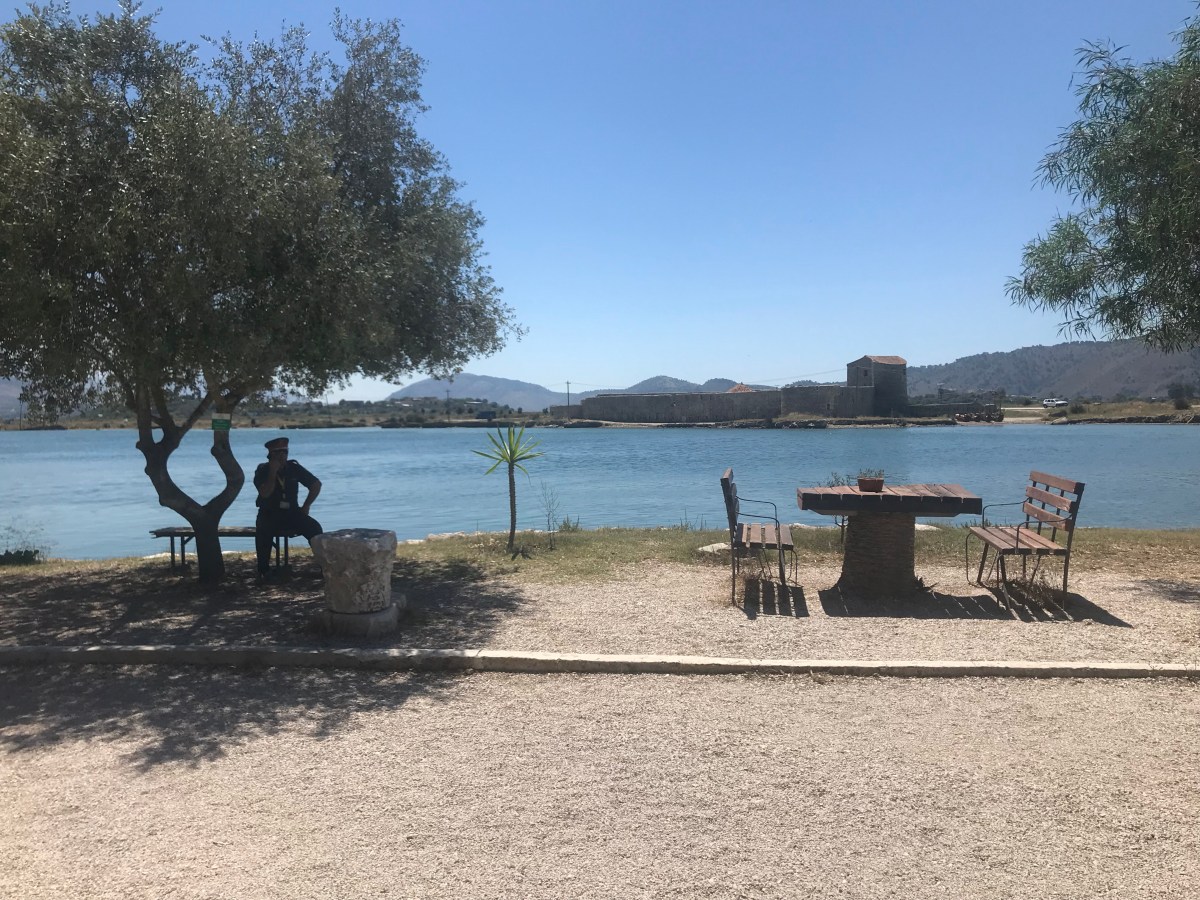
‘Jobsworth‘ The obligatory moustachioed guard at the gate. Cowering from the heat and enjoying pointless chat on his spanking new phone.
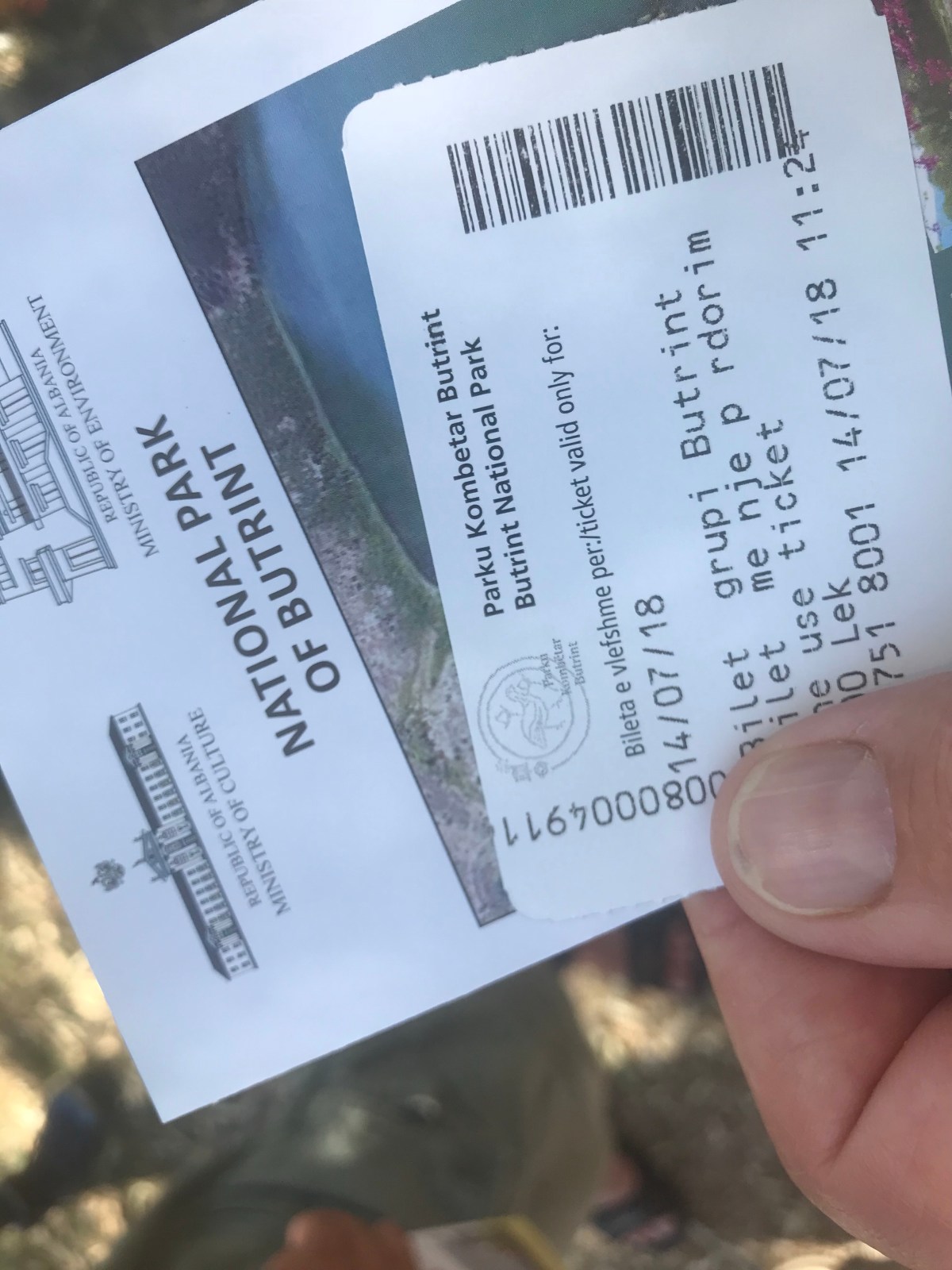

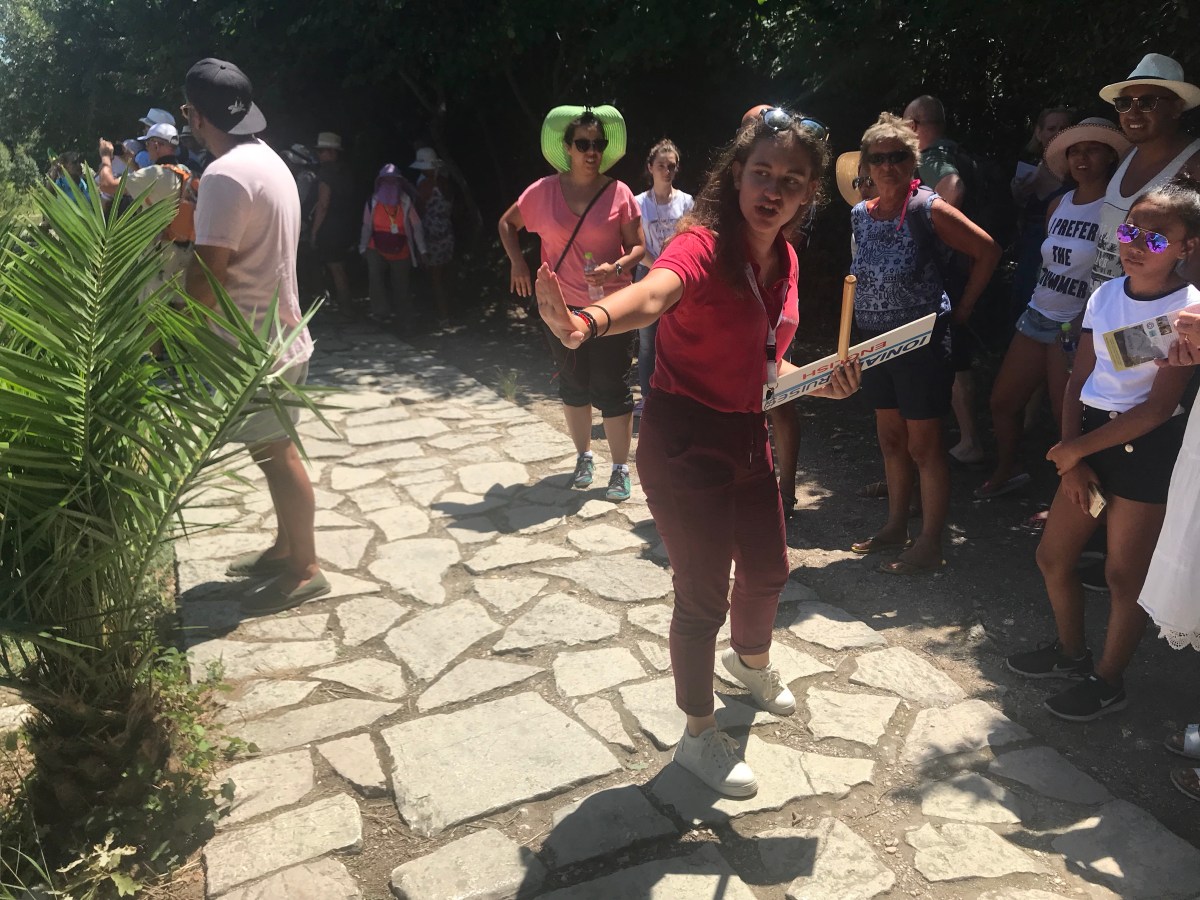


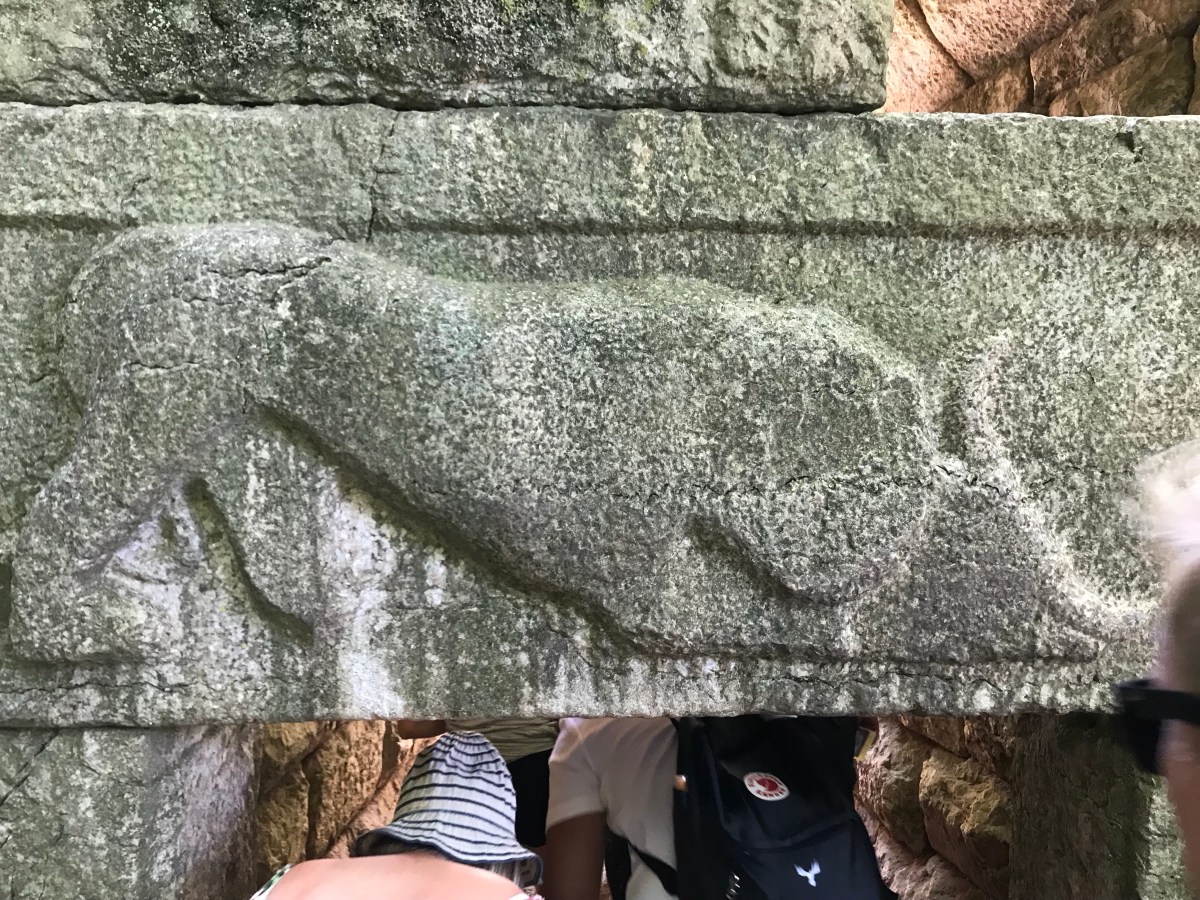
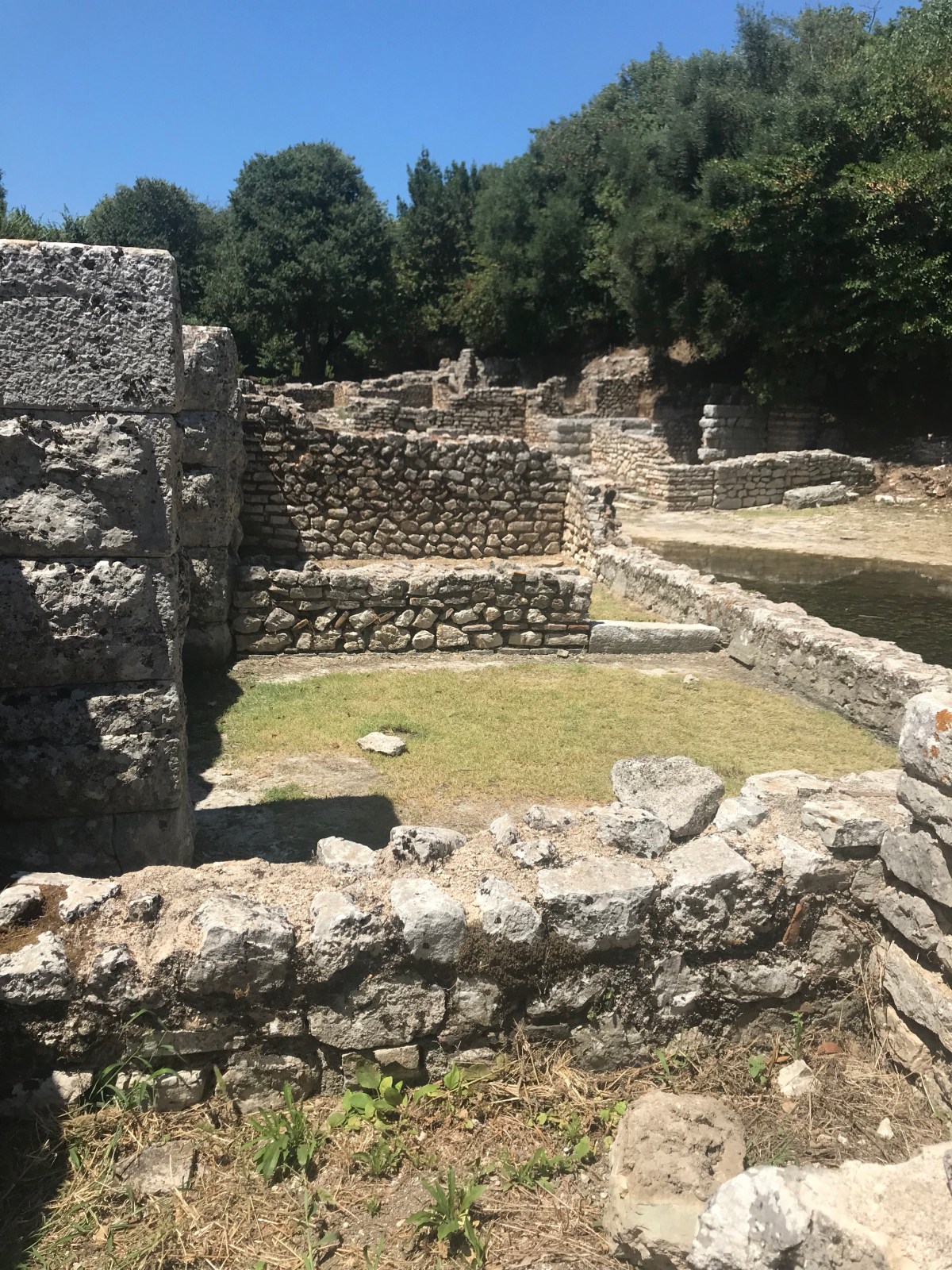

Views of the site with no explanation. Without sounding too critical much needs to be done on this project and it was plain to see. Although the guide did a brilliant job, meandering groups were always bumping into each other and the gangways and walkways weren’t thought out properly so visitors were left clambering over the ruins.
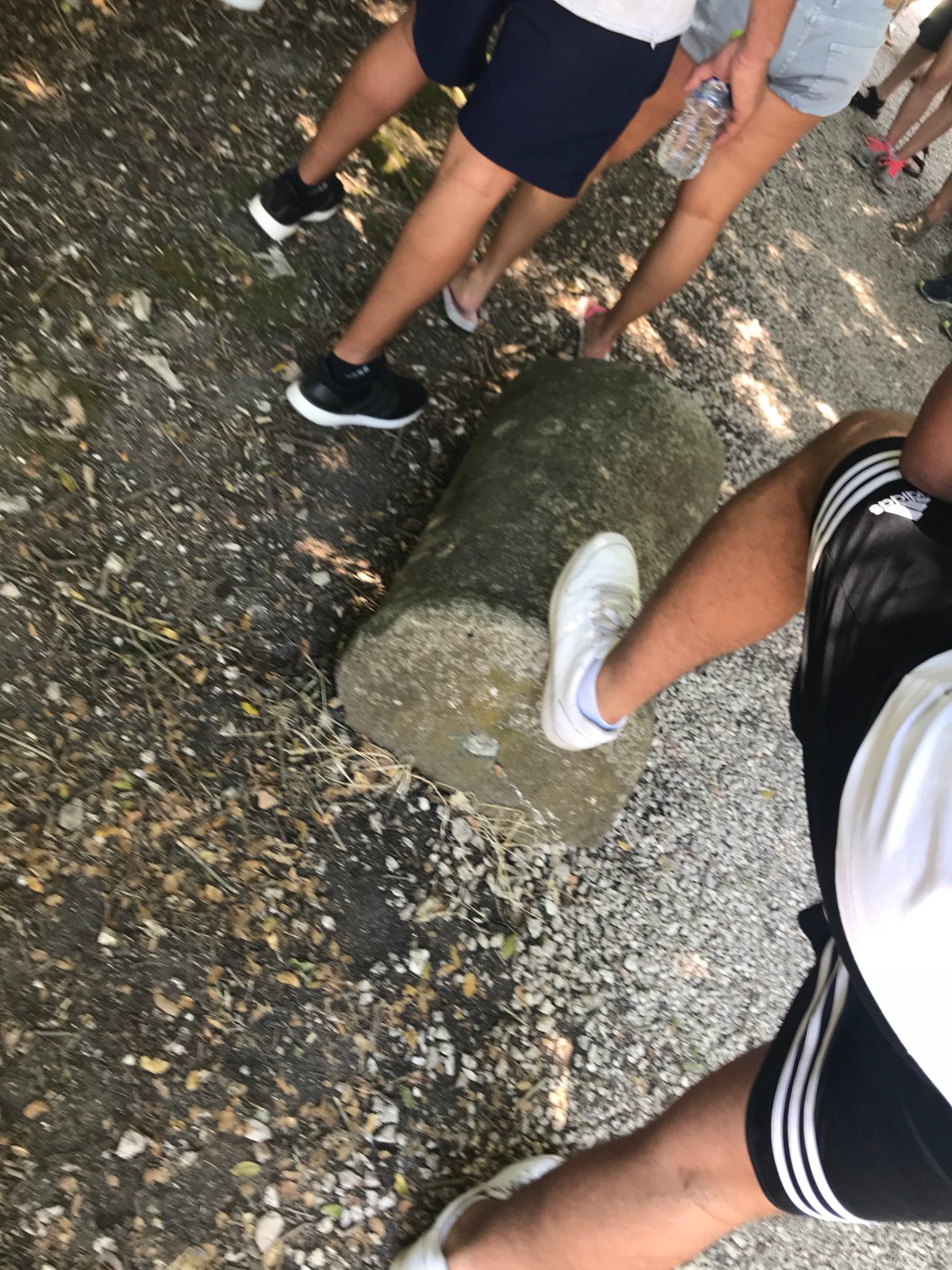

Above: Folk rest their legs using a very old seat…
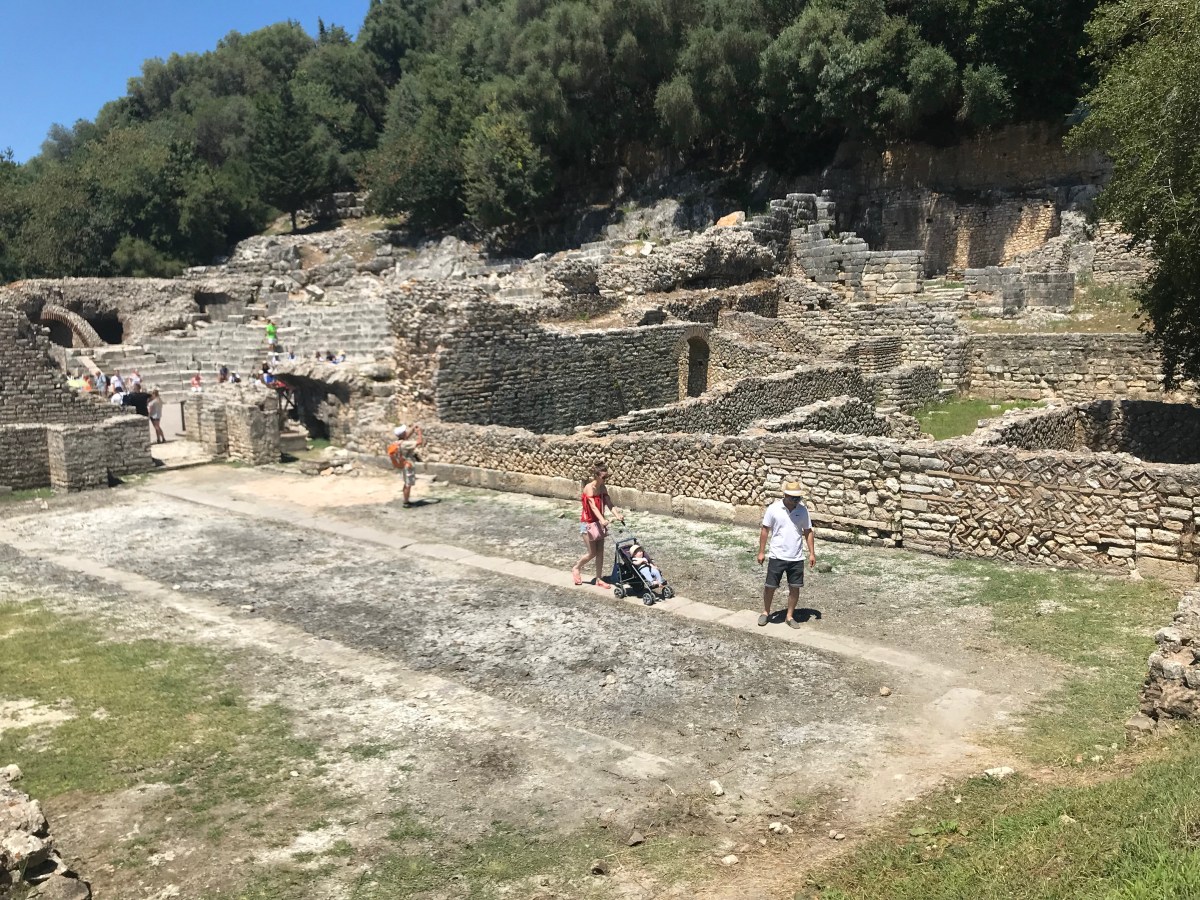
Take your buggy along a Roman pavement but be careful not to tread on the mosaics!
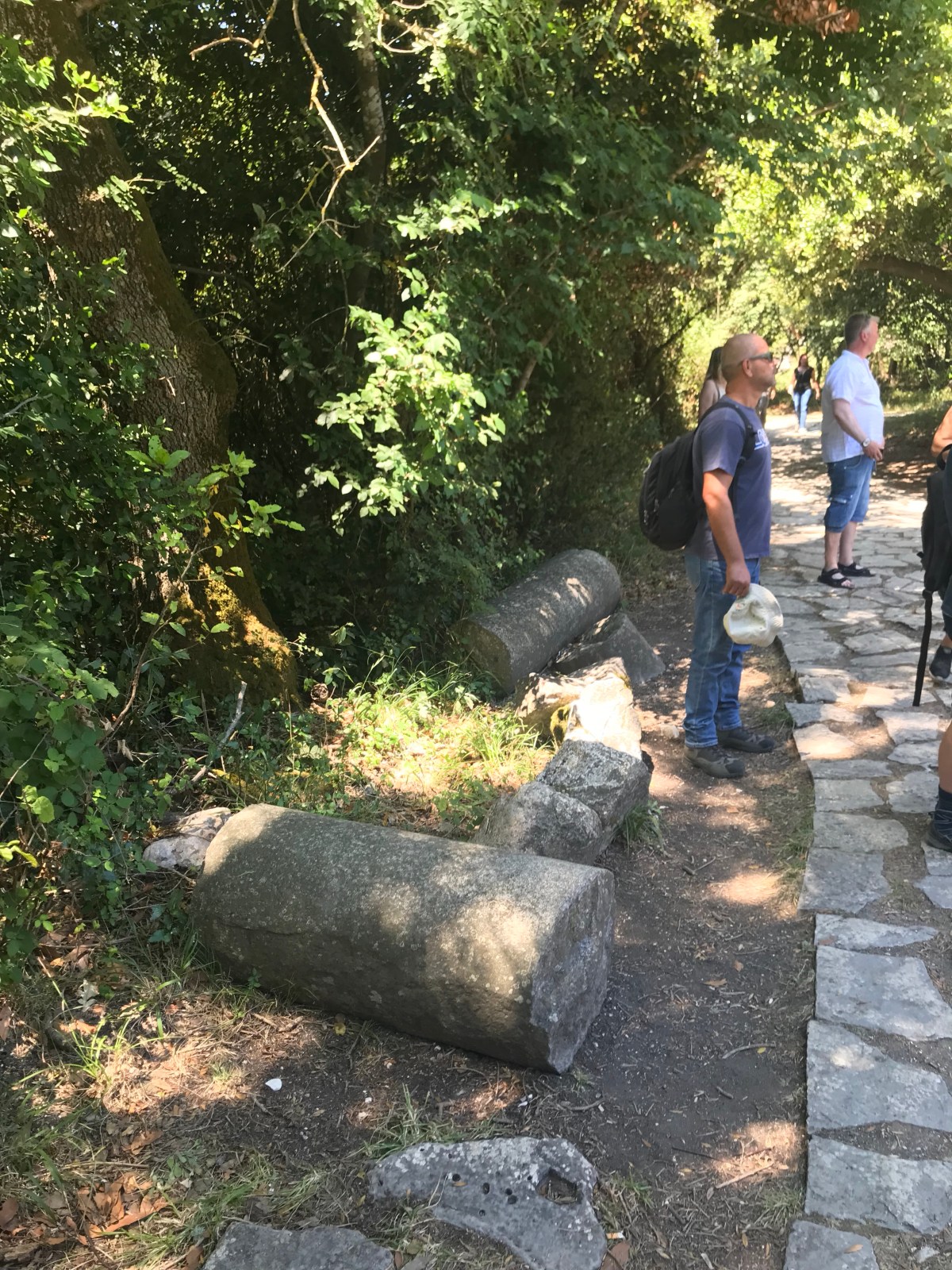

Hot it was, but also interesting. Like so many of these kind of sites, you wish you had read a little more in advance, that it wasn’t quite so hot, and that there weren’t so many people milling around waving smart phones in the air.
Returning to Sarandë we stopped for an excellent lunch at a new but quite plush cafe. Big business for them when 50 odd tip up all wanting food and drink.
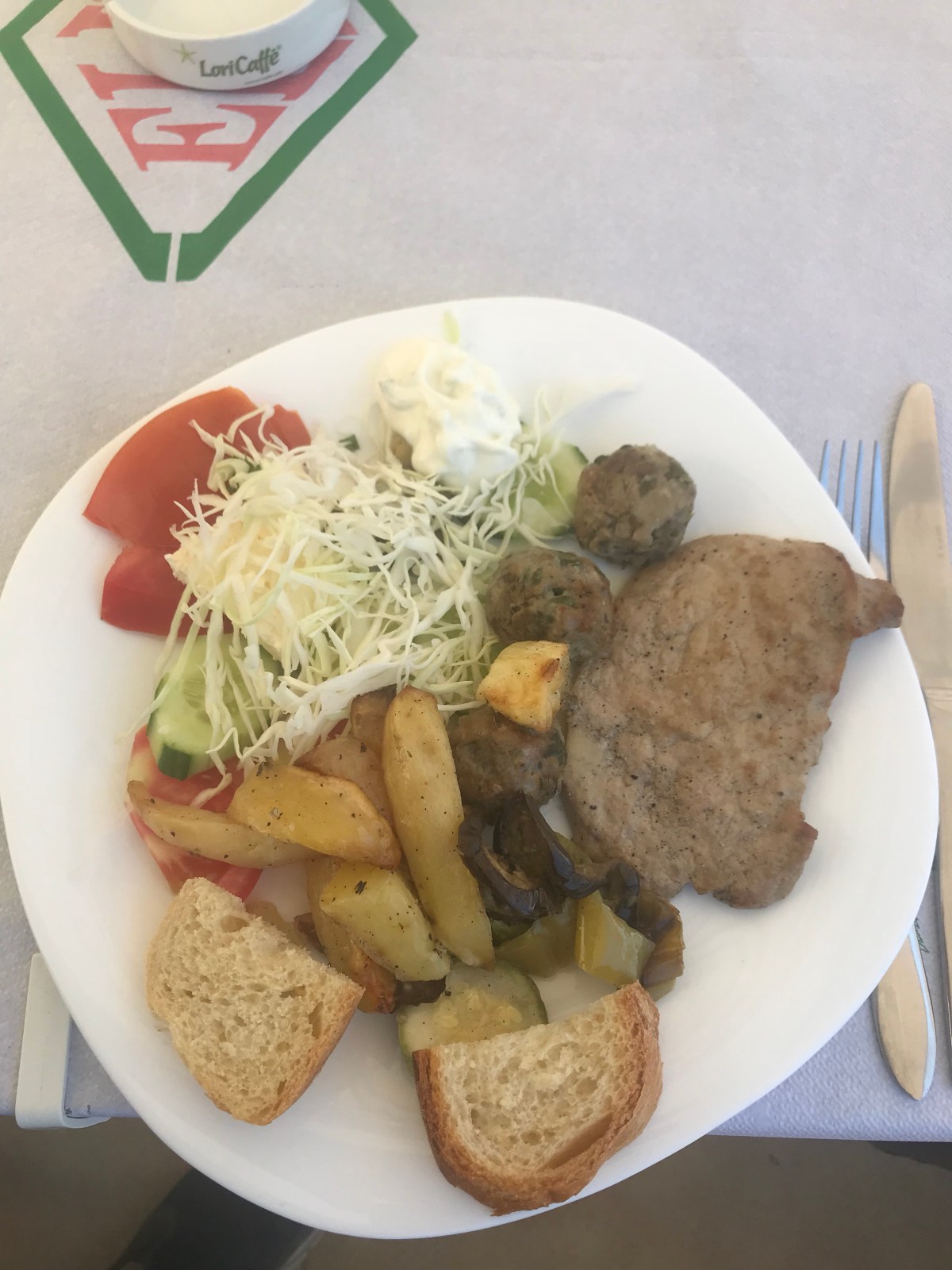
After lunch we were promptly bundled back onto the bus and with tired promise taken to the highest point in the locale. The Old Castle at the top of the hill. By now I was flagging and so were the others – and it was with mild relief when the little batiment came into view. The full-sized coach had again negotiated a road only really designed for four leggeds. Hair pins with patches of concrete added so as to make the whole escapade possible.
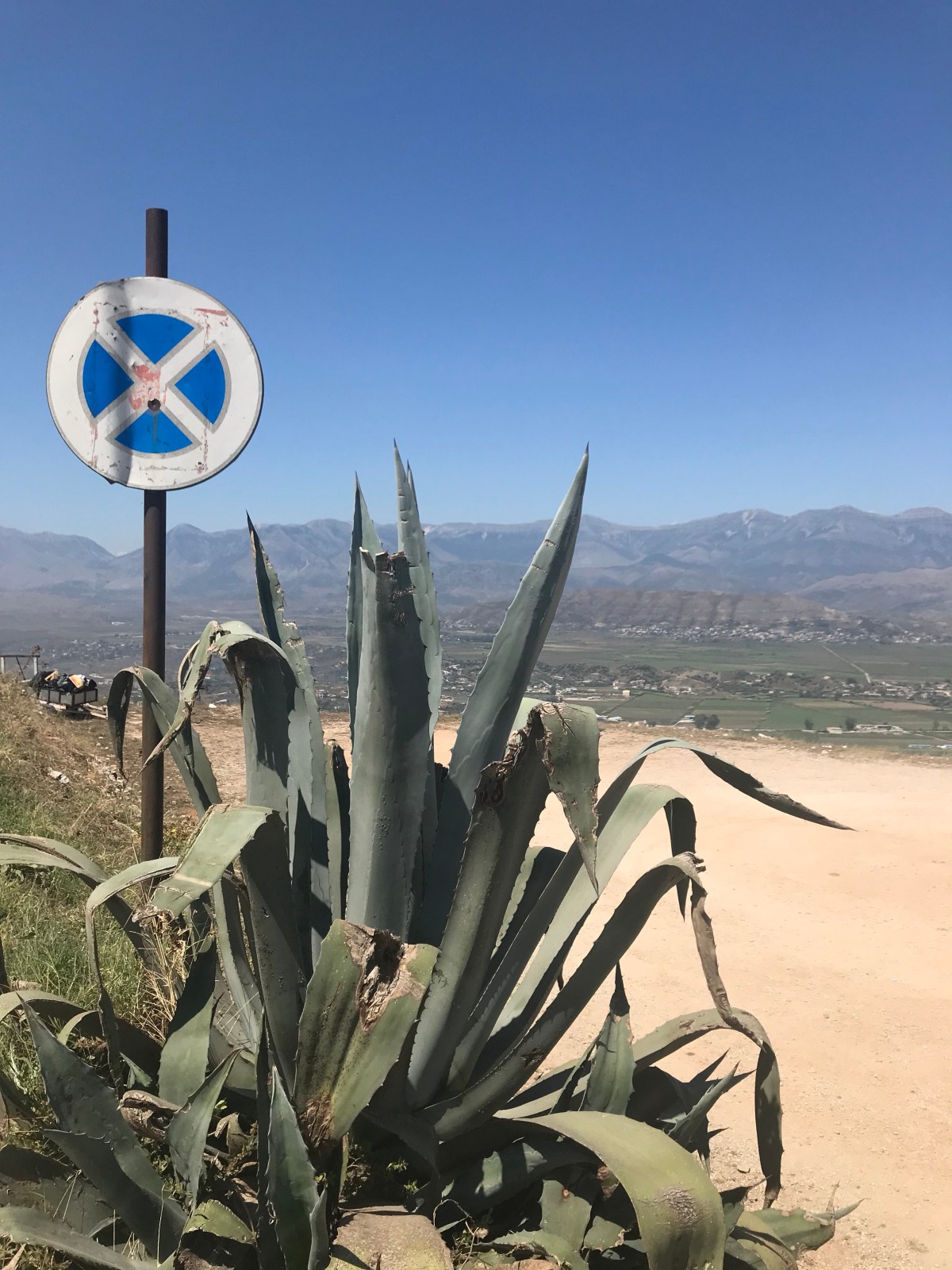
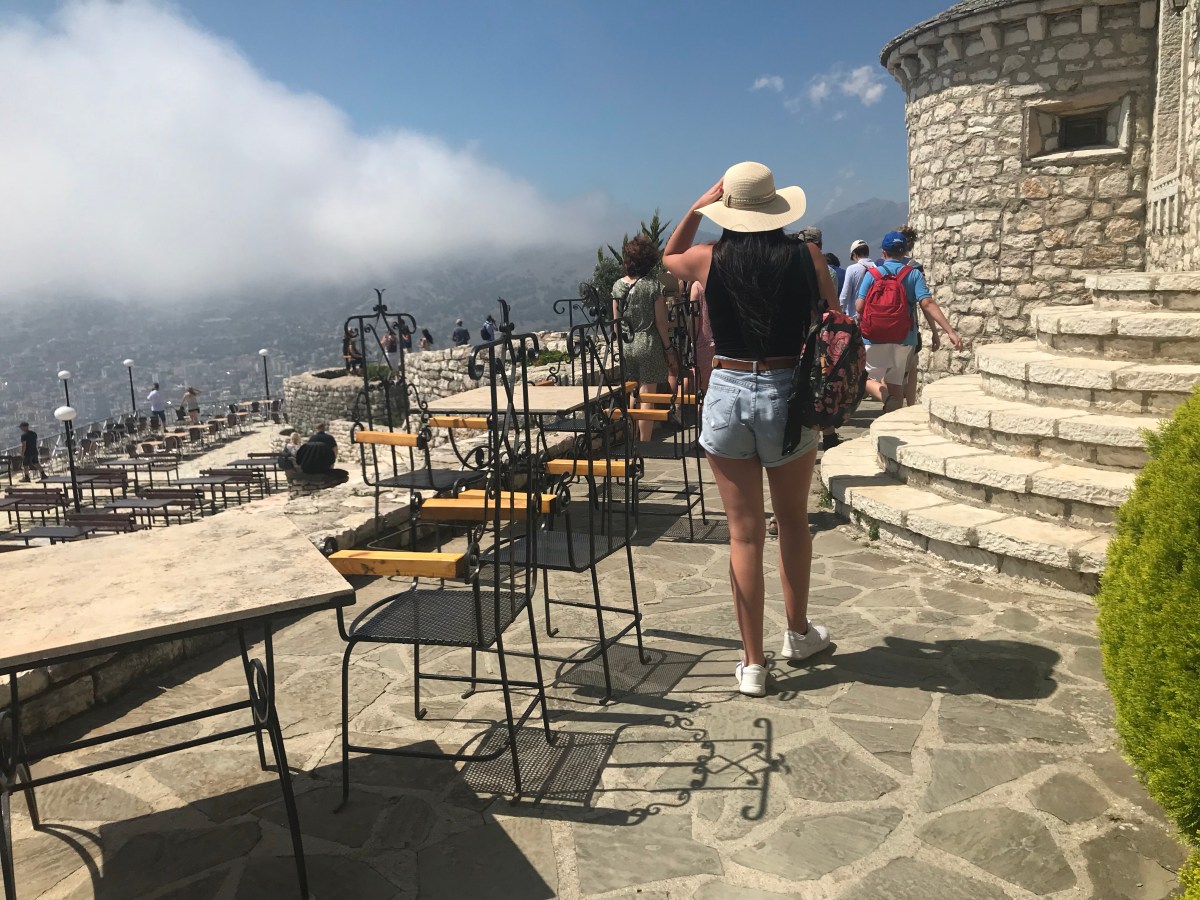

Walking around the ‘fortress’ began another thought process. Most travellers have found themselves ‘doing’ something by way of sightseeing or whatever, and begin to realise that, on some occasions, its all a bit ‘over-hyped’. This was the case here. Nothing to see but the view. The castle wasn’t really anything other than a glorified pizza restaurant with extra thick walls; and a demeanour suggesting that it had no will to live. A big idea but no-one to back it up.


Normally Cannons and gun emplacements draw some interest, but in 39 degree heat no-one seemed to want to straddle a hot barrel.
The rest of our stay was ‘at leisure’ and we were dumped out on the street by a large supermarket. The tour guide had mentioned the supermarket stop a number of times in her pre-amble. In ‘foreign places’ I’m always curious about supermarkets, and usually take the time to make an excursion. You learn a lot quite quickly by a wander – not least surreptitiously noting the alcohol prices. So here I was; in the Albanian Riviera, wandering around a stuffy supermarket looking at items that had no relevance to me. None whatsoever, but all at the behest of a 22 year old guide who clearly felt it important that we were left in no doubt as to the luxuriance of living standards in modern Albania. Or maybe she was acting on higher orders…?
My trip ended here, or hereabouts, as I strolled along the spotless and clinical seafront – an esplanade with spectacle but nothing too spectacular.


As I joined the other day trippers for the return journey to old Corfu, I was divided in my sentiments about the snapshot of Albania I had gathered. Clearly it had emerged from another age – but I was more than aware that Sarandë was not a real yardstick for judgement. In between here and the capital Tirana far up north, there must be dozens, or hundreds of remote communities all still living in a time that us day-trippers simply couldn’t imagine.
Business was booming in this Cote D’Azur, but looking around, there were far more new establishments than there were people to fill them. It seems that at a specified time in the past everyone that was anyone had the same ‘business plan’ – ‘oh let’s build a tourist venue, and cash in…’ Unfortunately hardly any had – pristine cafes, with bleached white awnings and serried ranks of identical tables were empty. You could immediately sense the desperation with which first-time entrepreneurs had speculated 20 years back – all simultaneously creating what they thought was the best of the best. Nowadays to a Western eye that’s all a lot more obvious, but there’s never been an Alan Sugar here and the Dragon’s Den would have kicked all but the most viable plans into a dusty touch.
That’s not to mention the prongs of steel rods and mesh that stuck up out of unfinished buildings, most probably signifying the power of the underworld’s ability to thwart projects that might seem competitive.
Let’s wait to see if Albania ‘finally’ makes it…
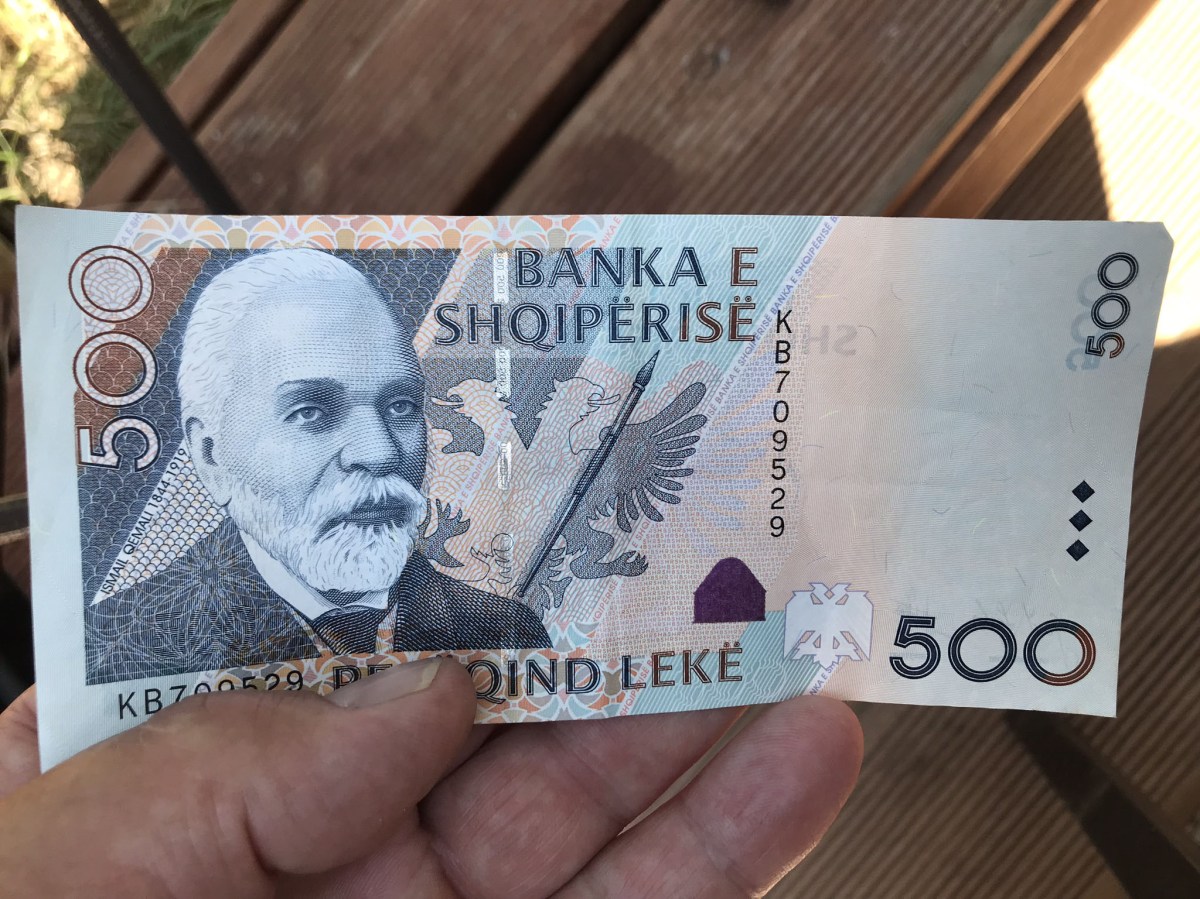
A 500 note. £3.50 in 2018 currency.
 jimsoccasionalblog