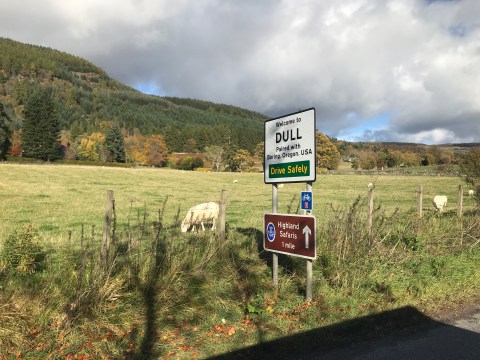
Population ‘Not Many’.
So, yes, there is a ‘Dull’ in Perthshire – as it happens; ‘Twinned’ with Boring in Oregon and Bland in New South Wales.
I wondered what these other places might look like on a glowing autumn afternoon. Would they scrub up as well as dear old Dull in its golden October light?
I had wandered off my autoroute North [the A9 to Scotland knowers] to make this detour around the well trodden scenic backwaters of Perthshire. The vistas here allow you to see for miles, and on a good day miles and miles. My day was golden and clear; the sideways light picking up the silvery threads of floating cobwebs and small insects in the windless air. It was a picture-postcard day. Lou Reed on the sound system.
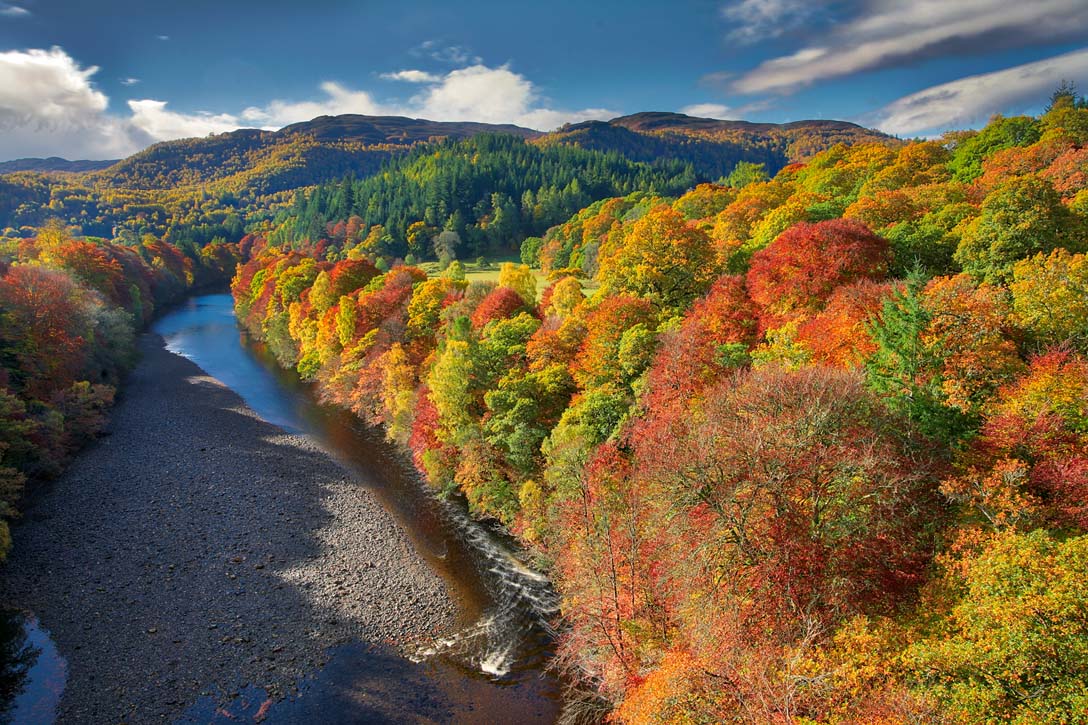 The River Garry from the Killiecrankie bridge. And below a snippet from the Killie Visitor’s website…
‘… Where history and natural heritage combine! On 27 July 1689 the first shots in the Battle of Killiecrankie were fired – one of the goriest battles in Scottish history. From leaping soldiers to leaping salmon, this rich historical conservation area…’ blah blah…
I’ve visited Scotland frequently in recent years and like many tourist destinations throughout Britain there seems to be an increasing desperation to plant yourself on the map. [See another forthcoming blog ” Brown Sign Crazy” for further thoughts on this.]
IT GOES: If there’s a View; there’s a Coffee Shop; if there’s a Coffee Shop there’s got to be a Visitor Centre; a Visitor Centre warrants a Heritage Centre; and once you’ve got one of those you’ve suddenly got a Brown Sign Community. Maybe fishing or a small-scale railway isn’t far away. Here was no exception – you could reliably find a ‘Farm Shop’ selling shortbread quicker than policeman plod with a boot-full of traffic cones.
Below: The Scenic route through Perthshire
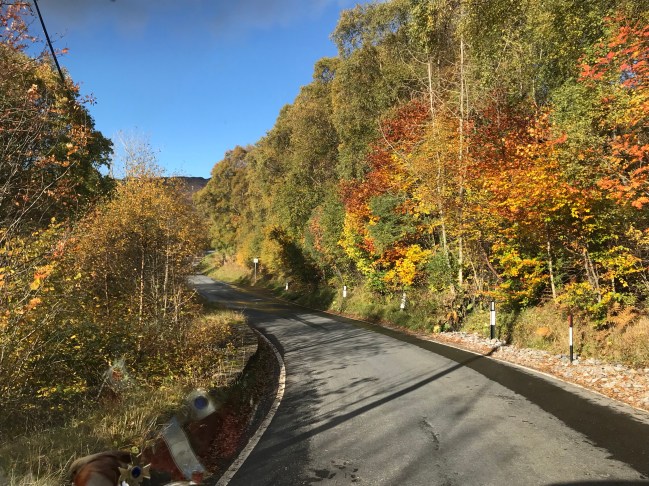
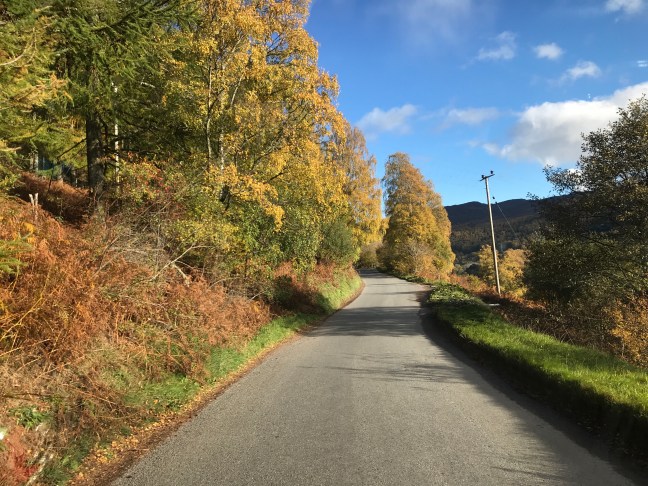
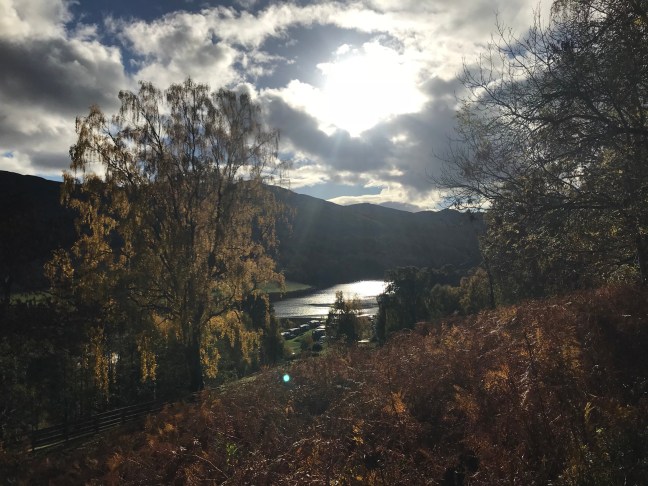
Storm Callum and foul weather were behind me, and my detour was West to the town of Aberfeldy – to make the circuit thru to Tummel and then back East to Pitlochry.


Something beyond the Green Route marked on the map made me choose this; I recalled the bridge at Aberfeldy as being a structure worthy of featuring on a UK Commemorative stamp way back in childhood. The bridge, I now re-read, was selected as an example of classic design and engineering that was relied upon as the only means of being structurally sound at a time when most efforts were essentially seasonal. It seems that here in Aberfeldy the military saw the bridging of the Tay as an essential strategy to connect fast routes for their operations fanning out into the Western reaches of Scotland. The controlling English.
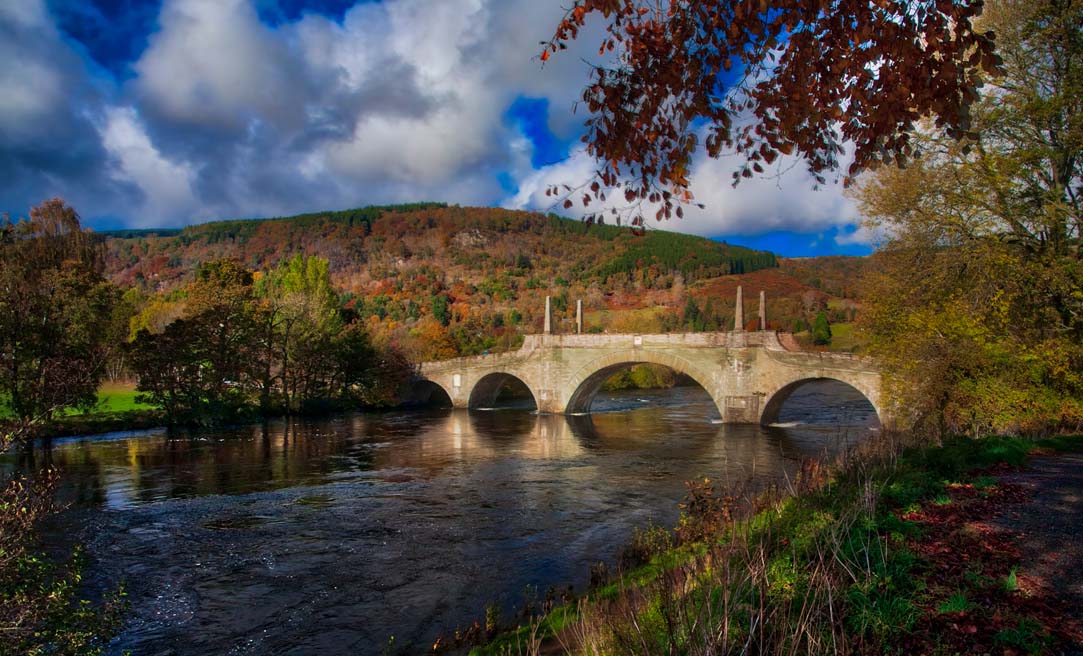
The bridge 280 years on. By all accounts still a masterful feat and still resisting the seasonal swell of the peaty waters that follow the valley.
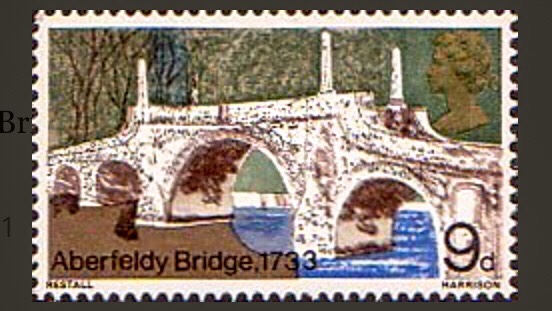
The bridge stamp when I was a schoolboy in 1969.
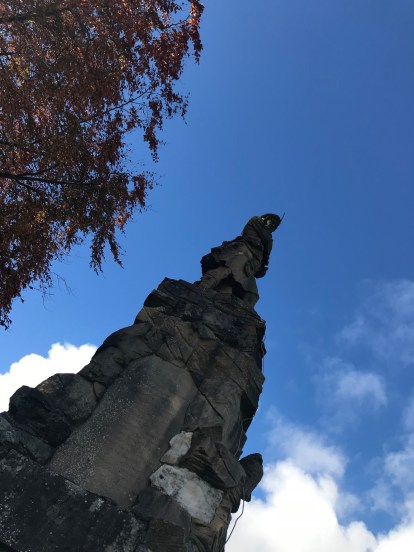
Beside the bridge, on a sort of putting green (the Aberfeldy golf club was across the road), was a robust memorial to the establishment of the Black Watch Regiment. There’s a long and proud story behind these Highlanders, which is only hinted at on the granite slab at its foot. Many of its number came from this area along the banks of the Tay.


Further west I came across the Bridge at Tummel – also built at the same time as Aberfeldy, but today spared vehicular use. The plaque says, it too, provided a strategic link for the military and adds that it cost a massive £300 to construct.
[Who’d have a ”£ day rate” that meant walking miles to your place of work – or camping in the damp with a bunch of unwashed oiks and then setting about lumping hundreds of hefty stones into precarious place? Somewhere, someplace these quoted figures need to be contextualised. If ‘the plaque’ went on to say that the 300 quid spent on a bridge in anno domini 1730, scaled up, meant £700,000 today, you’d think ‘Oh Ok’ or something equally mildly expressive.
BUT… I’ve just looked it up – a ‘reliable’ chart on the net – the product of some university findings, states that things in 1730 should be scaled up by 97.1 – That makes our bridge cost a cracking £30,000. ‘No’ I’d say. Not possible, Perth County Council providing a bin service in the village would cost more than that.]
Glancing at my not very detailed map, I noticed that nearby was the village of Fortingall – 4 miles down the B-road, away from where I should have headed. But Fortingall? It clicked another schoolboy synapse – The Yew tree, Pontious Pilate. On a warm Sunday lunchtime I revved up to this quiet Perthshire village to see the famous tree that has laid claim to being the oldest living thing on earth – all set in a quiet churchyard adjacent to the local hotel.
Below the yew in its own walled garden; and below below the pub that cashes in…
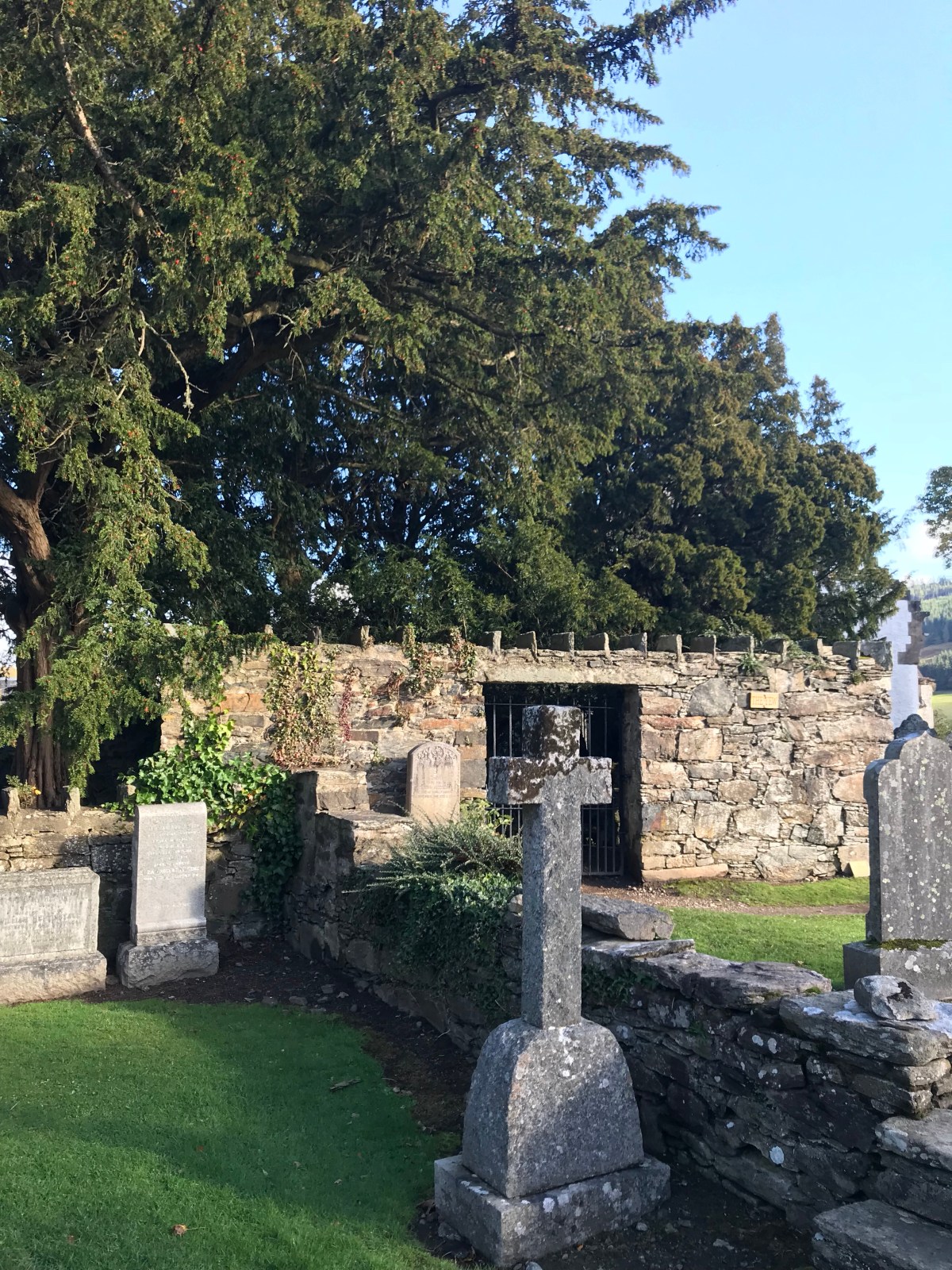
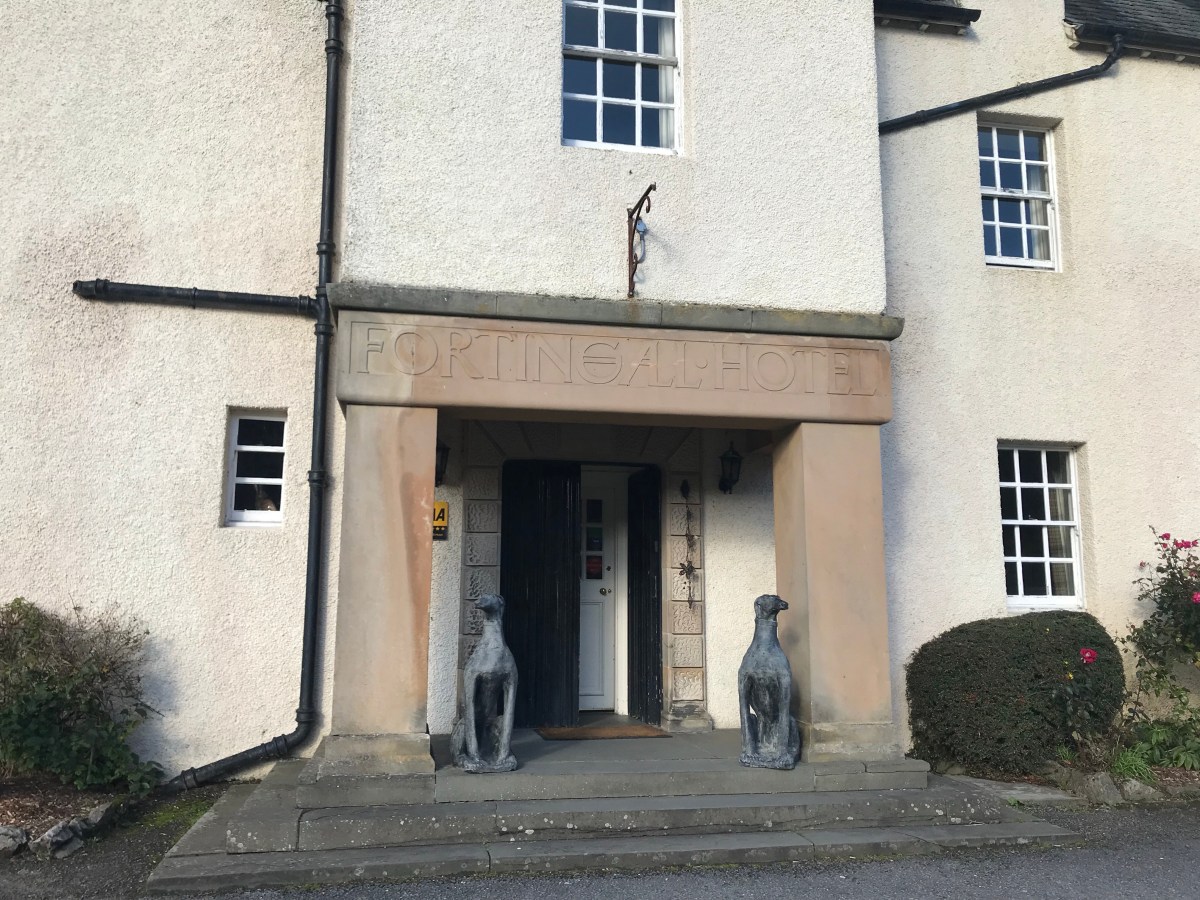 Now we have Wiki, it seems some of those myths about good old Mr Pilate and the veracity of the village’s claim that he originated here, couldn’t have been possible. A logical timeline of his life indicates that he would have had to have left as an embryo with uninterrupted travel back to the Holy Lands to make the prefect rank he held in AD 26. Without failing his exams. It wasn’t going to happen – especially with all those European Border Controls.
Does Wiki spoil a lot? It goes on to say that the claims about the age of the tree would also be unreliable and it’s probably 3000 years old. The best bit, however, is that it was devastated by school kids setting fire to the centre of the tree about 300 years ago… and we thought the idle youth was a modern problem.
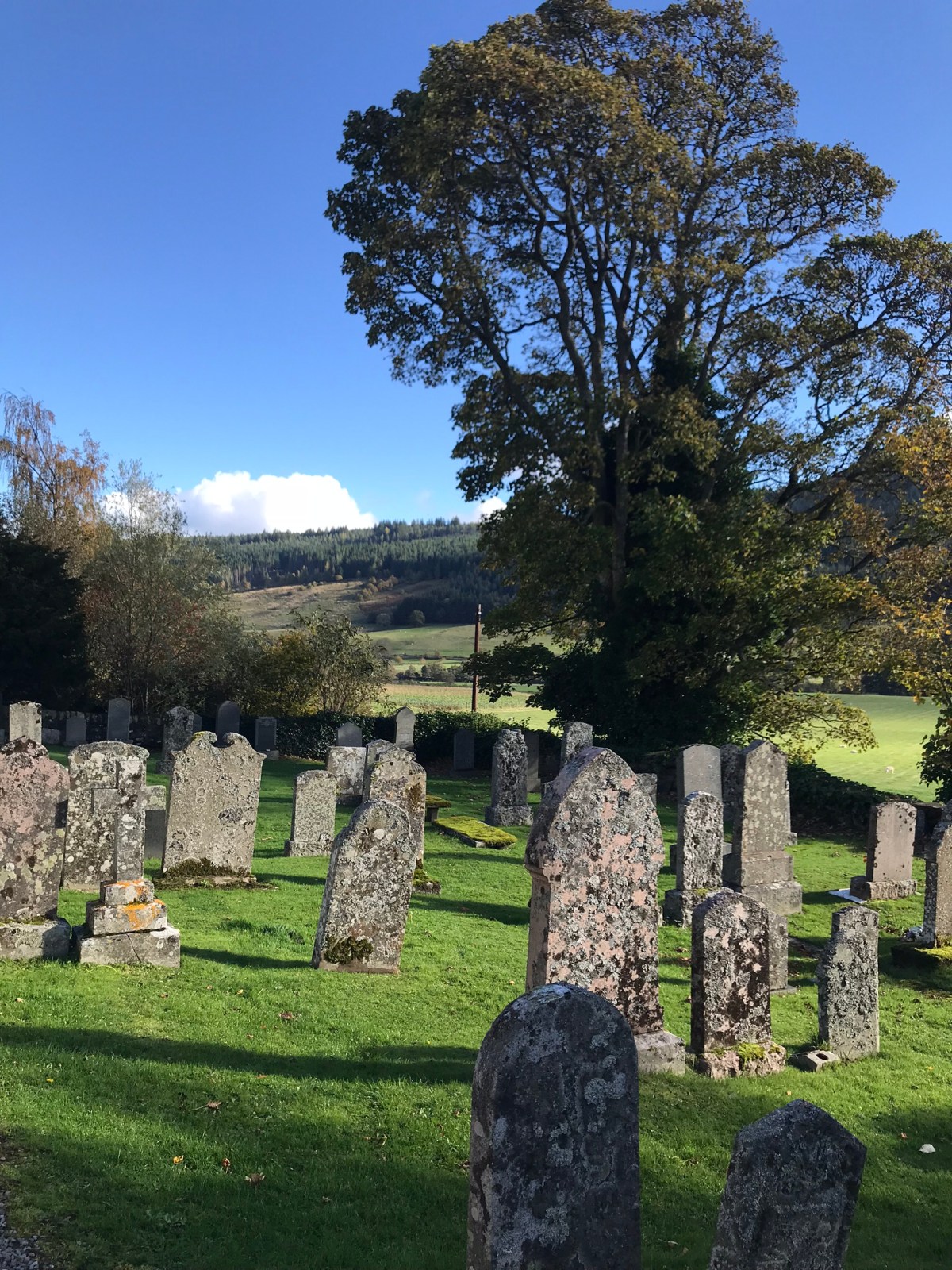 The Cemetery – Not a bad view for eternity
 Part of one of the Fortingall stone circles. Megalithic era, meaning anything up to 3000 BC. My theory is that the people who erected these stones MAY have planted the Yew… but then again I’m not an archaeologist, and only make these things up to entertain a small mind.
I headed off into the autumn light across the fertile flats of the Tay valley. There were fields of raspberry canes on one side (could they have been Tayberries!?) and cattle that looked ready to eat on the other. Fields of grazing creatures.
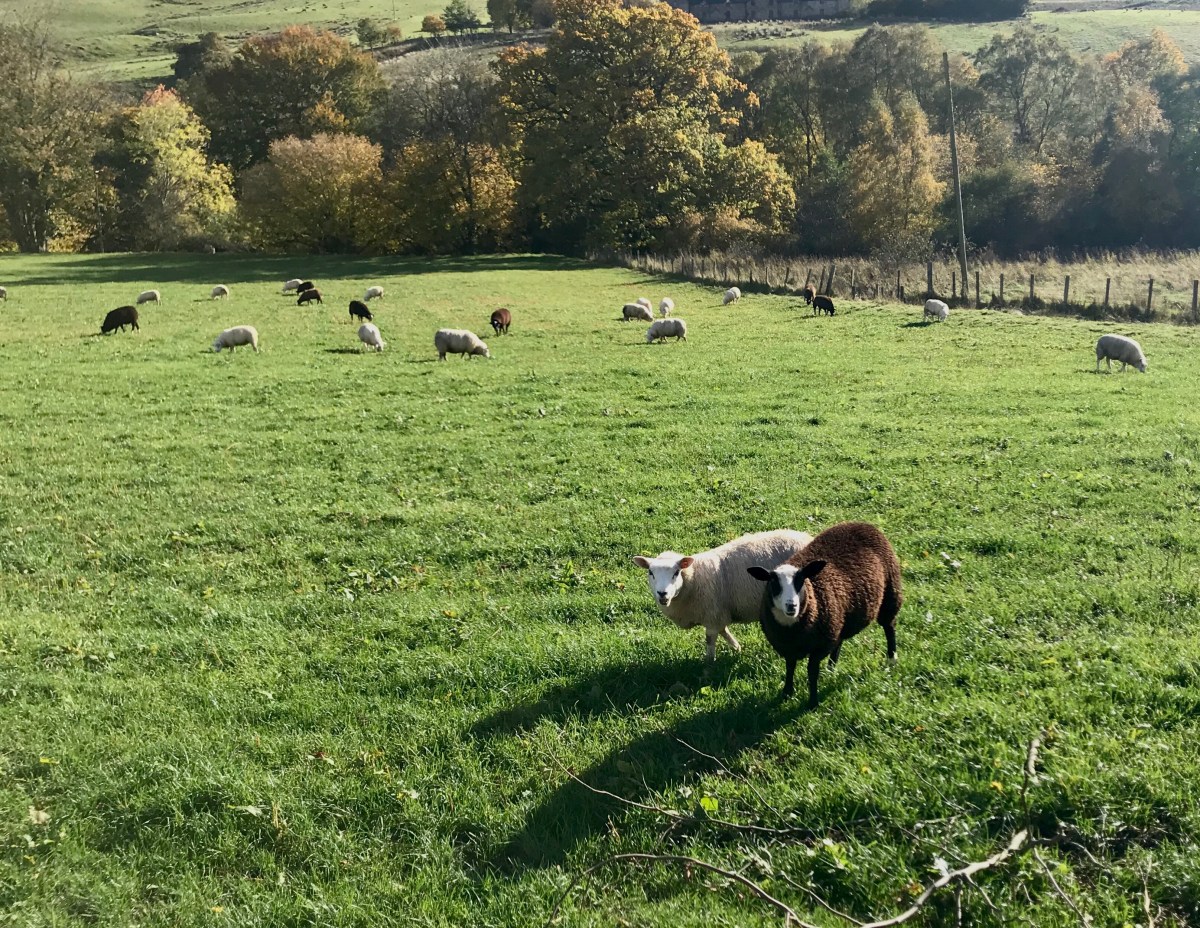 ‘Differently Coloured’ sheep bleat in harmony
Meandering up the hill that lead to the Tummel Valley I became acutely aware that this route was a Sunday loop – impatient cars behind me, and oncoming, near myopic septuagenarians swaying into the rough curbs to avoid my white van. It was a busy old afternoon.
Here was a majestic concoction of colour – birches with their penny stamp foliage showing butter yellow, beeches turning into a rich fulvous canopy and ruddy brown bracken carpeting the gentle slopes.

 The Author finds a spot for a tea break
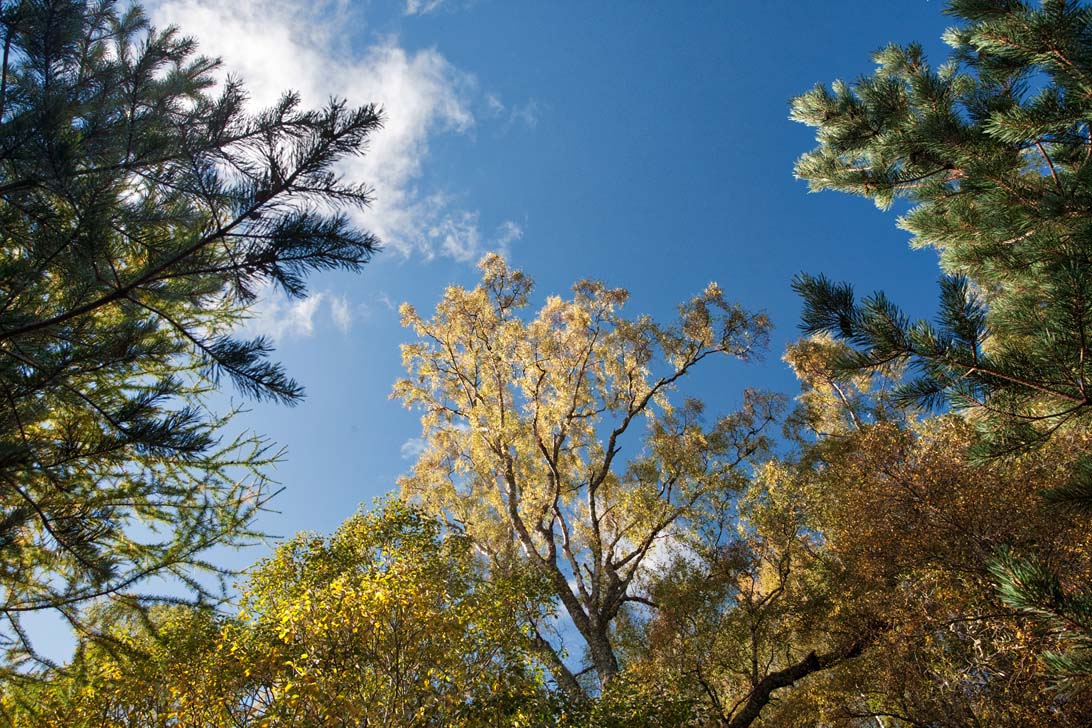
 Above: Rowan, a native species steeped in ancient folklore
I know you can dodge in a bit of colour into digital pictures. These days its made all the easier; but genuinely little by way of enhancement has taken place in the pictures shown here!
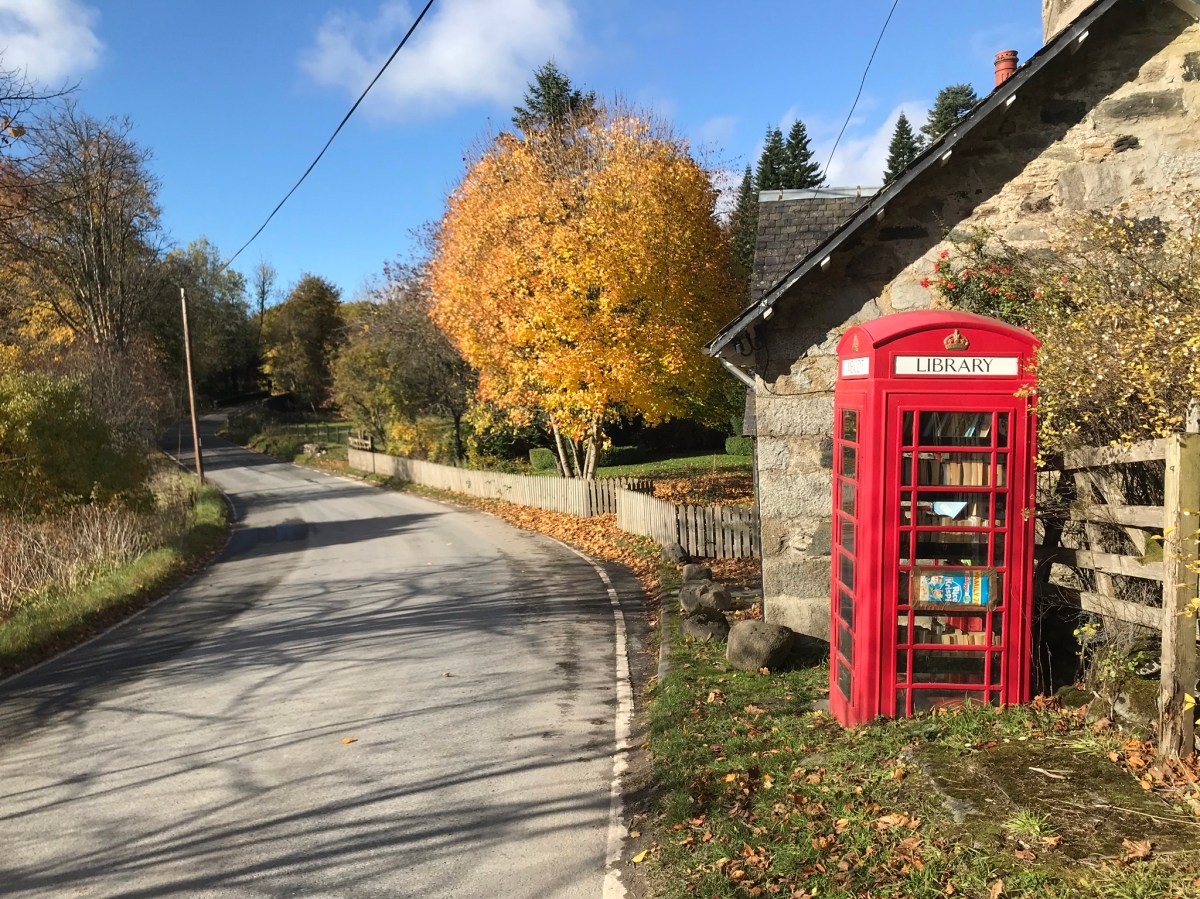
The little village of Enochdhu, just outside Blairgowrie now has 4G so its Classic type K6 phone box can become the Library. Agatha Christie was amongst the ‘good reads’ left by the good neighbours.
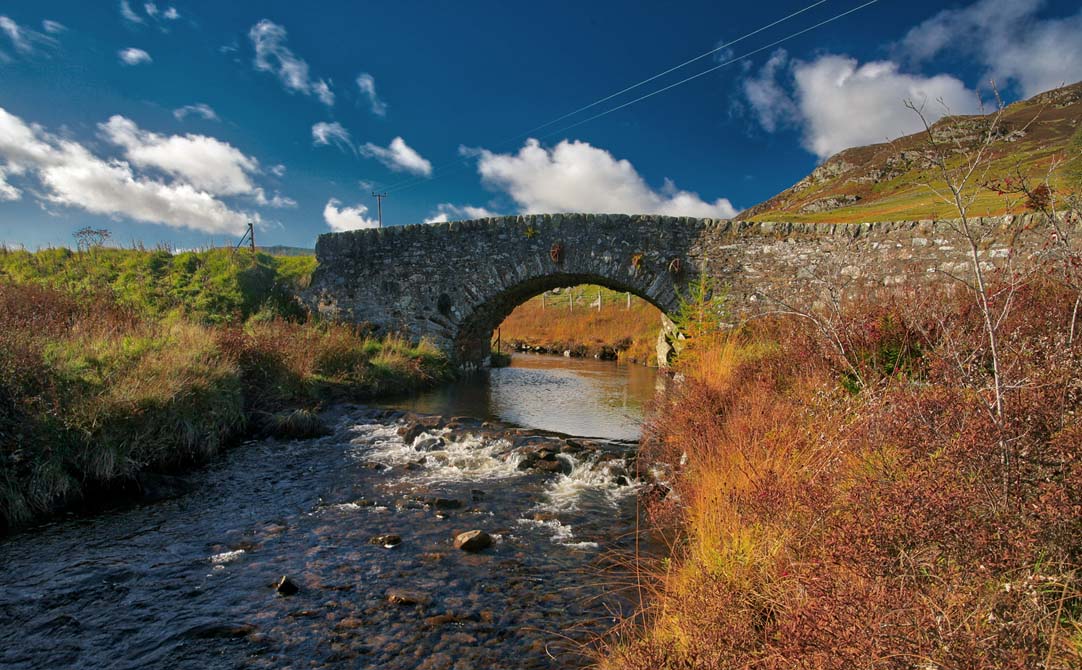 Another well made arch holding up the A road to Cally
In a few short days the colour of the country will inevitably settle back to the muted damp canvas of the winter. Who can say how long Perthshire will sit being ‘dull’ before the colour returns?
If there’s an ‘Enochdhu’ in Perthshire, I wondered whether there’s an ‘Enochdon’t’ somewhere out there waiting to be twinned?
 Fly Agaric – A definite ‘Don’t’.
 jimsoccasionalblog