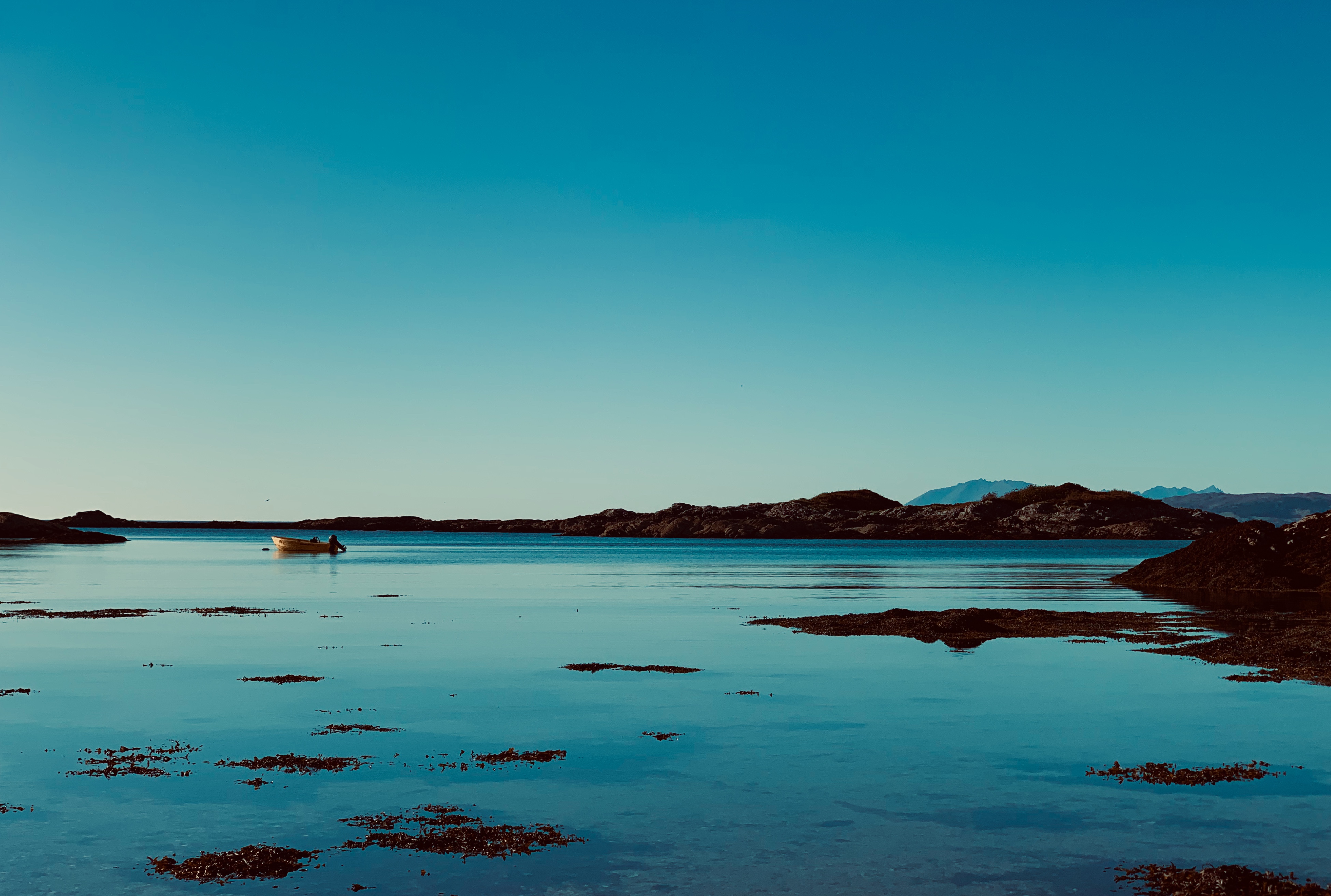
 ”Wherever I wander, wherever I rove, the shores of the Highlands forever I love” – Robbie Burns
 Into Scotland at Jedburgh and out at Gretna 2 weeks later. 1500 miles and almost as many phone pix. Above in Red the squiggled route to the top.
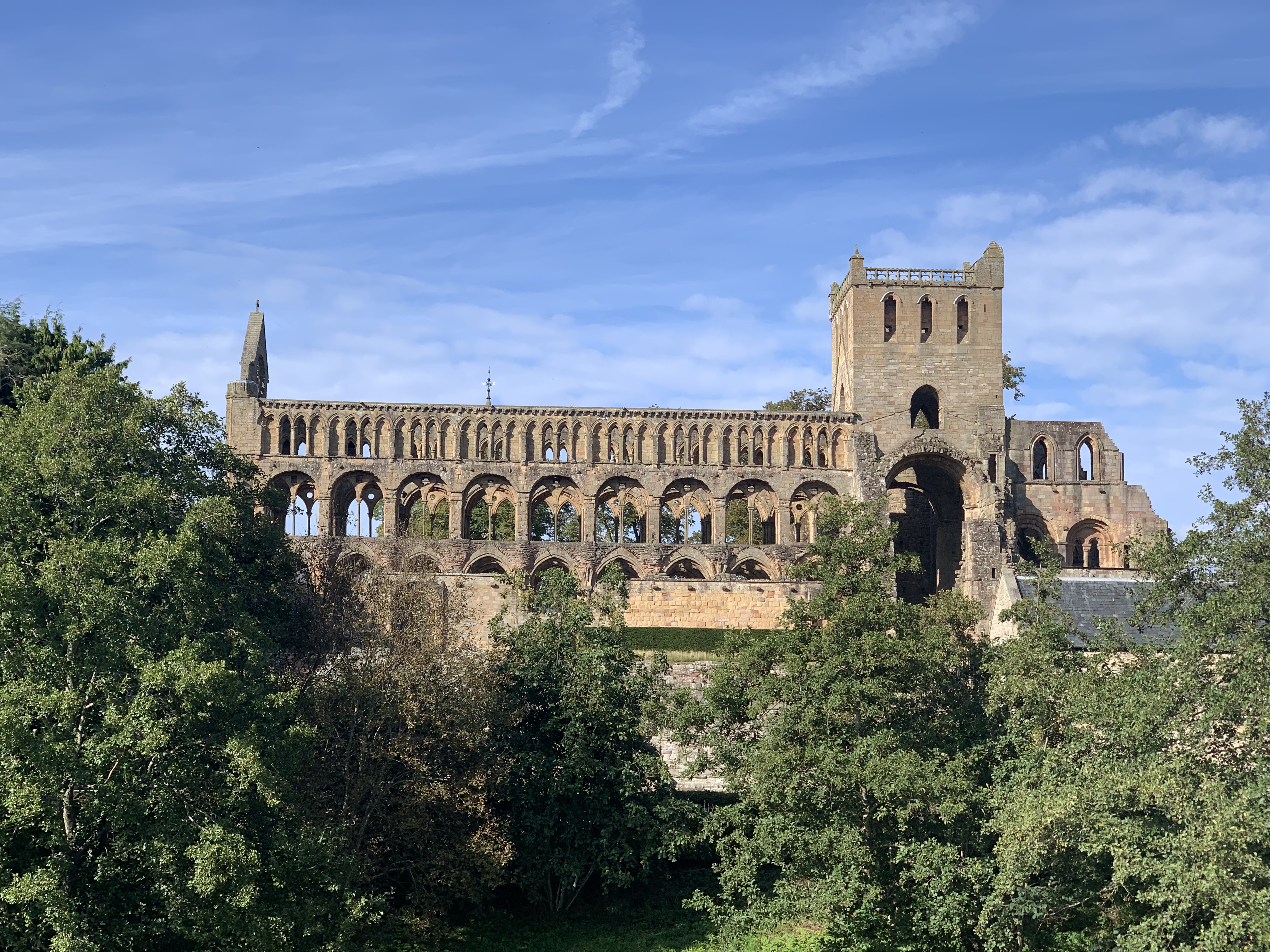 Jedburgh Abbey enjoyed a 500 year long Catholic history before the ignominy of being ‘Kirkified’ in the Reformation of 1560. ‘Damned Popery ‘ giving way to Calvinist beliefs.
 A not-so-random visit to 28 Somerville Road in the naval housing area beside the port of Rosyth. For my co-traveller it was a trip down memory lane – where he and his brothers spent their childhood before moving south to England. Not much had changed – the grass was still good for kids’ cricket, the copse at the back was still bikeable and the neighbours’ curtains clearly rippled as spies homed in on the strange people who had drawn up at no 28.
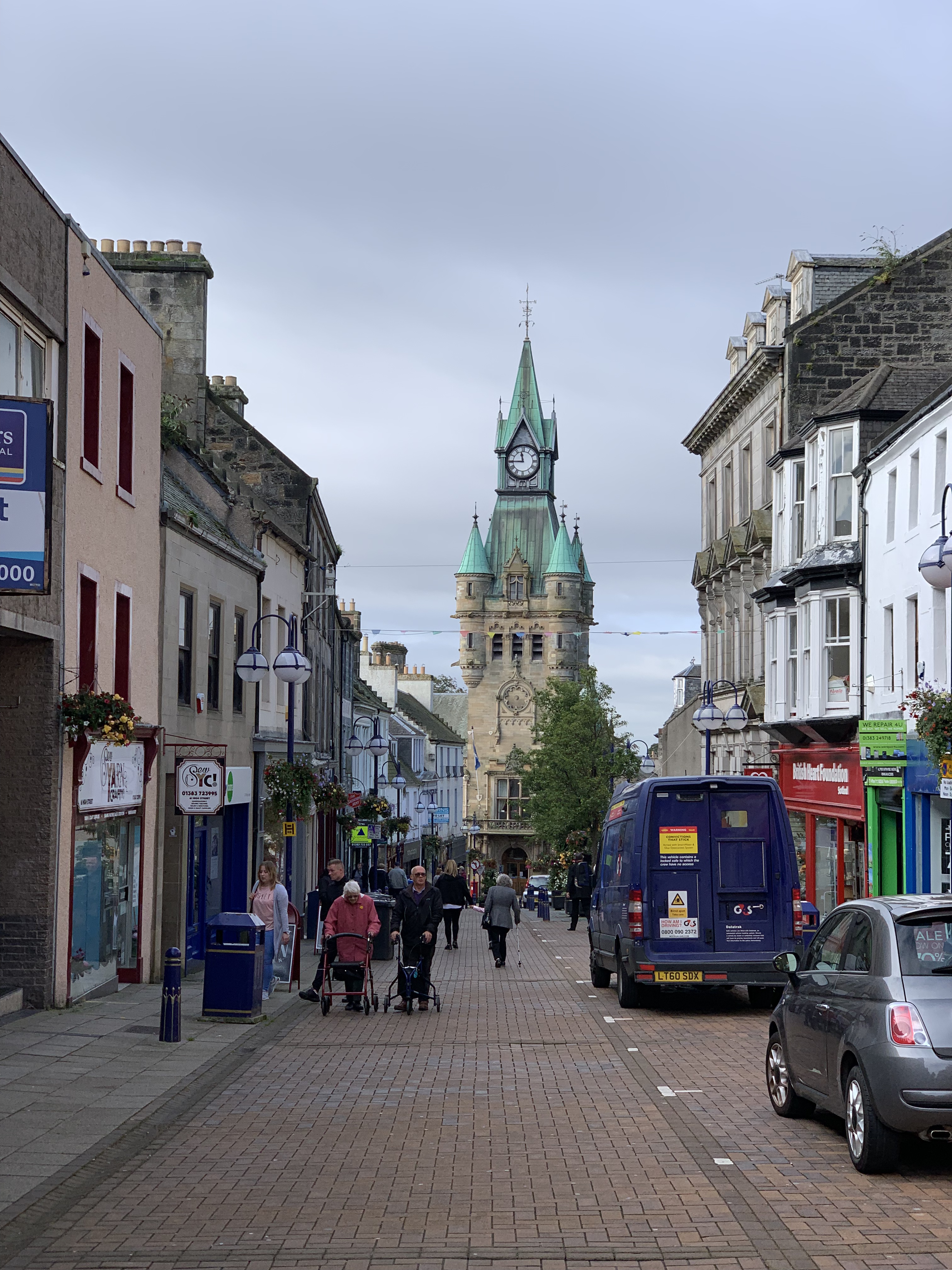
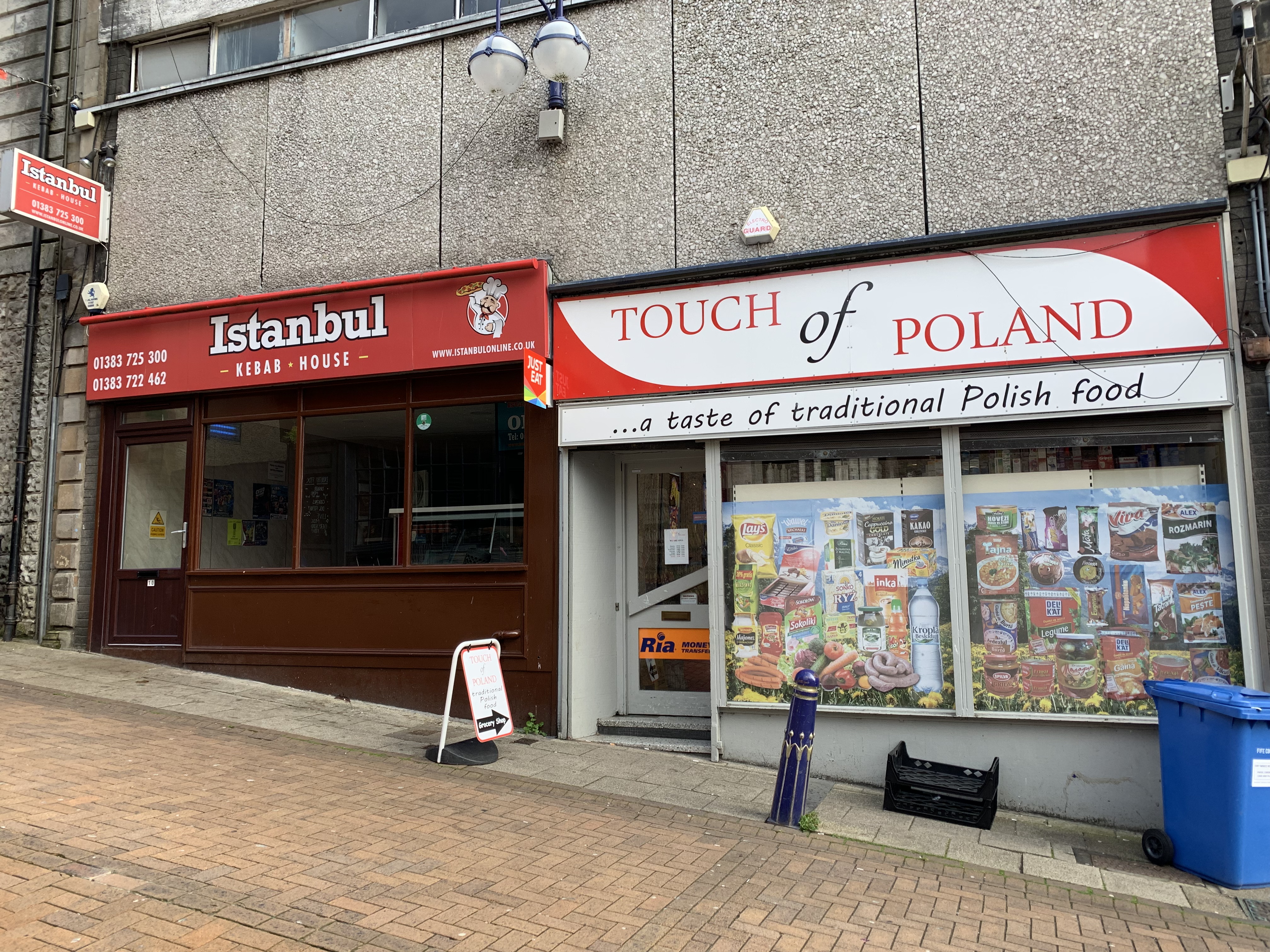 Above: The historic town of Dunfermline, nestled on the northern bank of the Forth. Erstwhile home of almost a thousand years of Scottish kings; but now, like every town in the UK, showing signs of high street change.
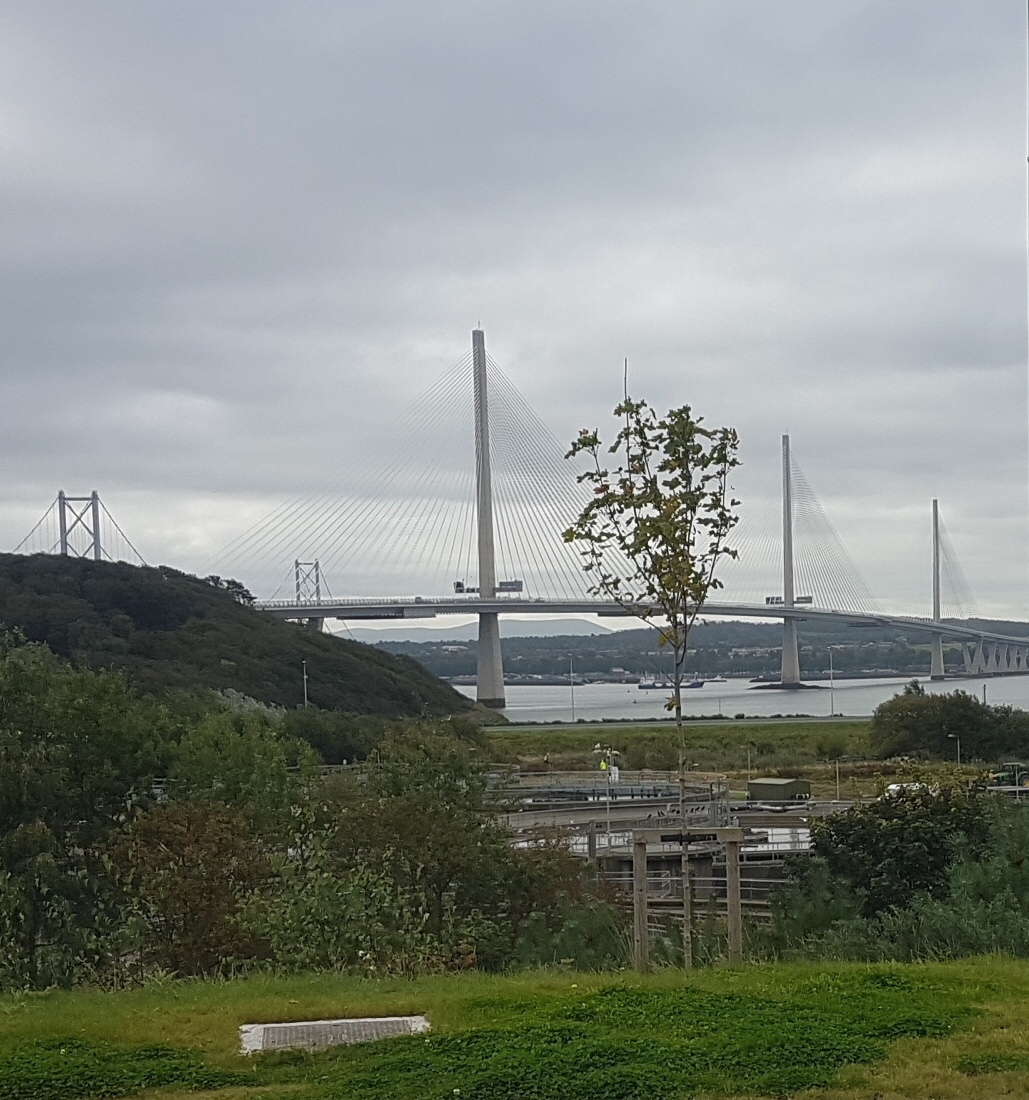
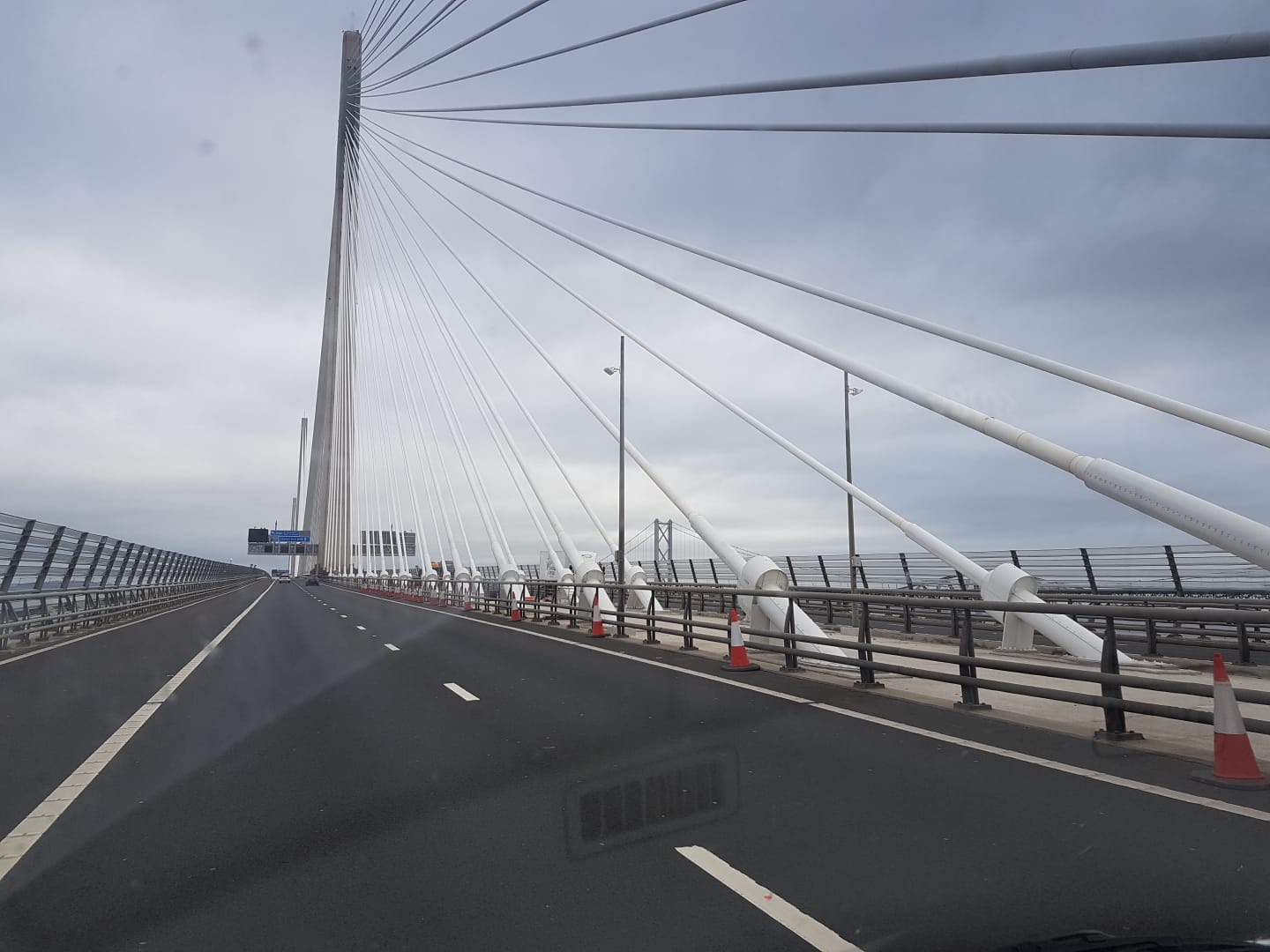 The ‘New Forth Road Bridge’. A project 8 years in the making and completed after only 3 years of construction. The ‘net tells you that many felt the money involved to achieve such a spectacular feat could have been spent elsewhere. I’m sure people opposed it – especially if they didn’t commute into Edinburgh from the north. My 5 year old SatNav showed us crossing an open expanse of water which served to remind me that it needed probably at least 1 software update.
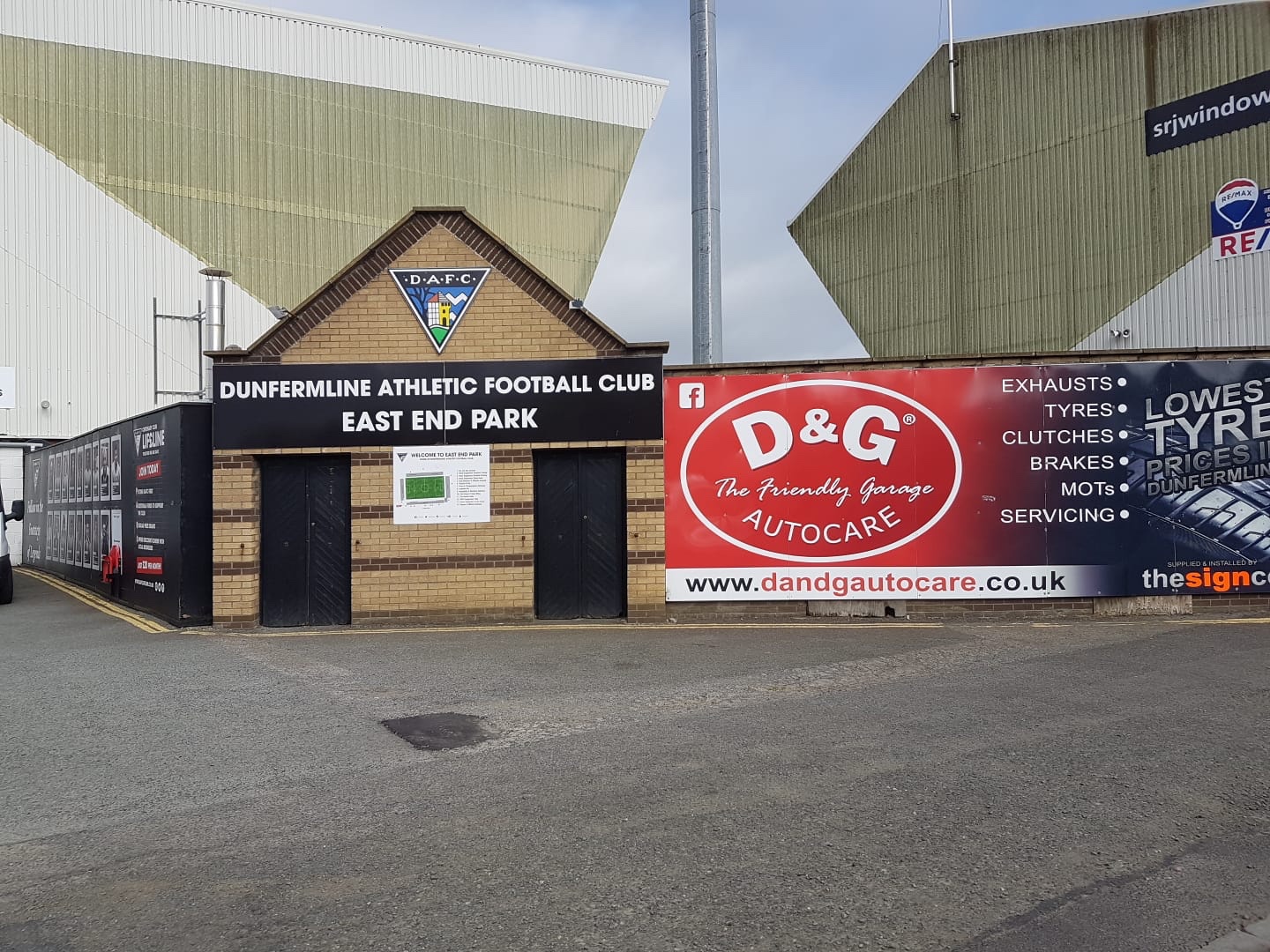 Above: DAFC. A big ground with hardly any support these days. Next game: Raith Away.
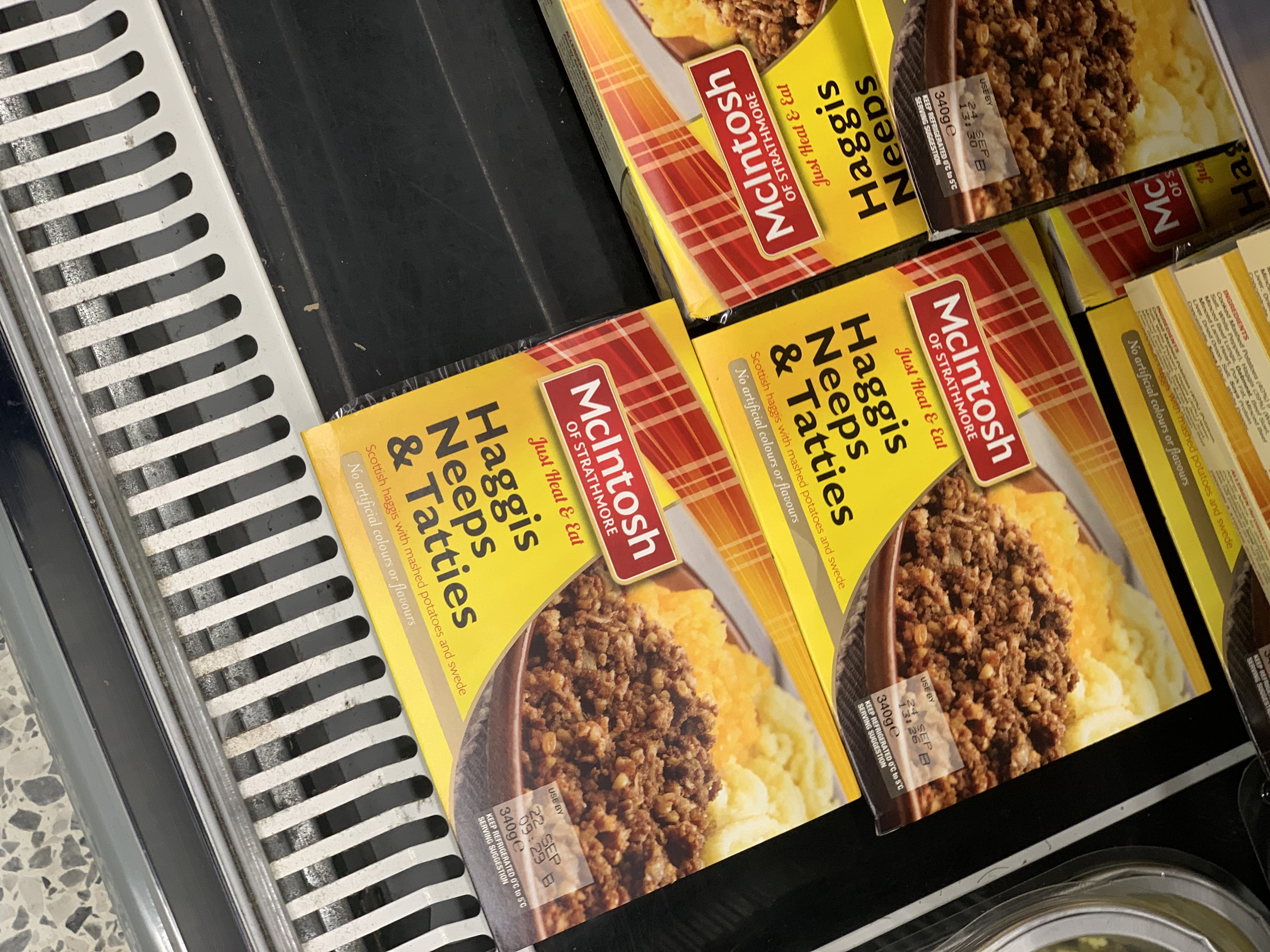 TV dinners for the microwave – travellers should expect different fayre north of the border. Shopping becomes important when on the road. Even more important when it’s dropped to 2 degrees in your tent* and a fan heater is top of the list. Asda to the rescue.
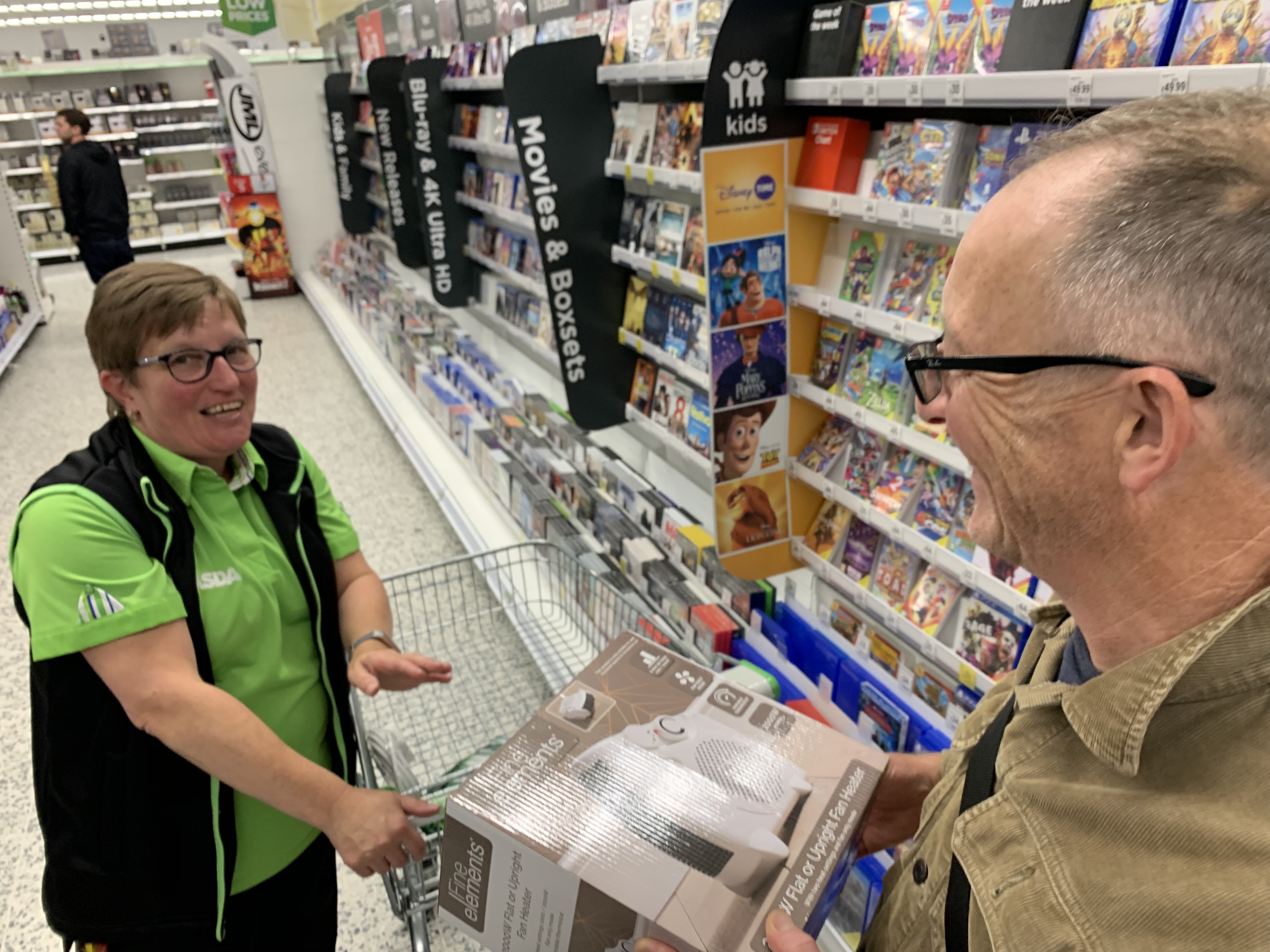
[* Note – we are a travelling couple of men who DO NOT share my campervan so obviously my compatriot is out of the vehicle after dinner and not allowed back in until morning tea.]
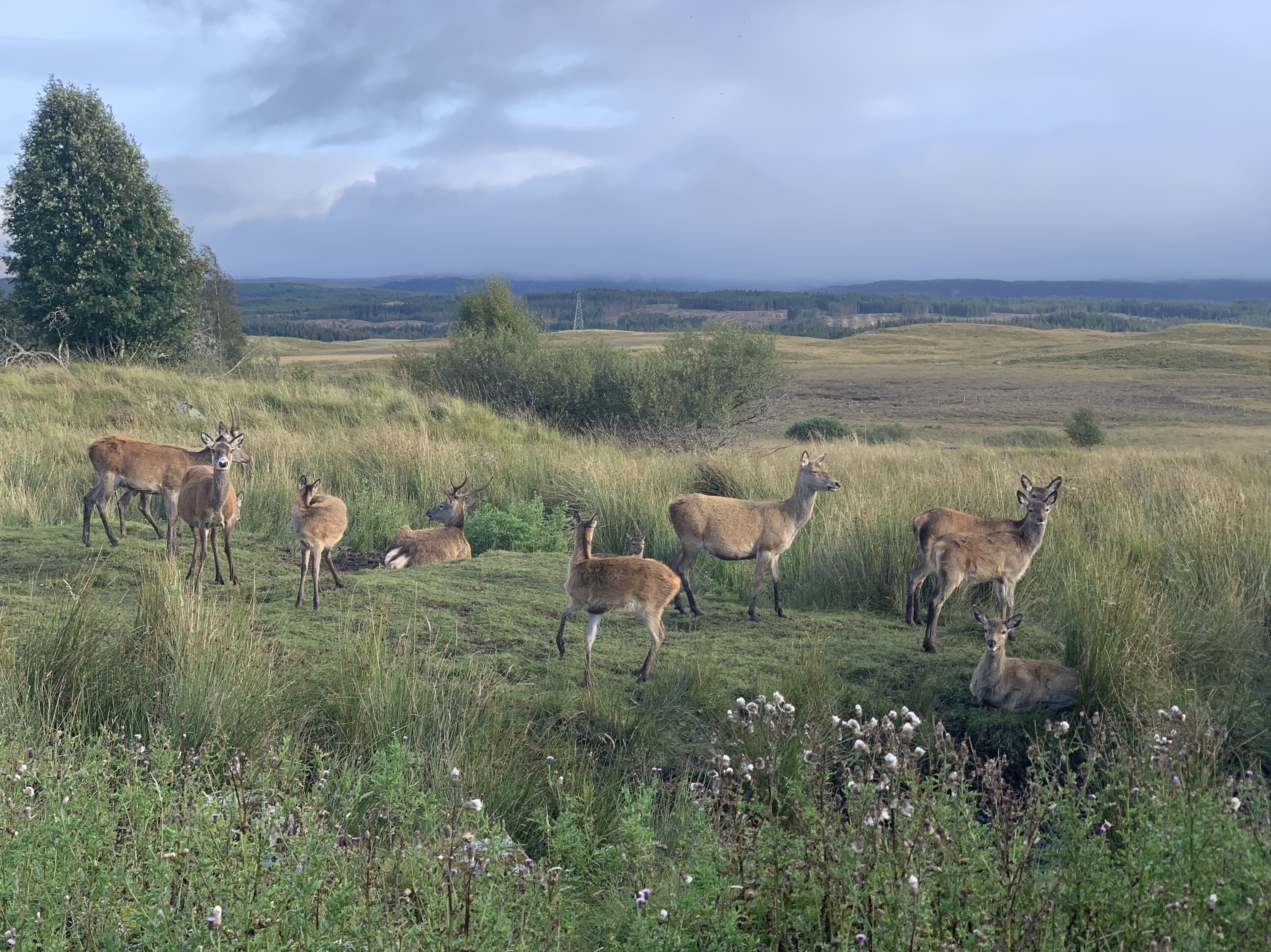
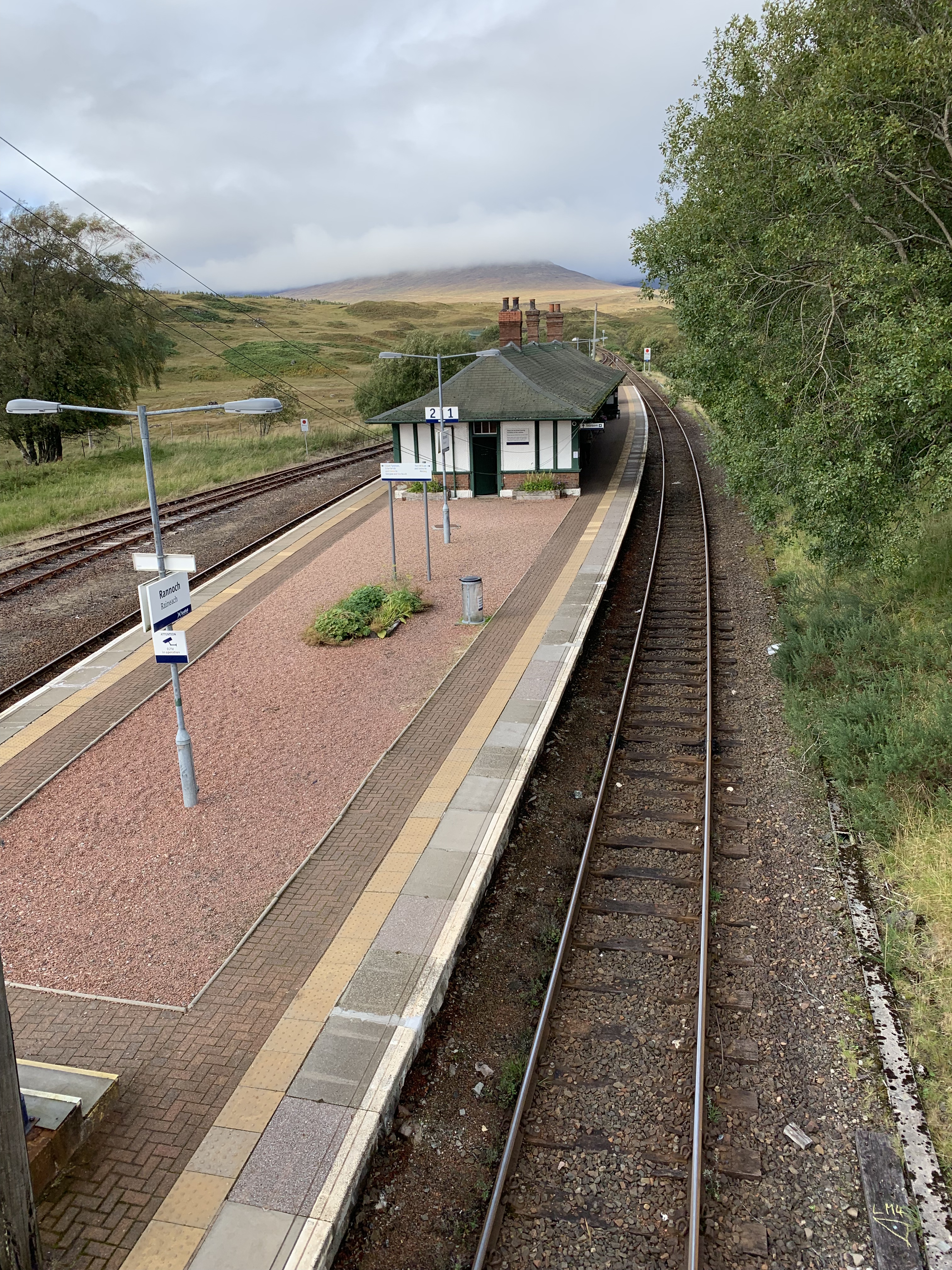 Above : The longest cul-de-sac in Britain. Rannoch Moor is the UK’s most remote rail station – some 25 miles up a single lane track. Originally built to plonk the Hunting-Shooting-Fishing fraternity into the wilds of Perthshire, today it attracts the odd sightseer, day trippers from Glasgow and adrenaline-pumped cyclists who race off into the seemingly endless wilderness.
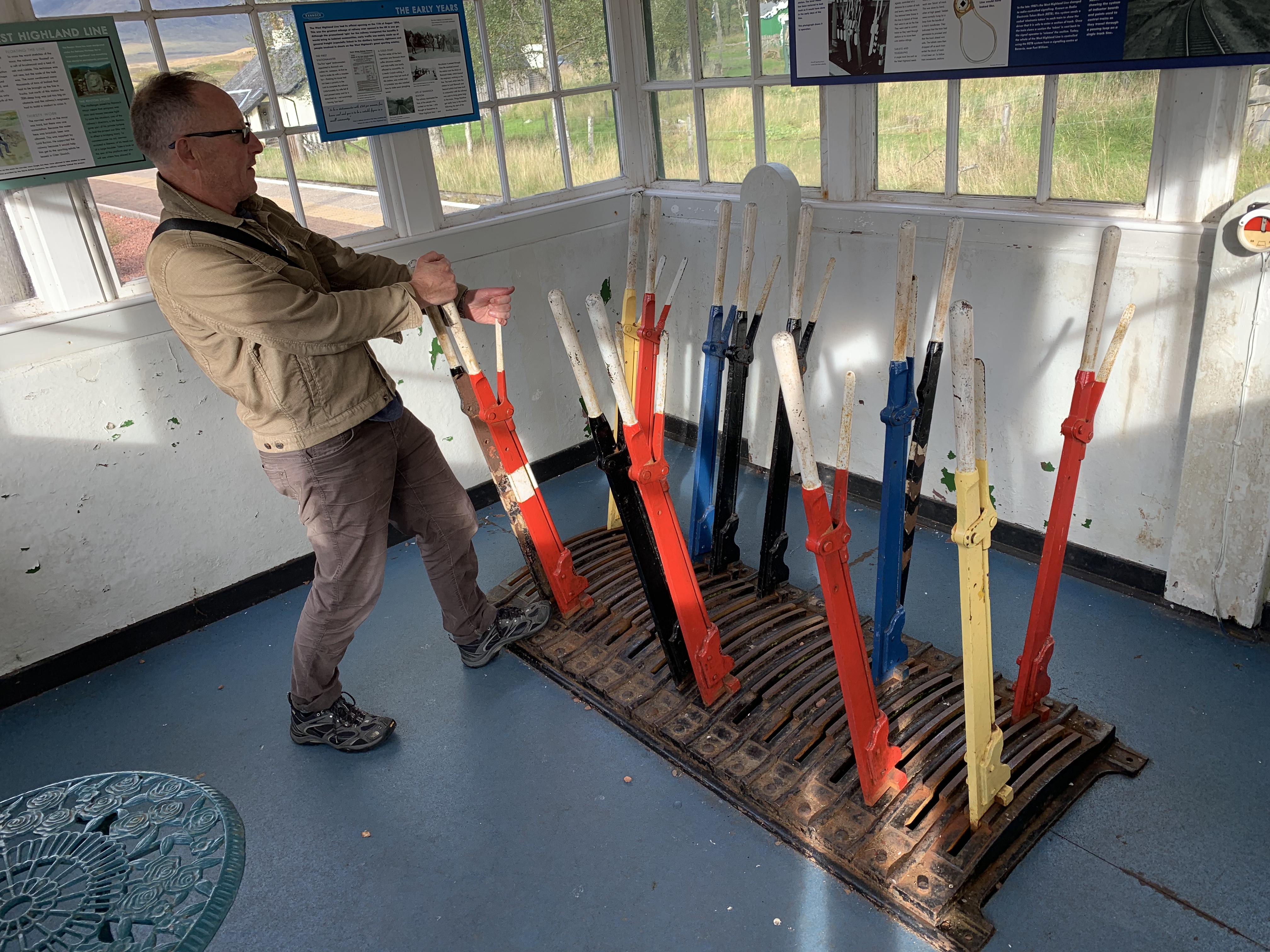 And a shot of someone who knows what to do. Not an act of hooliganism by the Fat Controller, just Terry play-acting in the old signal box.
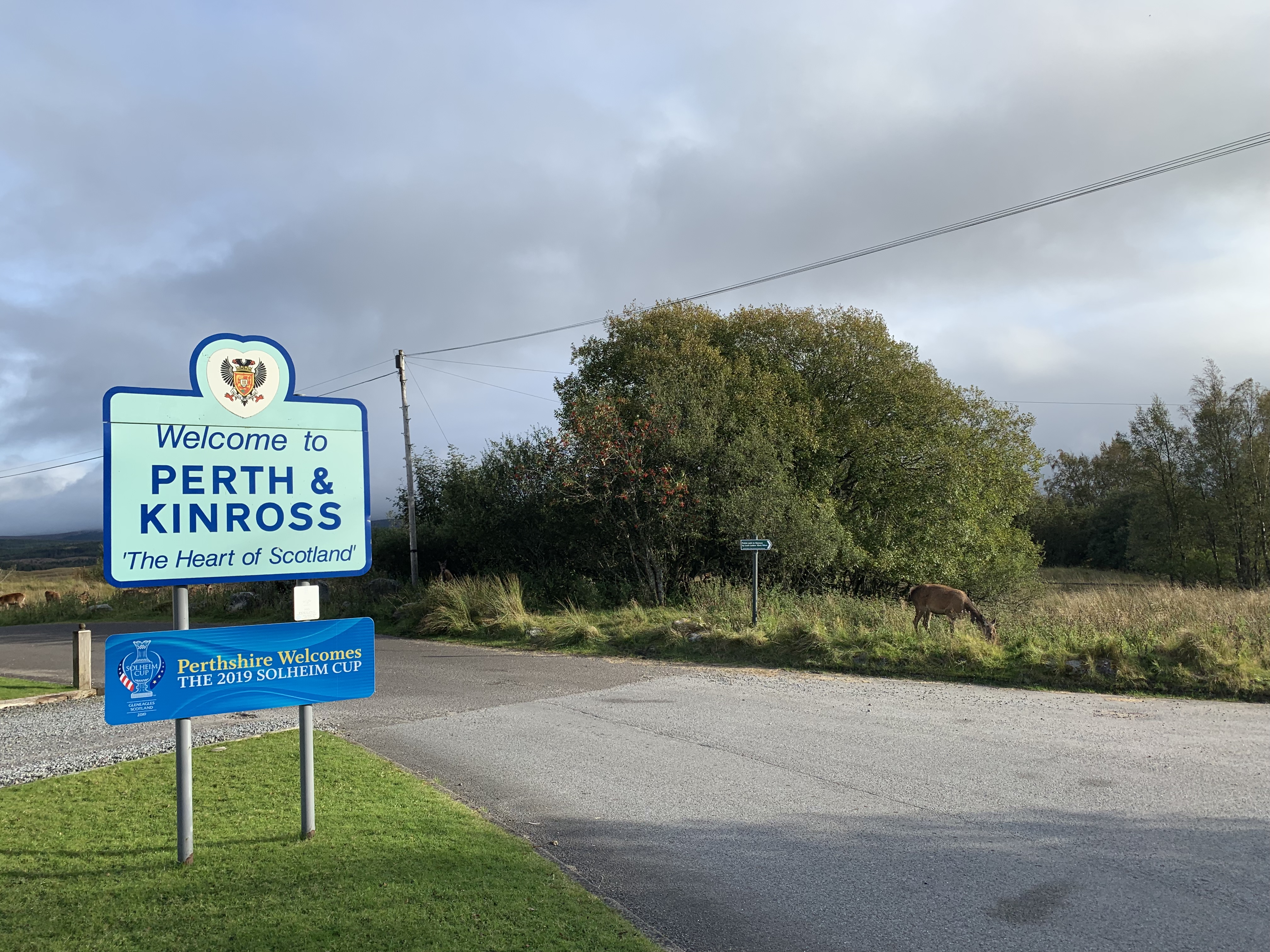
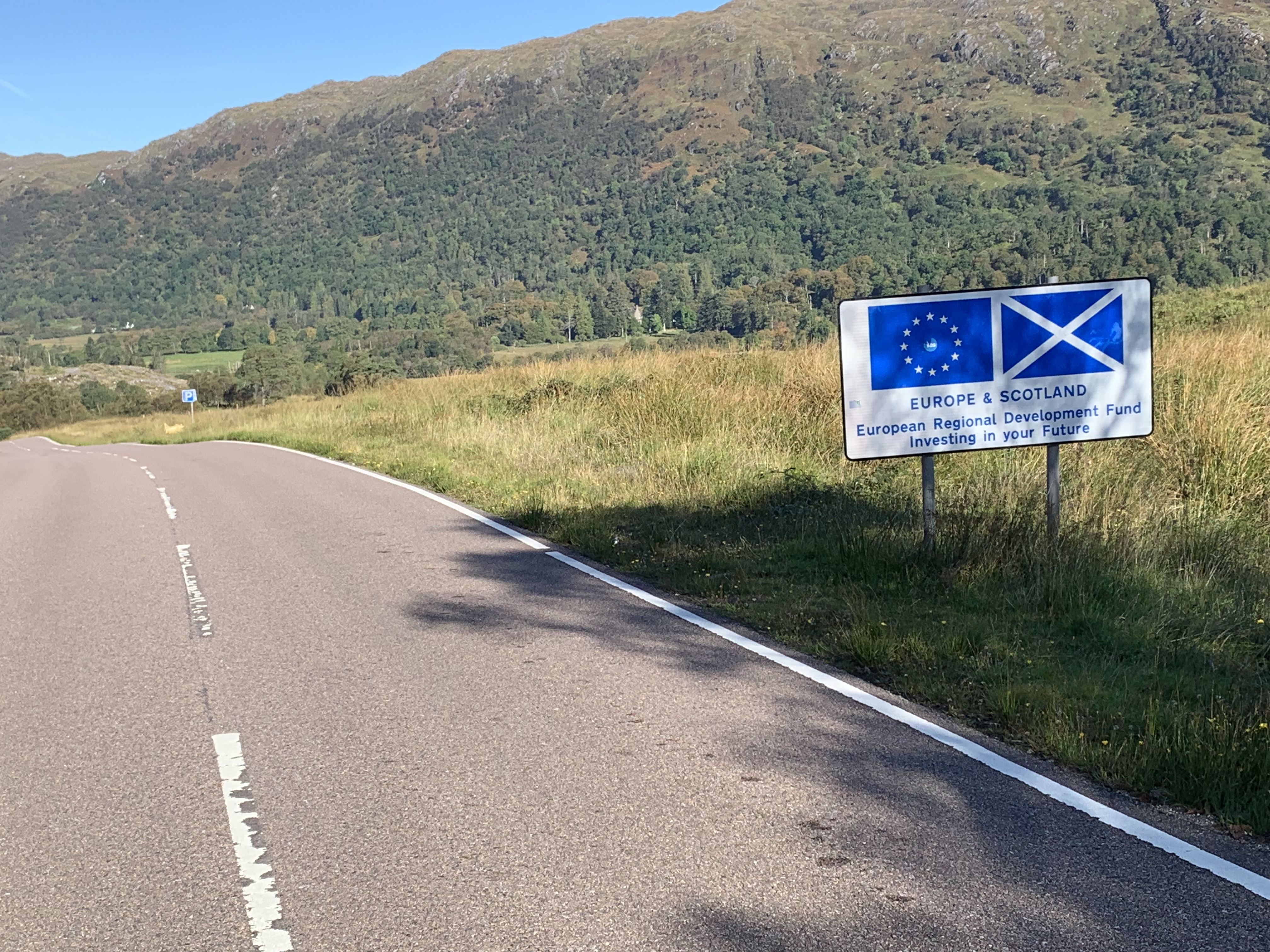
 Above and below: Reminders of where we are…
 Below: Loch Rannoch looking towards the distant Rail Station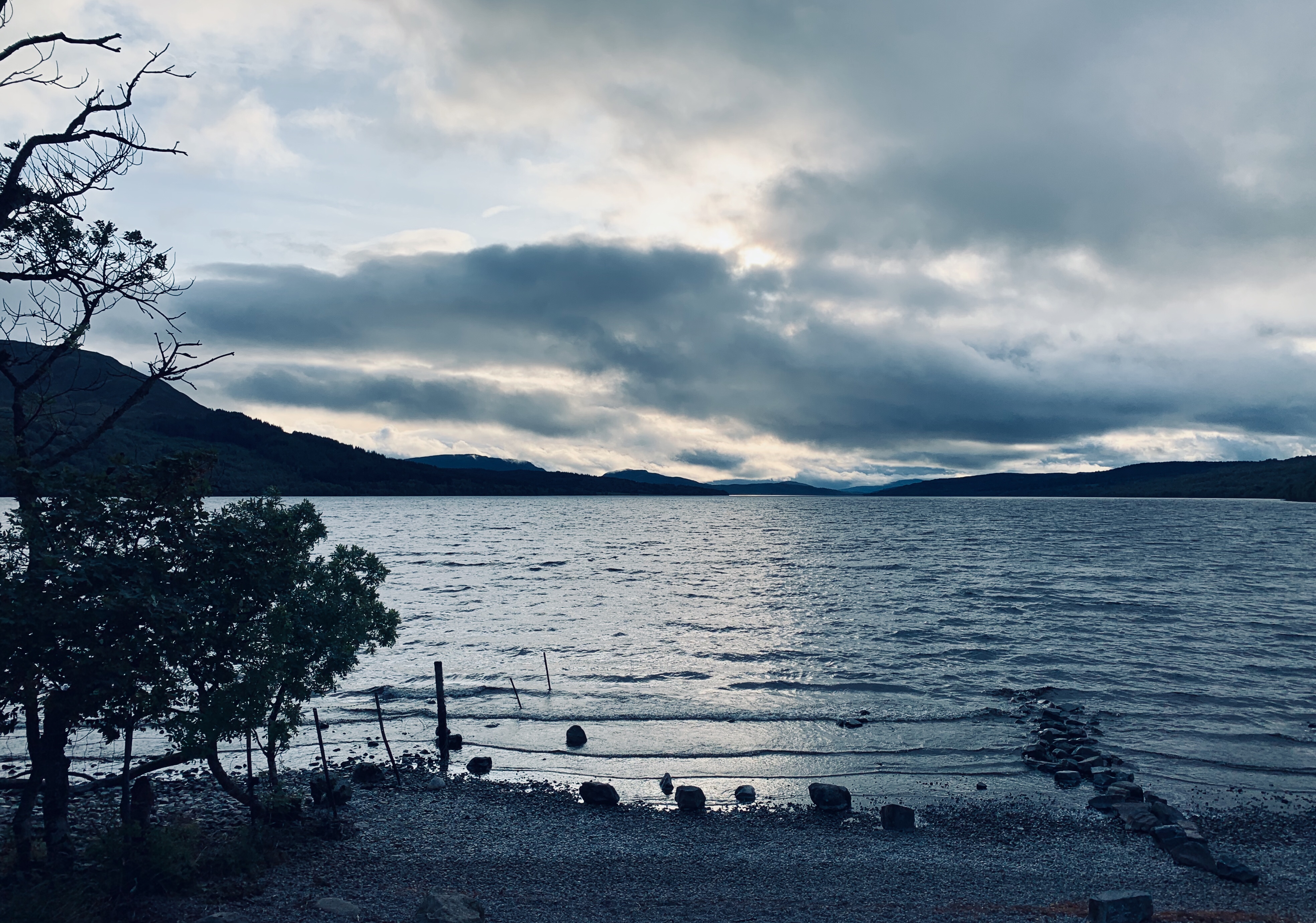
On the road. Coffee disaster? Not at all. Air press coffee wafts its scent across the squirrel woods above a massacre site.

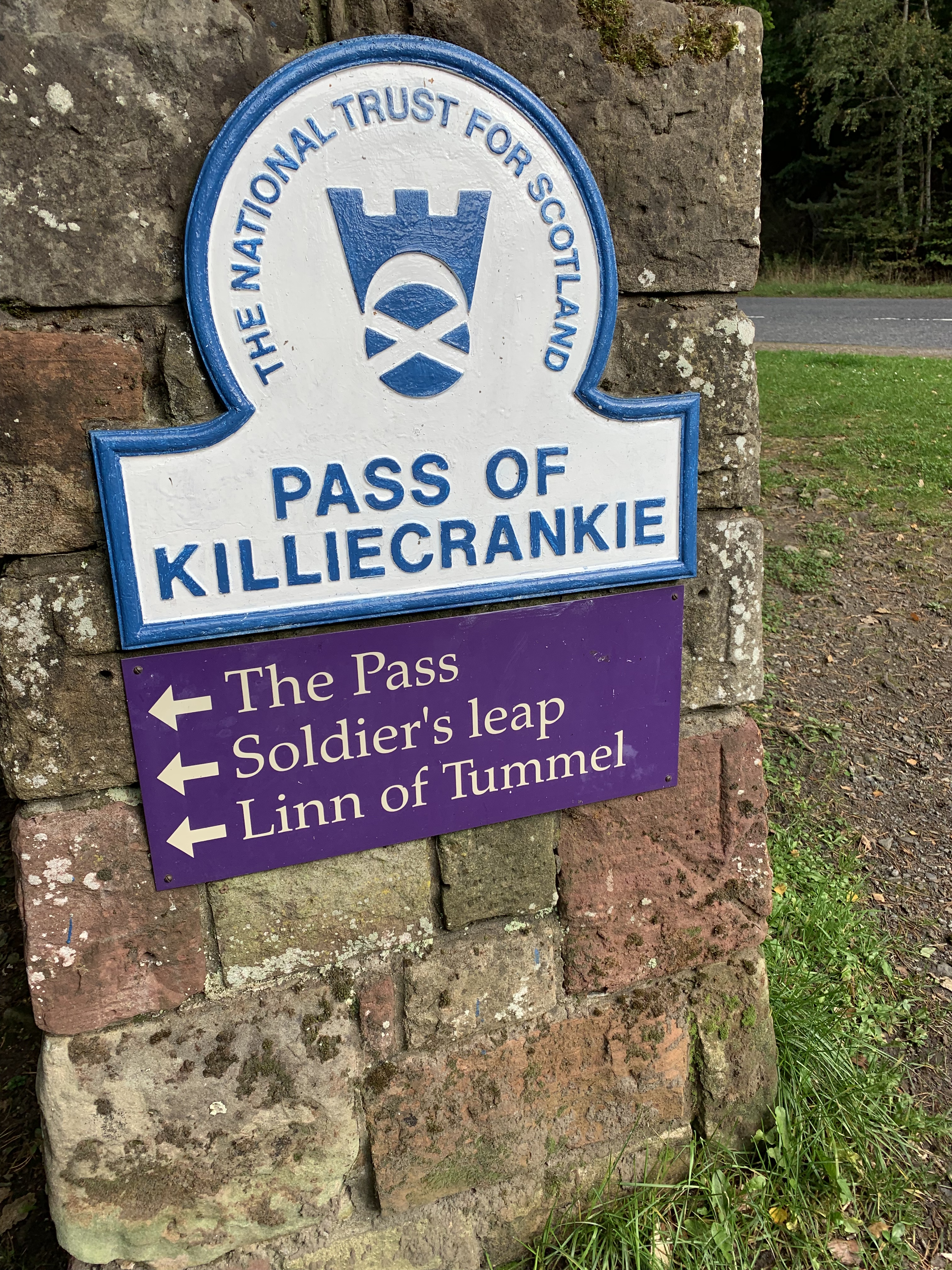 The Pass of Killiecrankie. The location of one of the bloody battles in the Highland story. Nowadays there’s the obligatory Visitor Centre; chance to buy Tartan or Shortbread, and of course an invitation to stay longer than you think necessary.
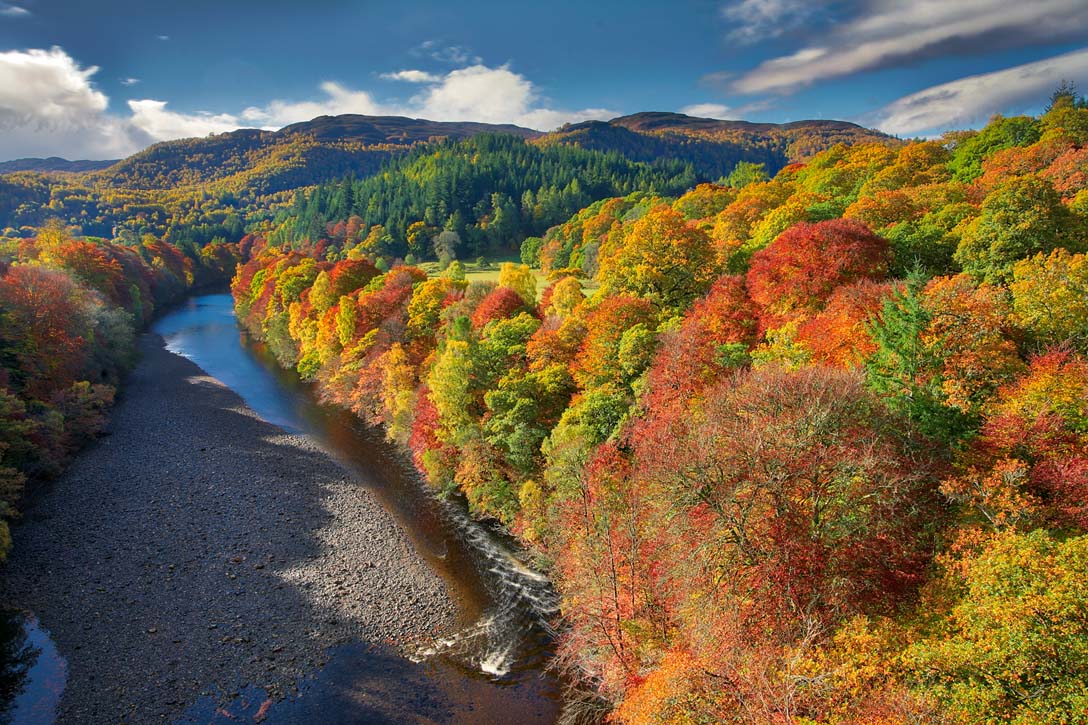
Below: A shot taken from the high bridge at Killiecrankie (October 2018) in full autumn colour.
 Next, over the £8 Corran ferry crossing – a distance no further than a good shot with a golf iron, and we were on the Ardnamurchan peninsula; some 10 miles south of Fort William.
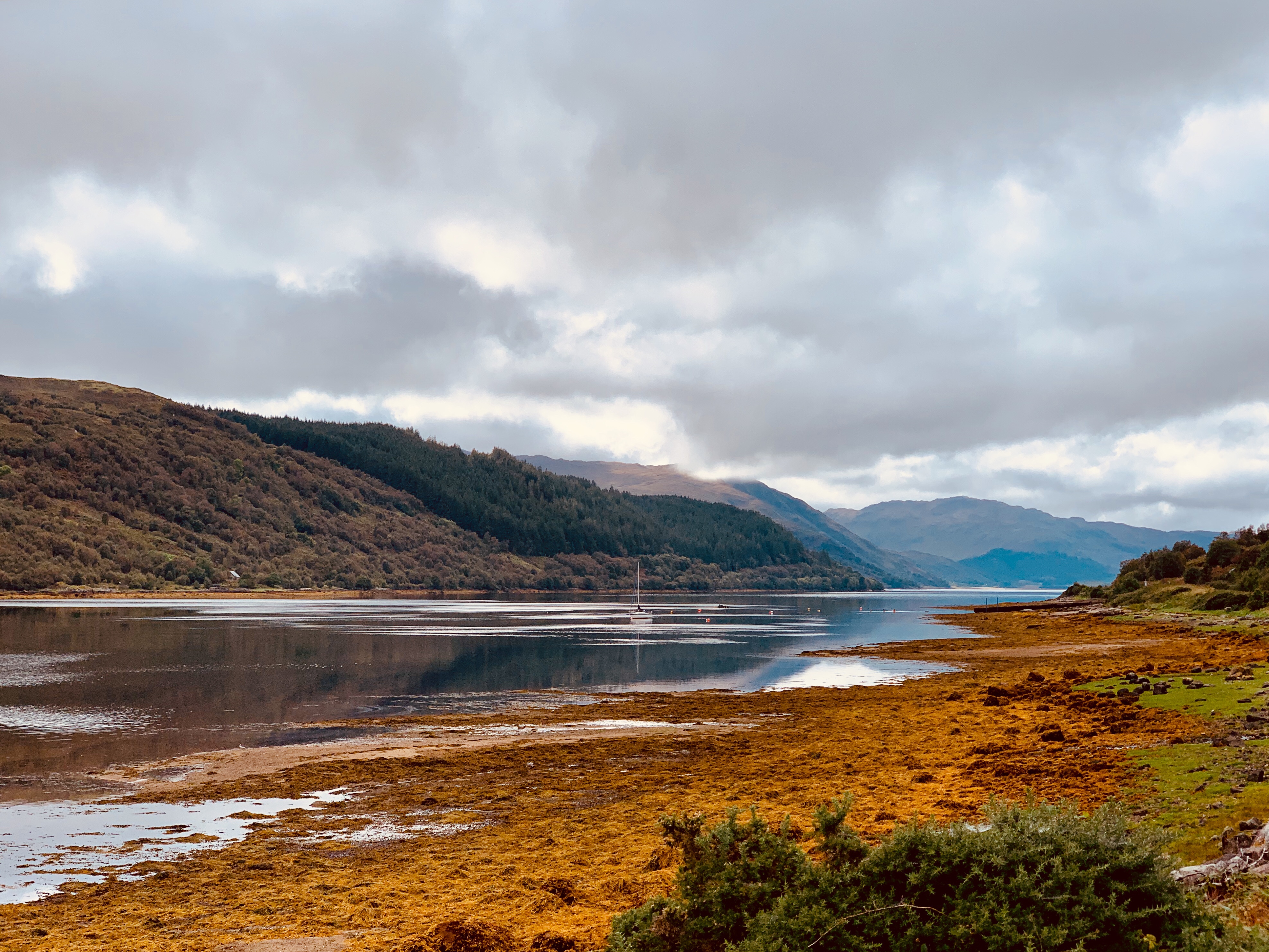
A winding ‘passing places’ A-road took us into a wilderness of red squirrel woods and hidden crofts. Progress slow. Above: Loch Sunart, which promised otter sightings but sadly didn’t deliver.
Below: The site at Ardtoe. A cowpat field with a functioning Portaloo.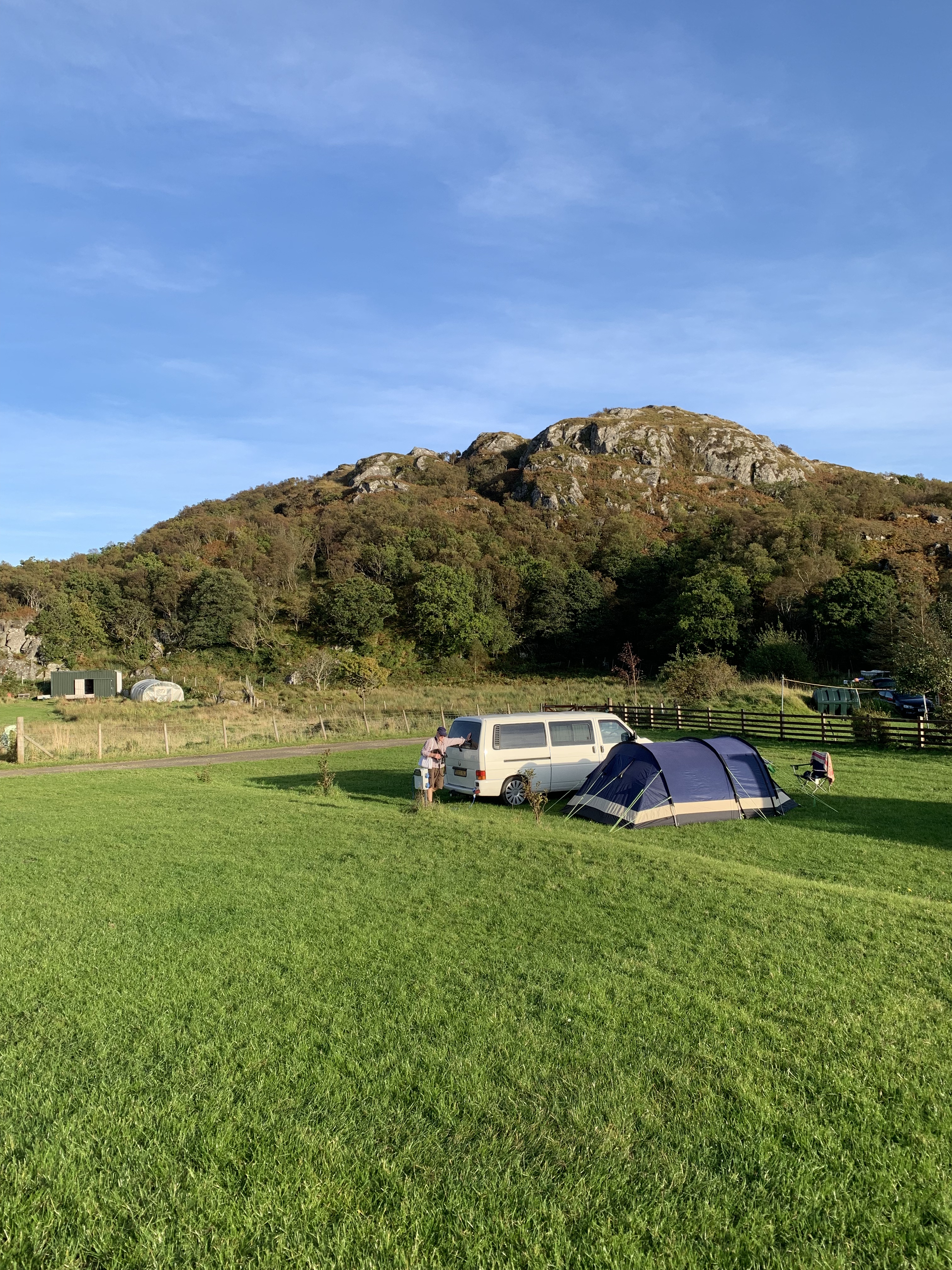
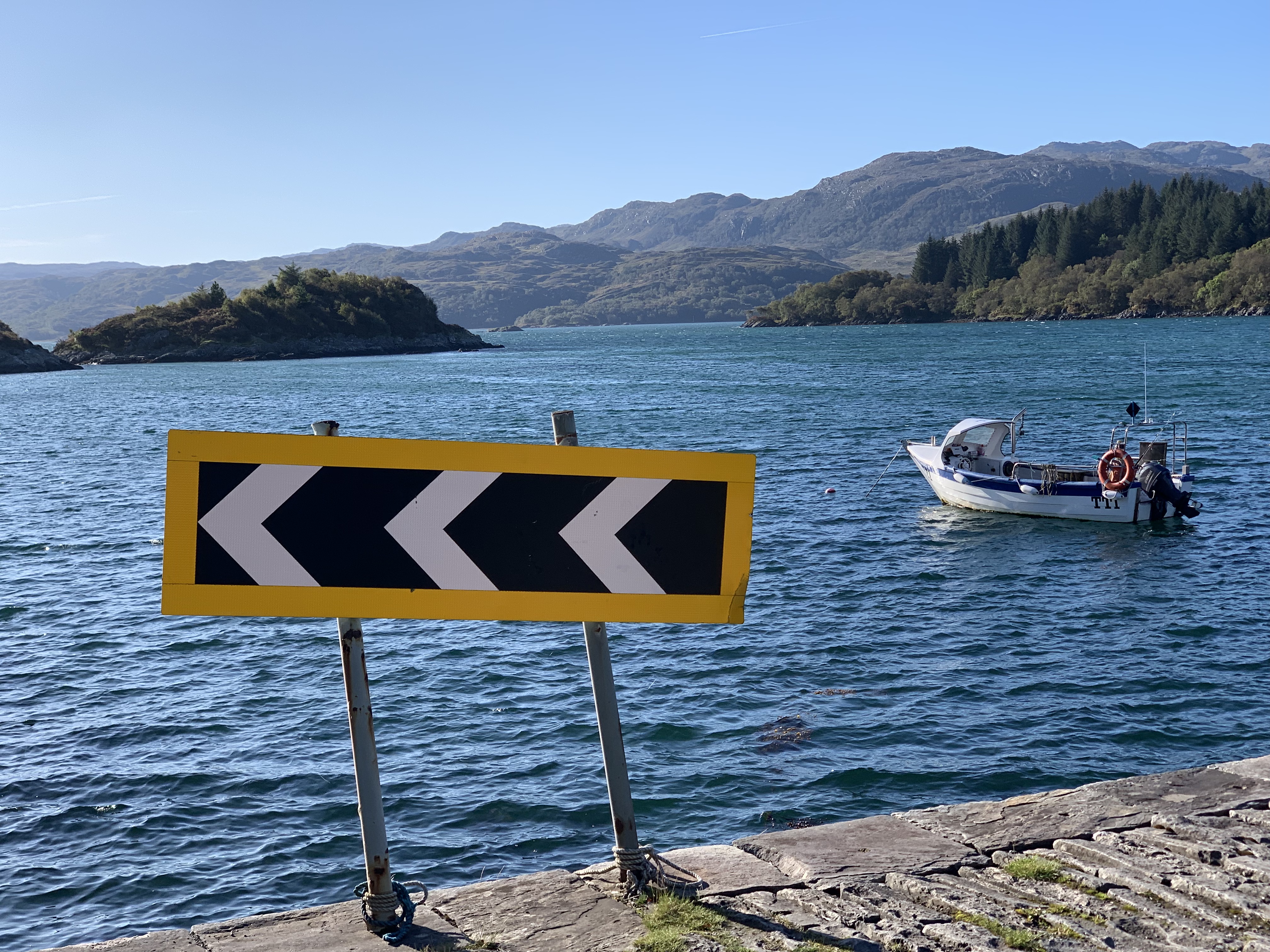 Things could go wrong if you miss the road sign at Ardtoe jetty.

Above: If you collect floats, there’s a bountiful supply along the shores of Corran.
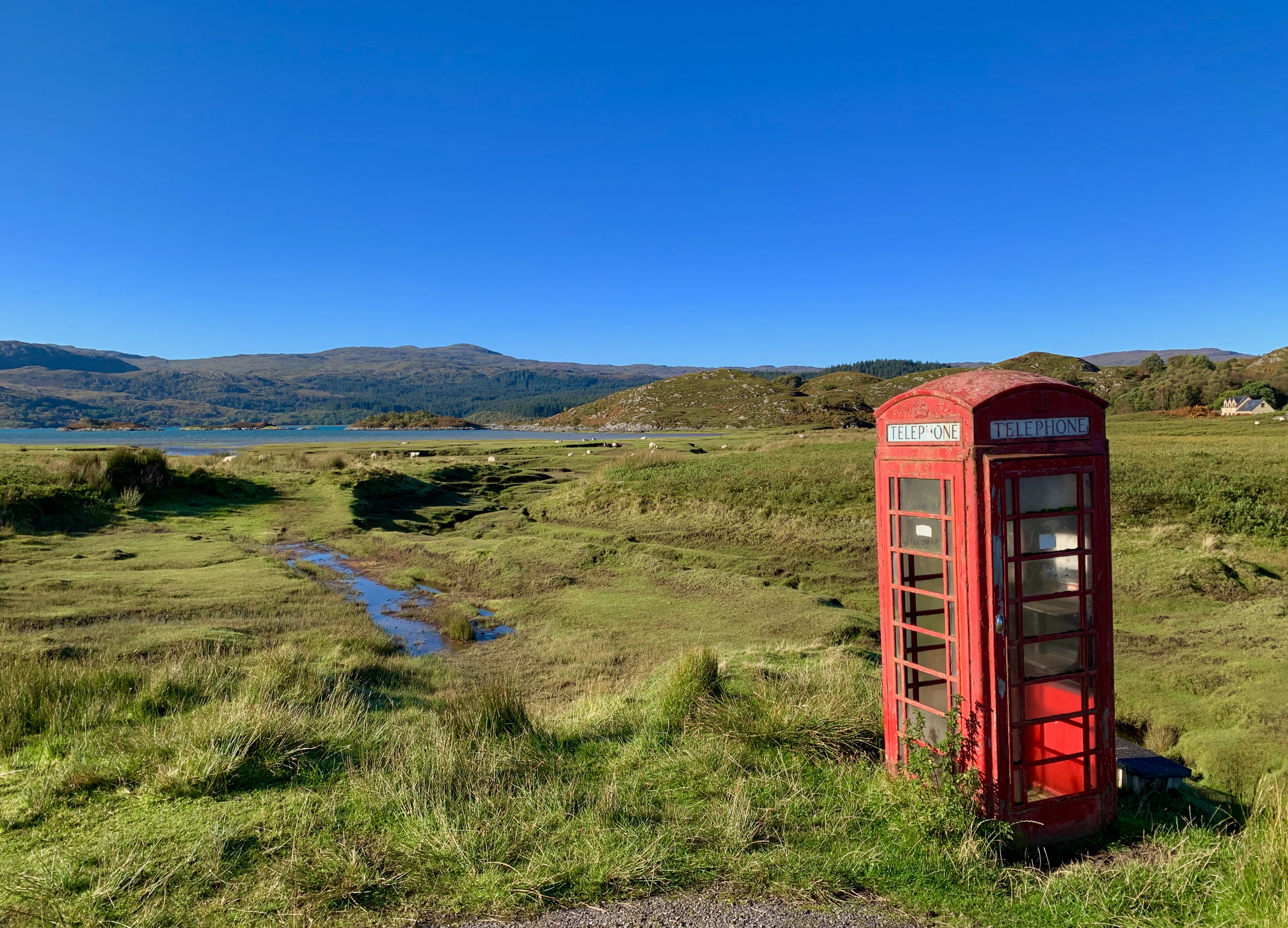 An iconic K6 phone kiosk stuck out in the middle of nowhere. 30 years ago a lifeline in a small community. Nowadays, here on Ardnamurchan, boxes don’t even curate your old ‘best read’ paperbacks. To my mind, this Sir Giles Gilbert Scott masterpiece is a ‘collectible’ waiting to get stolen.
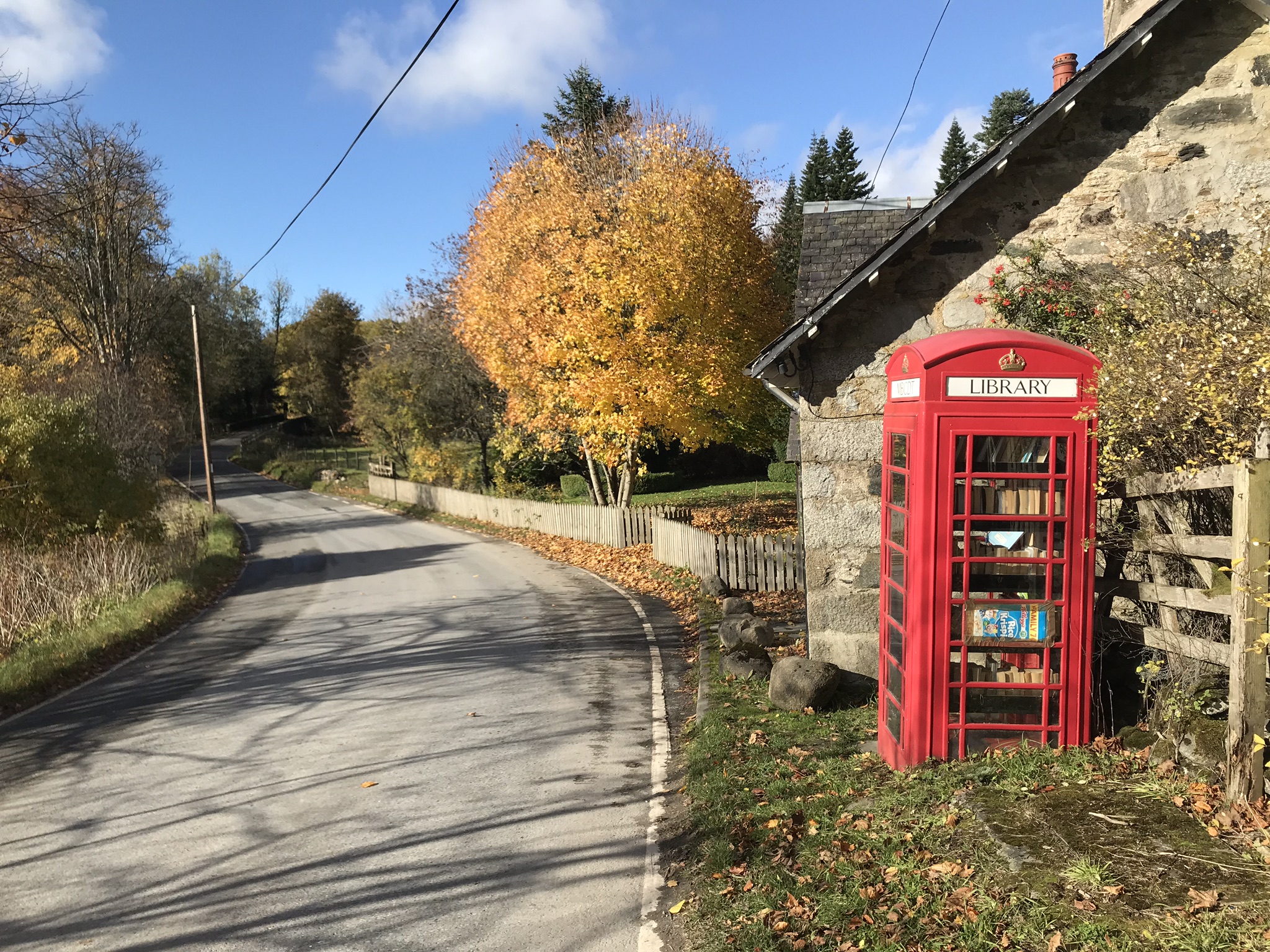
Below: Elsewhere in Perthshire, Agatha Christies are stuffed in a box for safe-keeping.
 Below: A lasting reminder of what Britain invented in 1840, and what survives in a similar form today. E2R postbox in a remote village that now enjoys a Fibre connection. A remote and almost recondite motif of the once magnificent ‘GPO’.
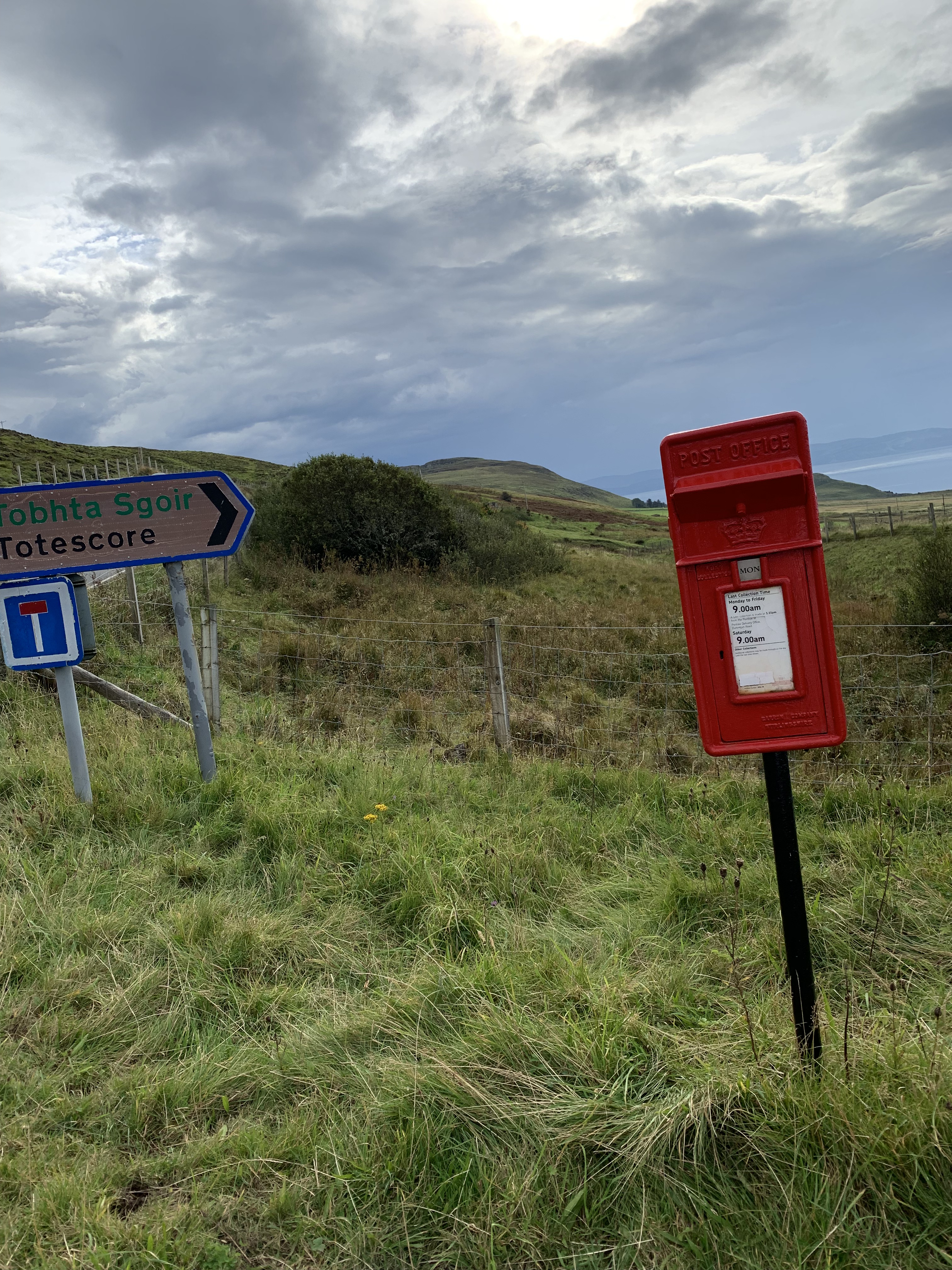

70 pence to send and receive anywhere in the UK. Bears thinking about.
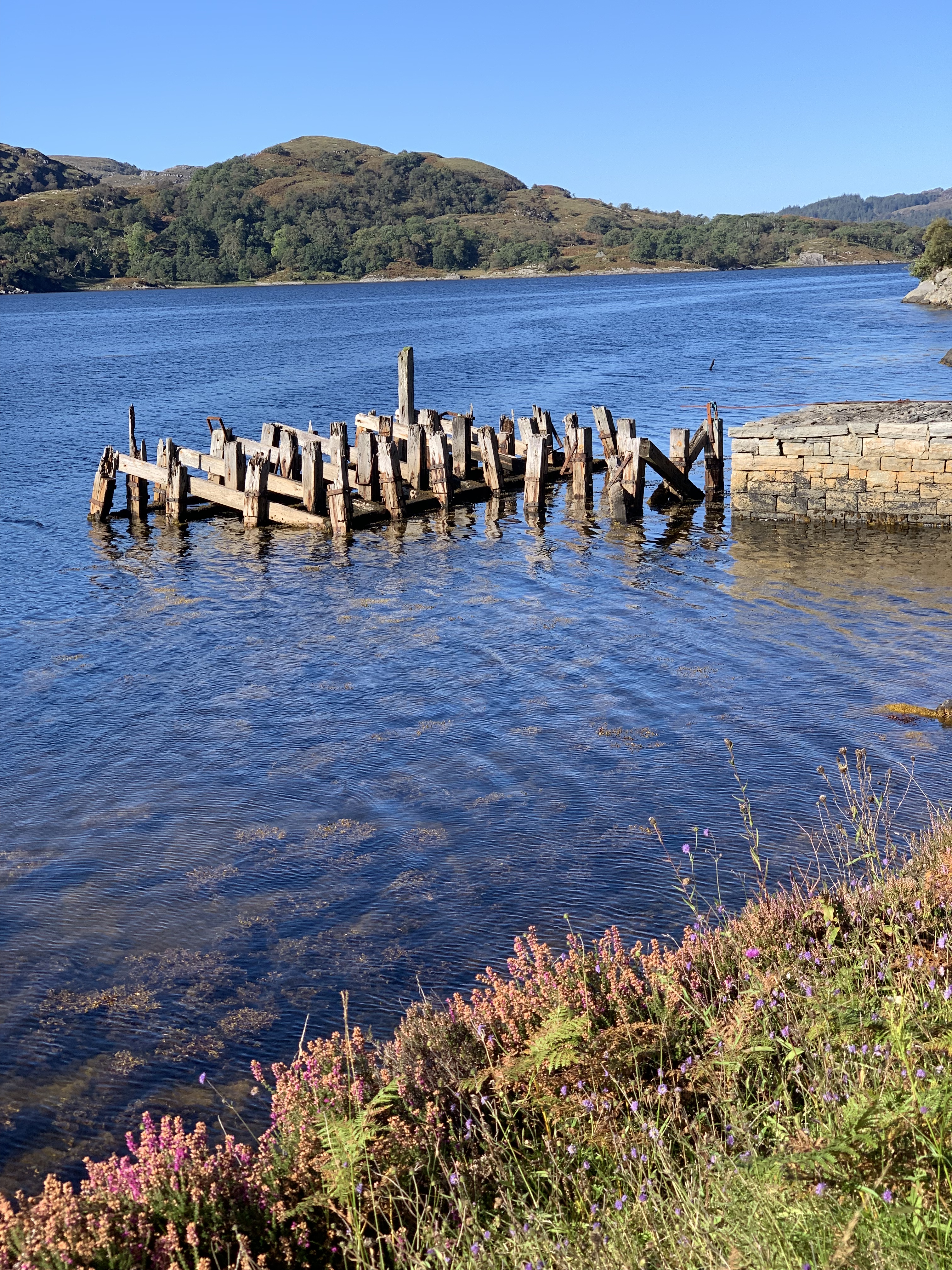
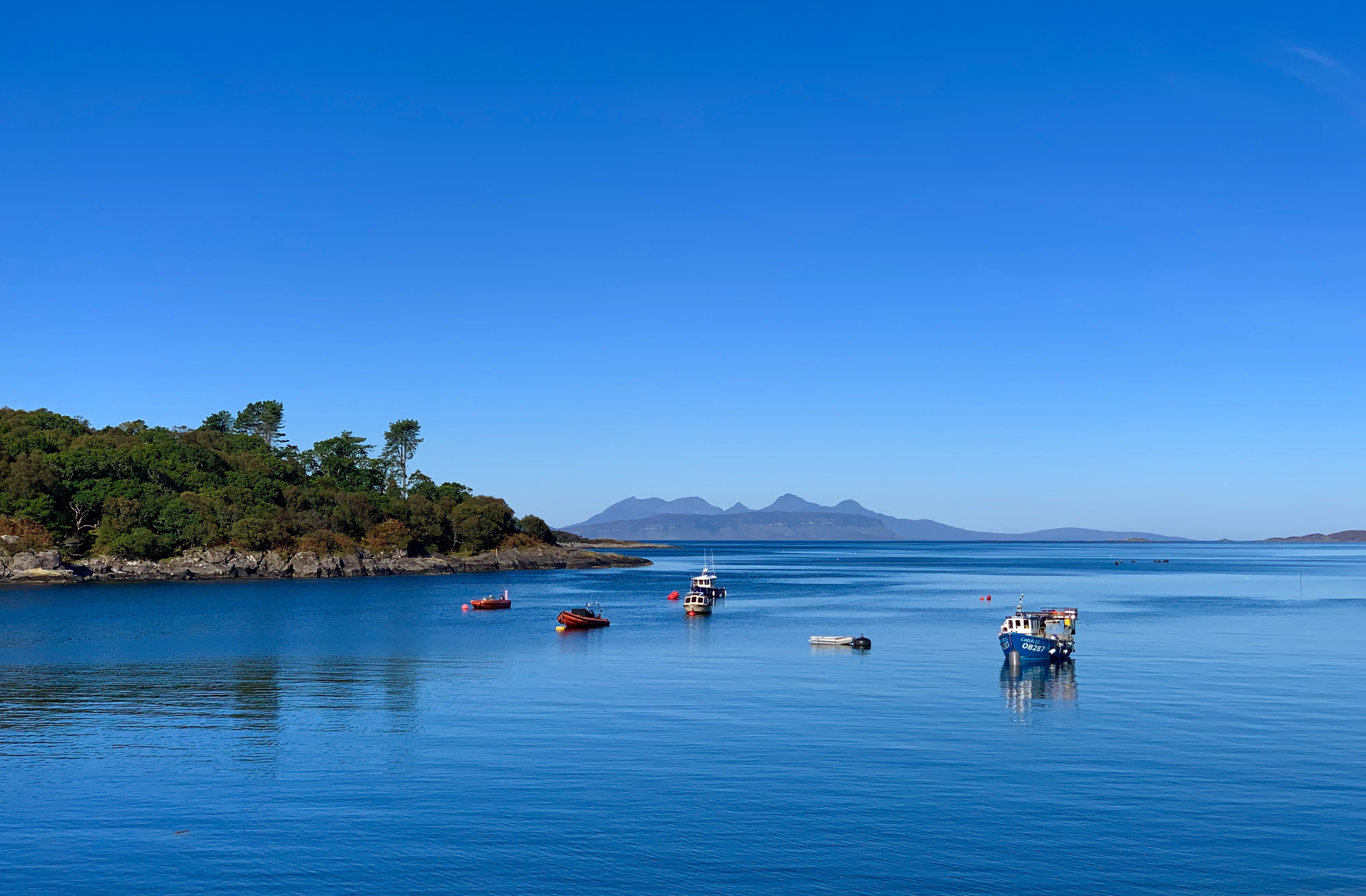 Views along Glenuig and (above) a cloudless day makes the isles of Rhum and Eigg look like they are sitting on a sheet of polished glass.
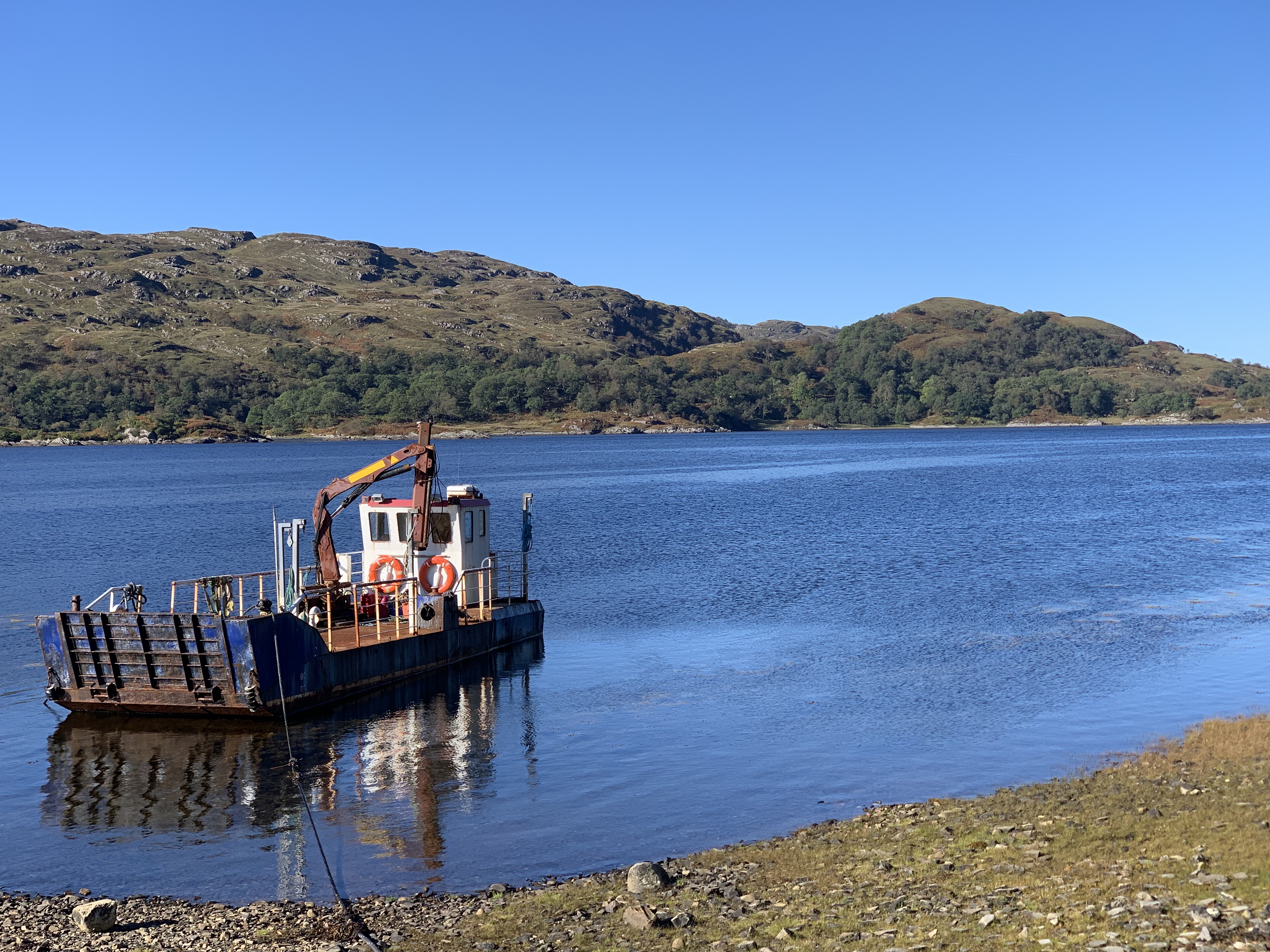
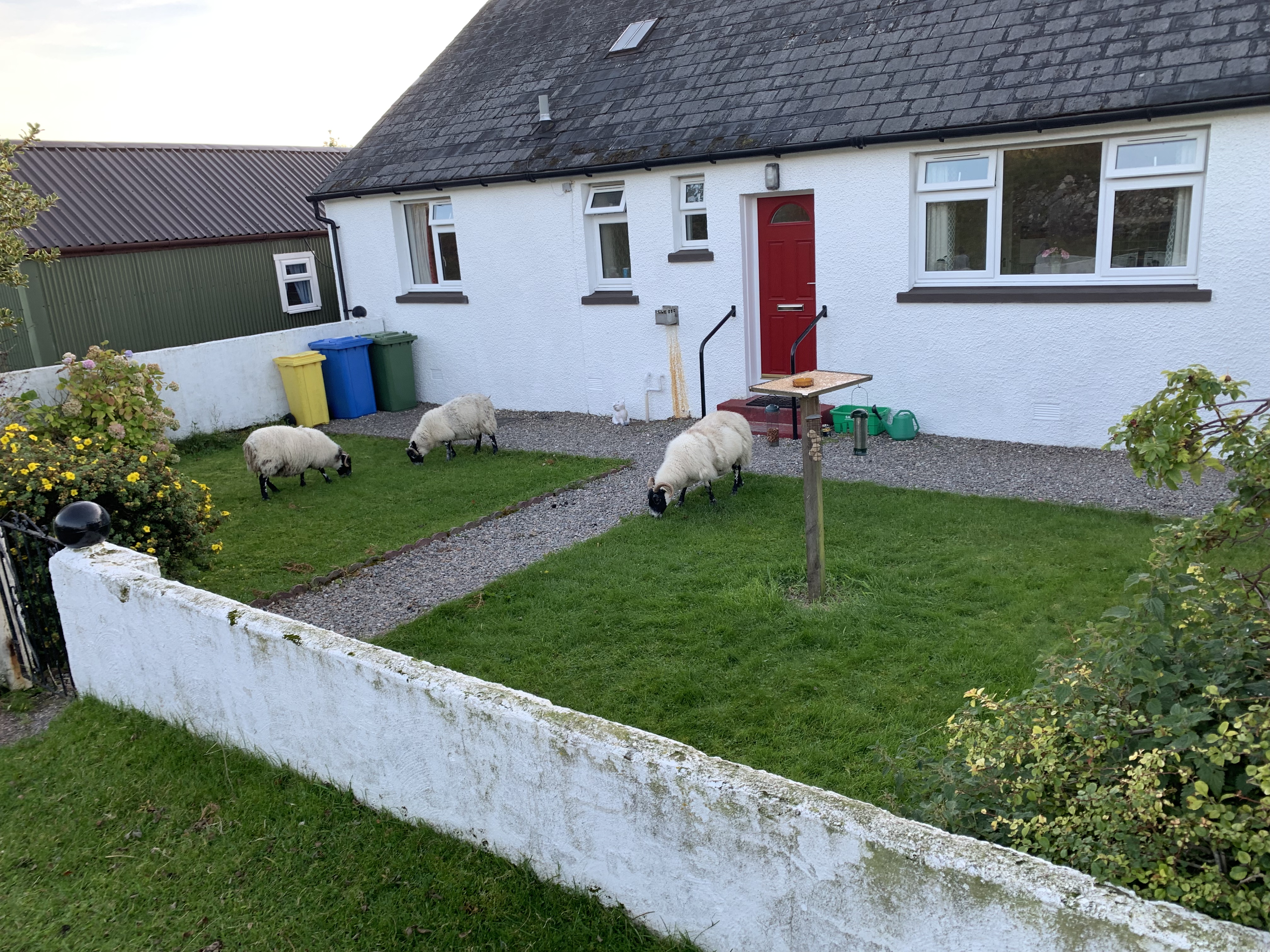
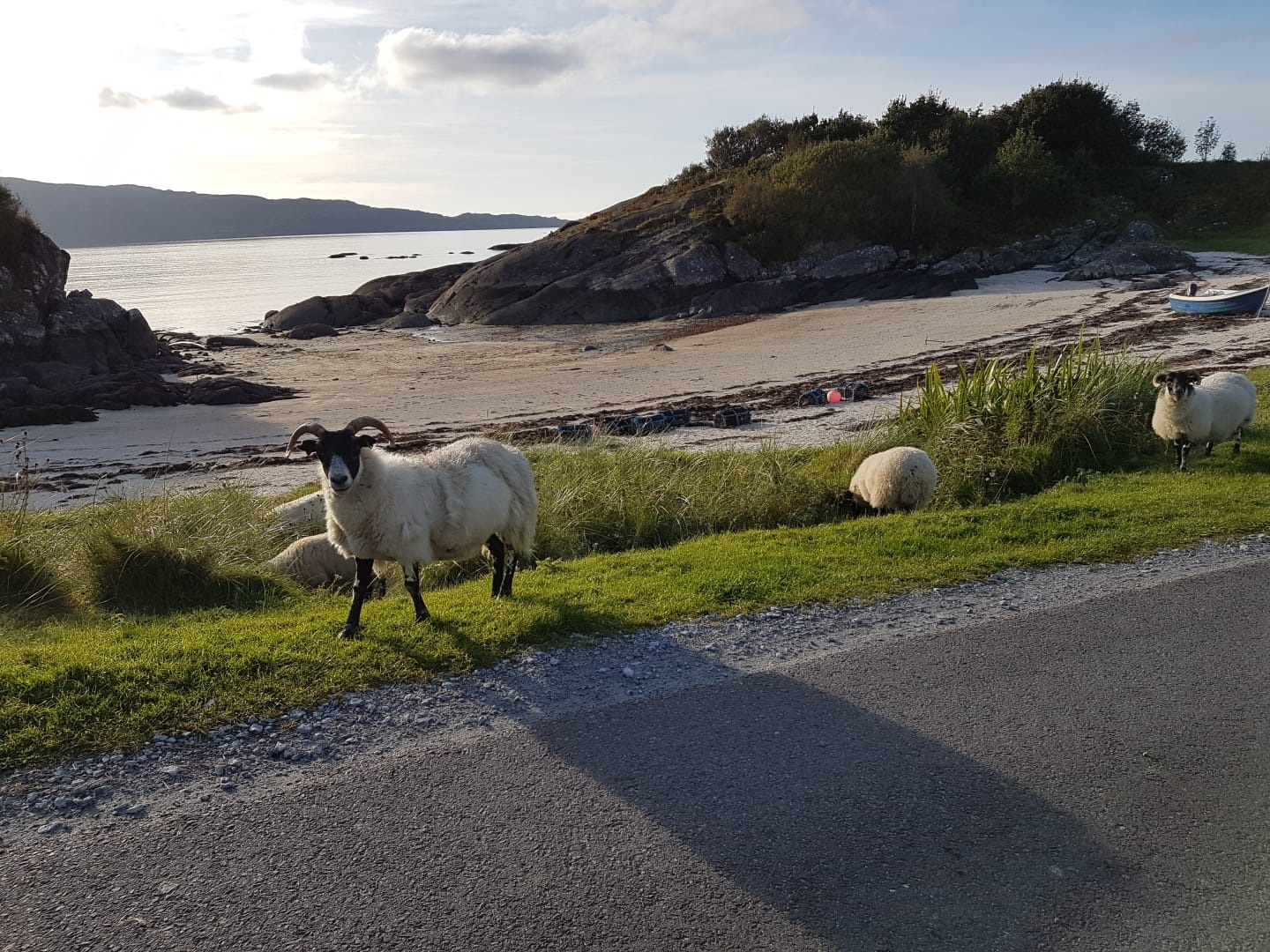
Below: Animals along the way. Lawn mowers, cow pats on the sand, fleeces and a very male bull.


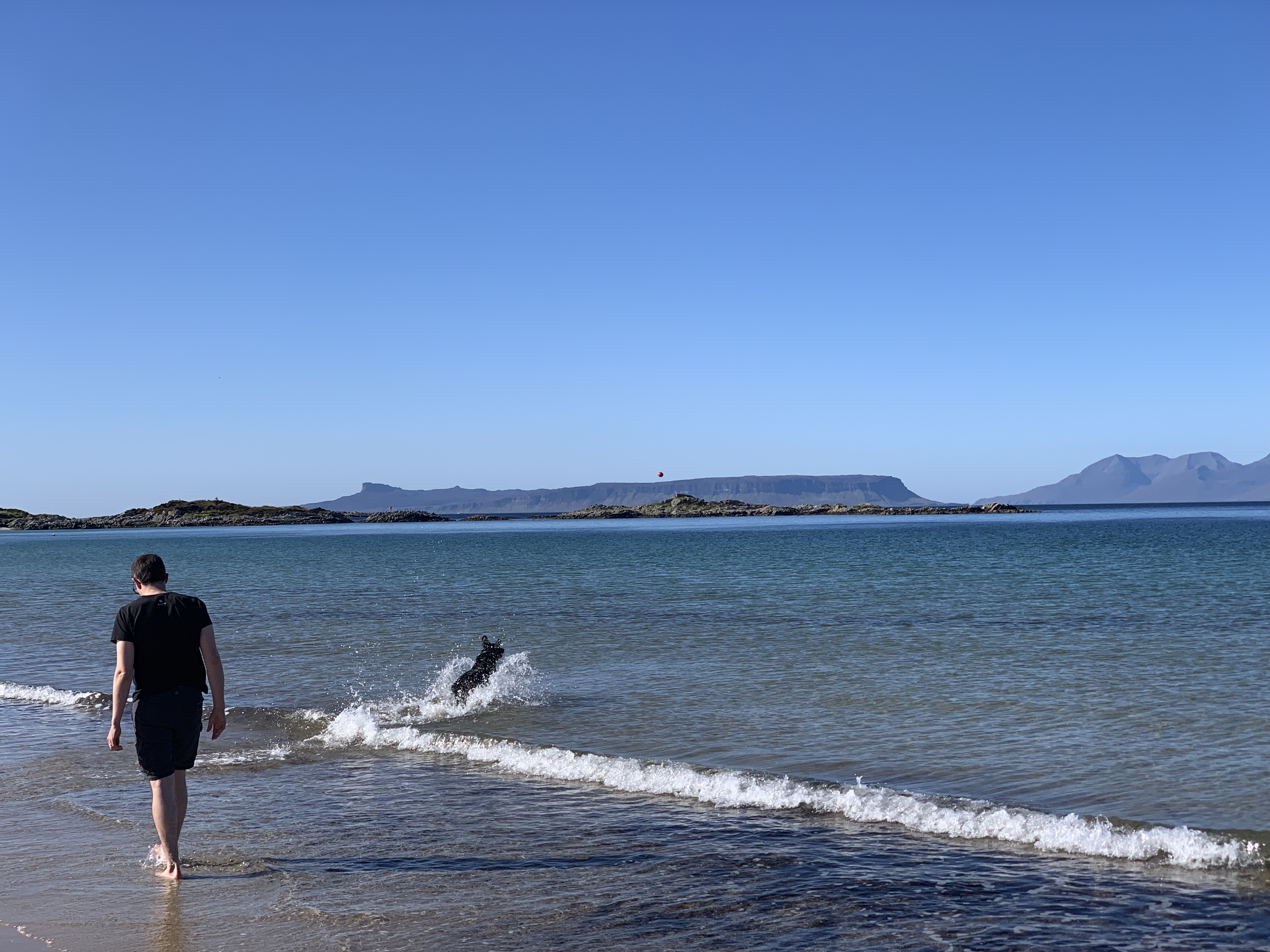 Above: A dog is no guide as to how cold this water actually was. Ball chasing dogs seem prepared to go in whatever the weather. Here the swimmers confirmed that it was cold – possibly 14c at best.

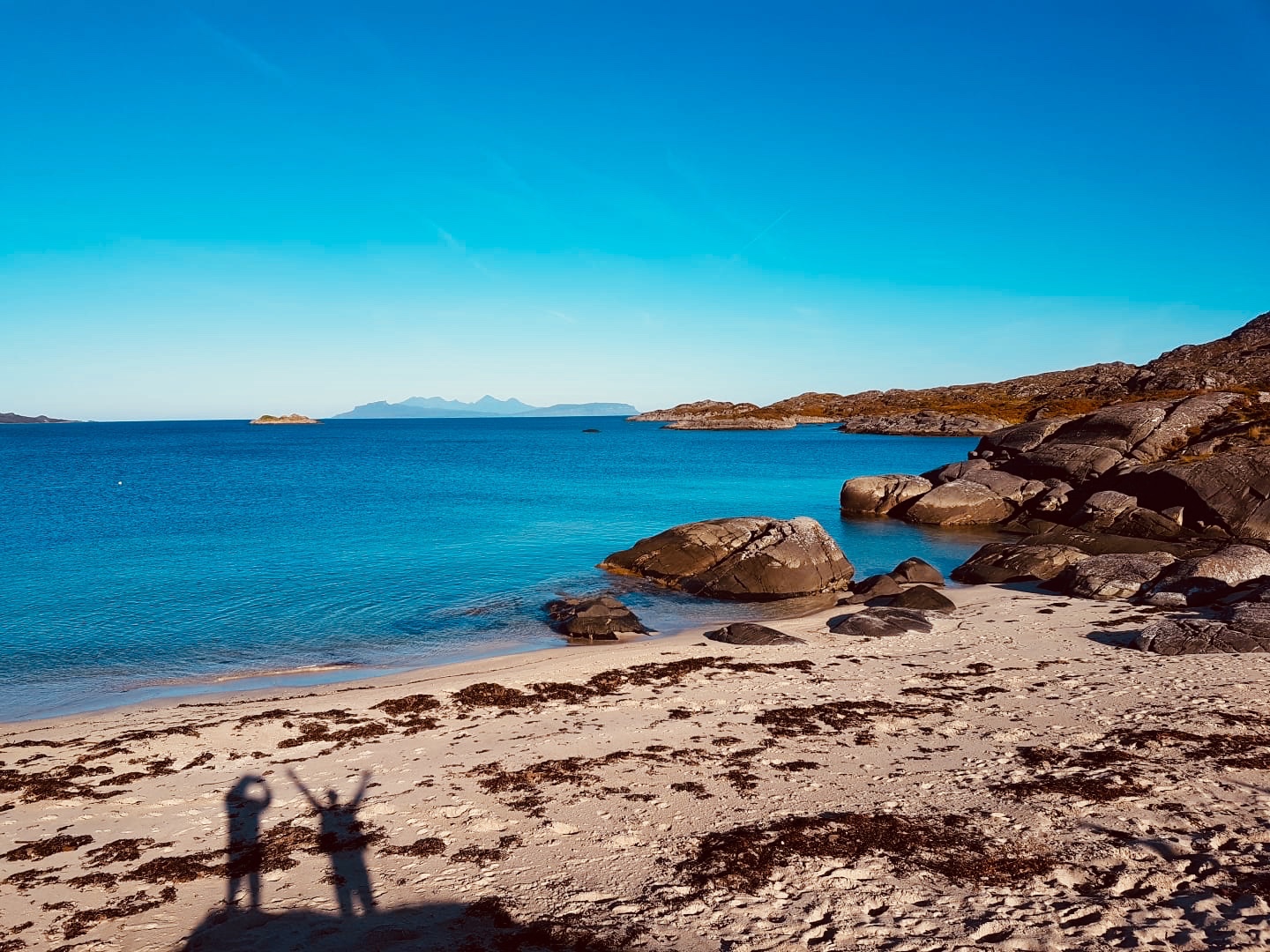 Above: A kind of self-portrait on the beach at Ardtoe. It was here, just short of the tiny island in the middle that we watched a sea eagle wheeling above the inviting waters.
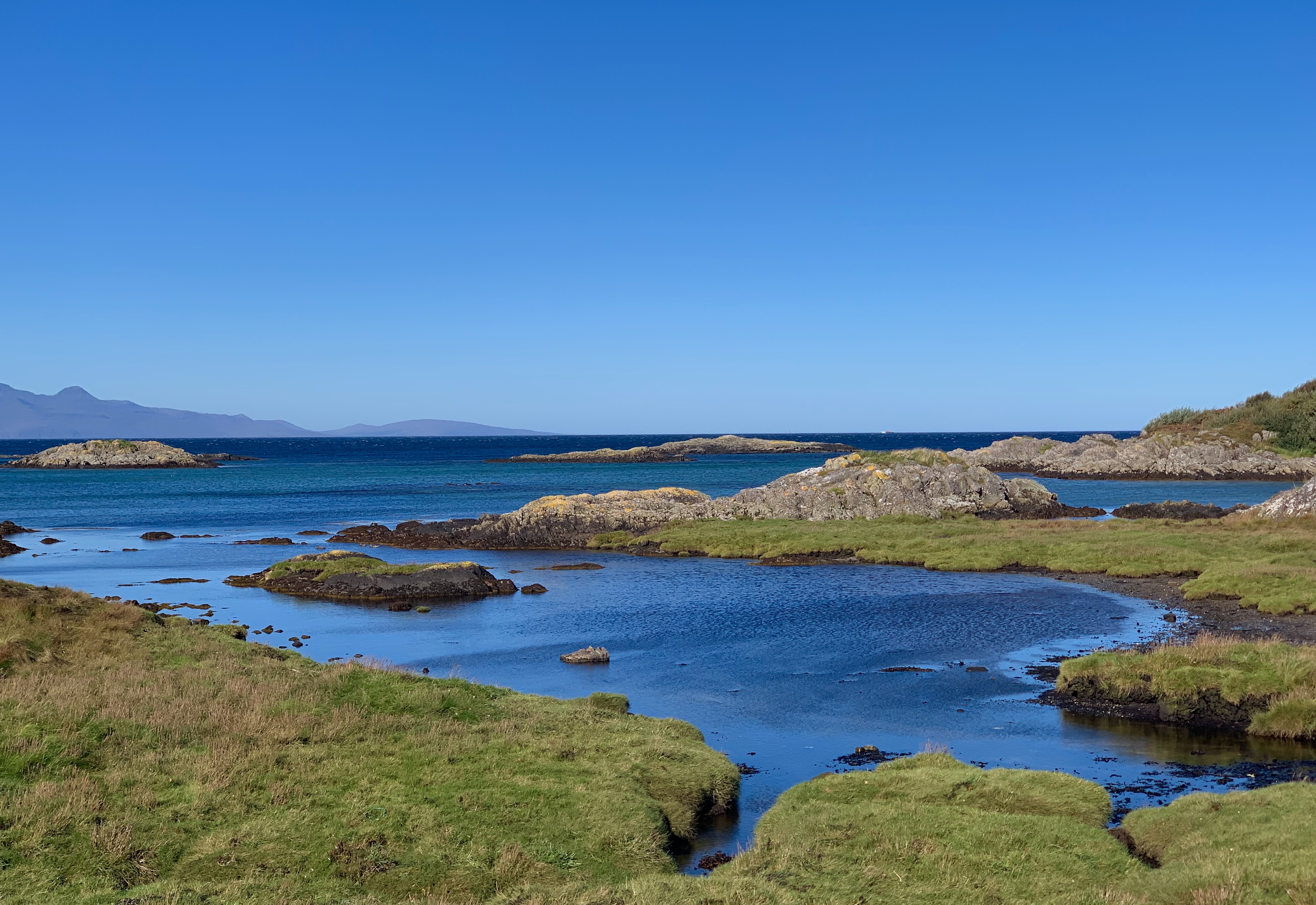 More proof that a blue sky can change the colour of normally grey water. Scotland at its best.
 Hardly an album cover – but now numbers had increased as we were joined by friends before heading to the comfort of the West Highland Hotel in Mallaig. The ‘O’Spencers ‘ were on the road. I guess I was the manager.
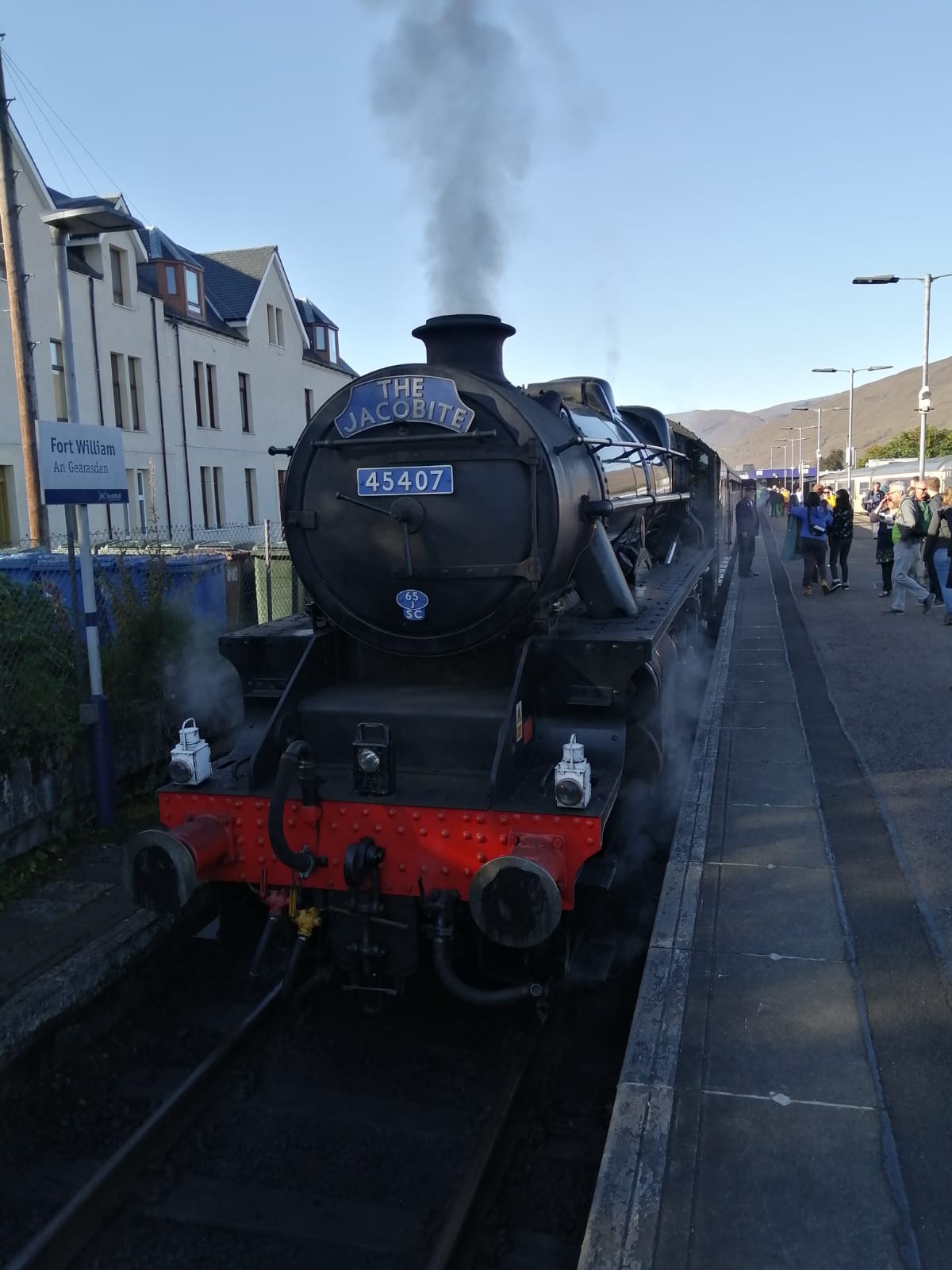 Above: The one reason many people visit this remote peninsula. A steam train. A steam train made famous (if it wasn’t already) by Harry Potter when he was on the Hogwarts Express bound for Hogmeade Station. Today it’s a loco called The Jacobite sitting in Fort William waiting for the ‘off’. Visitors curious to locate platform 9¾ would have been disappointed.
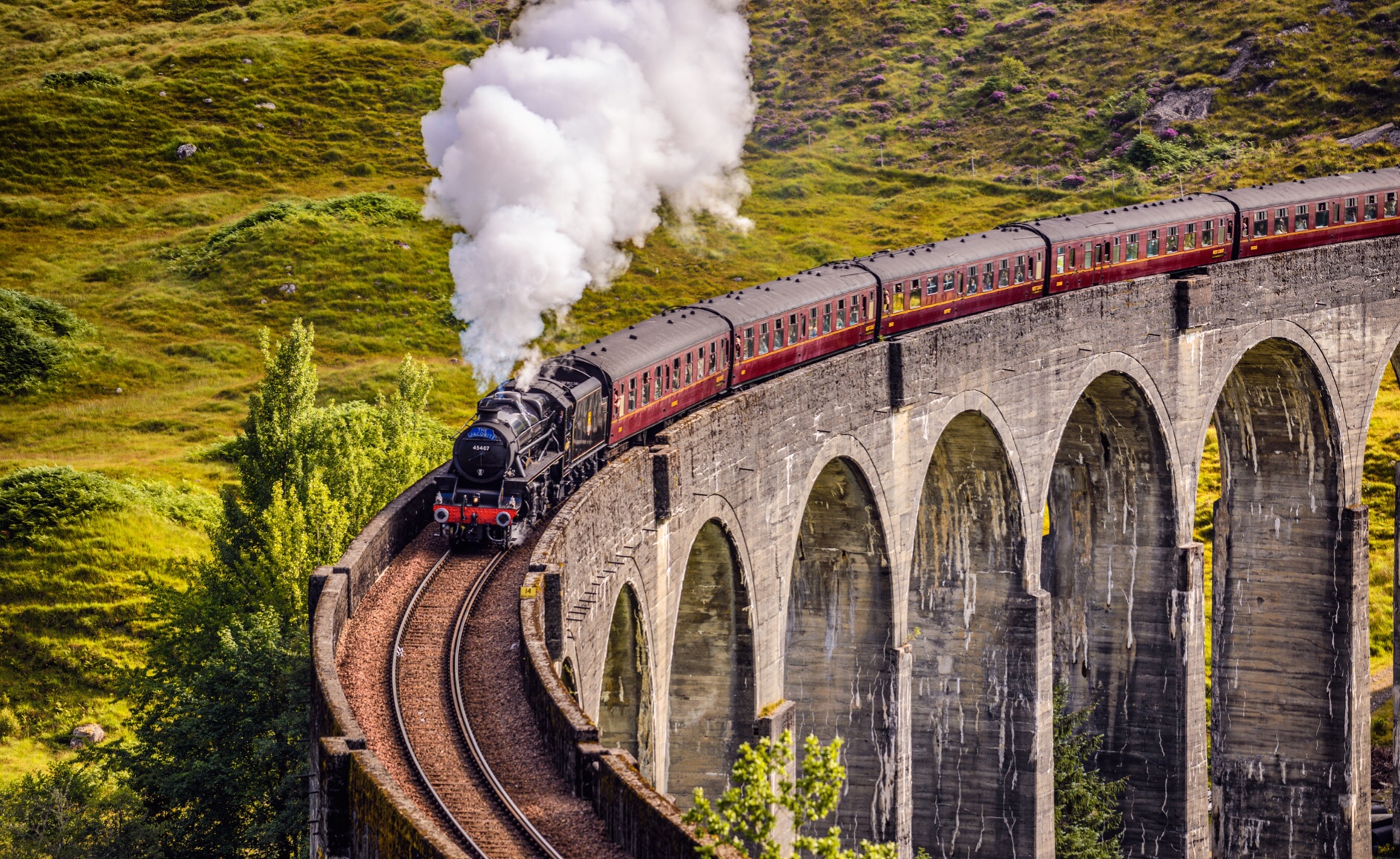 A ‘borrowed’ image of the train on the Glenfinnan viaduct. Although we just missed seeing this part of the train’s daily run – its coal smoke having just cleared the glen; we were aware of swarms of ‘twitchers’ positioned along its route trying to get ‘their picture’ of the icon. Welcome Asia and a following who wear stockings, floppy hats and sensible Mackintoshes. Hello Kitty.
Below: We didn’t know about midges, ticks or the self timer on the camera. Loch Morar.

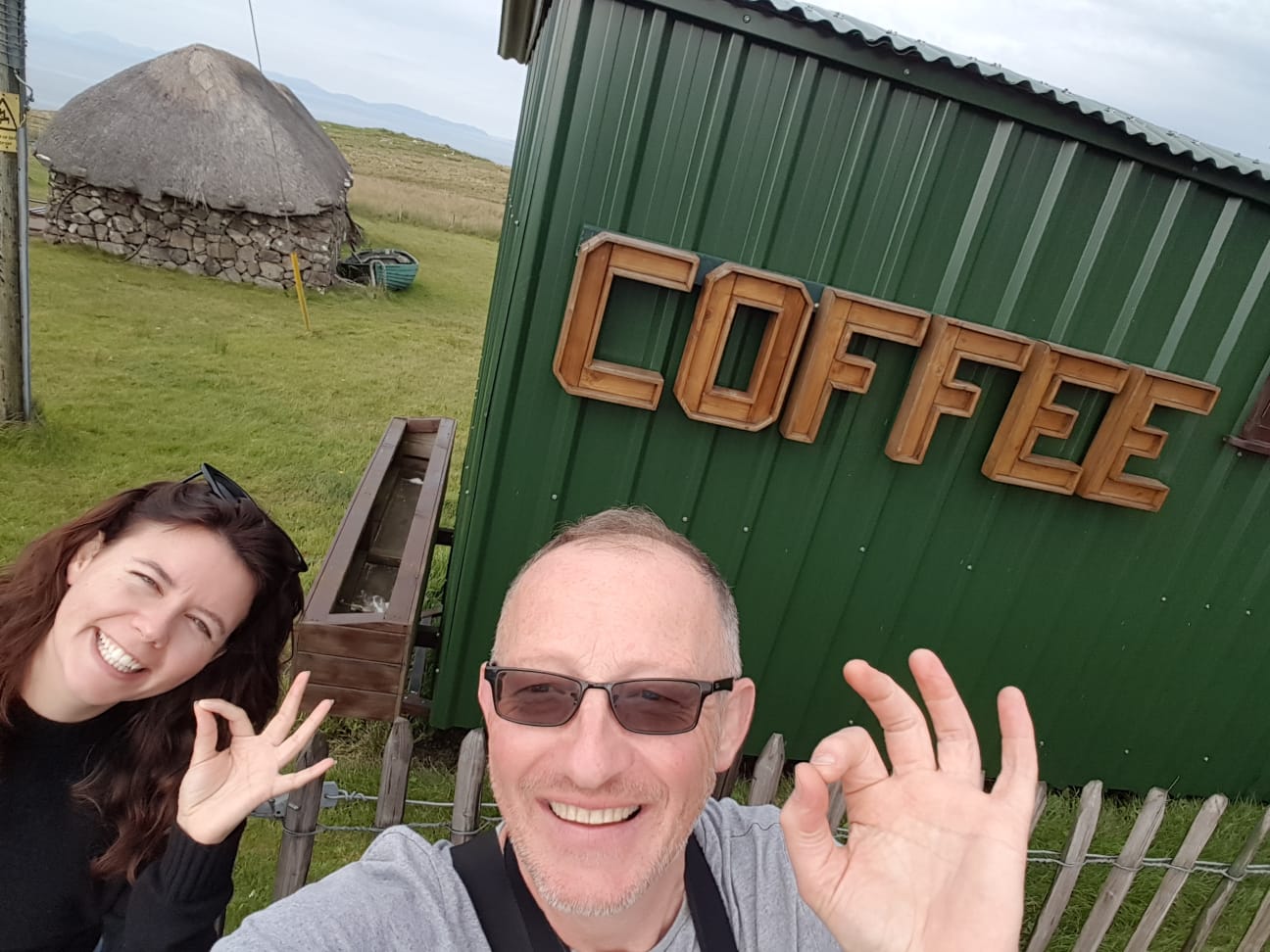
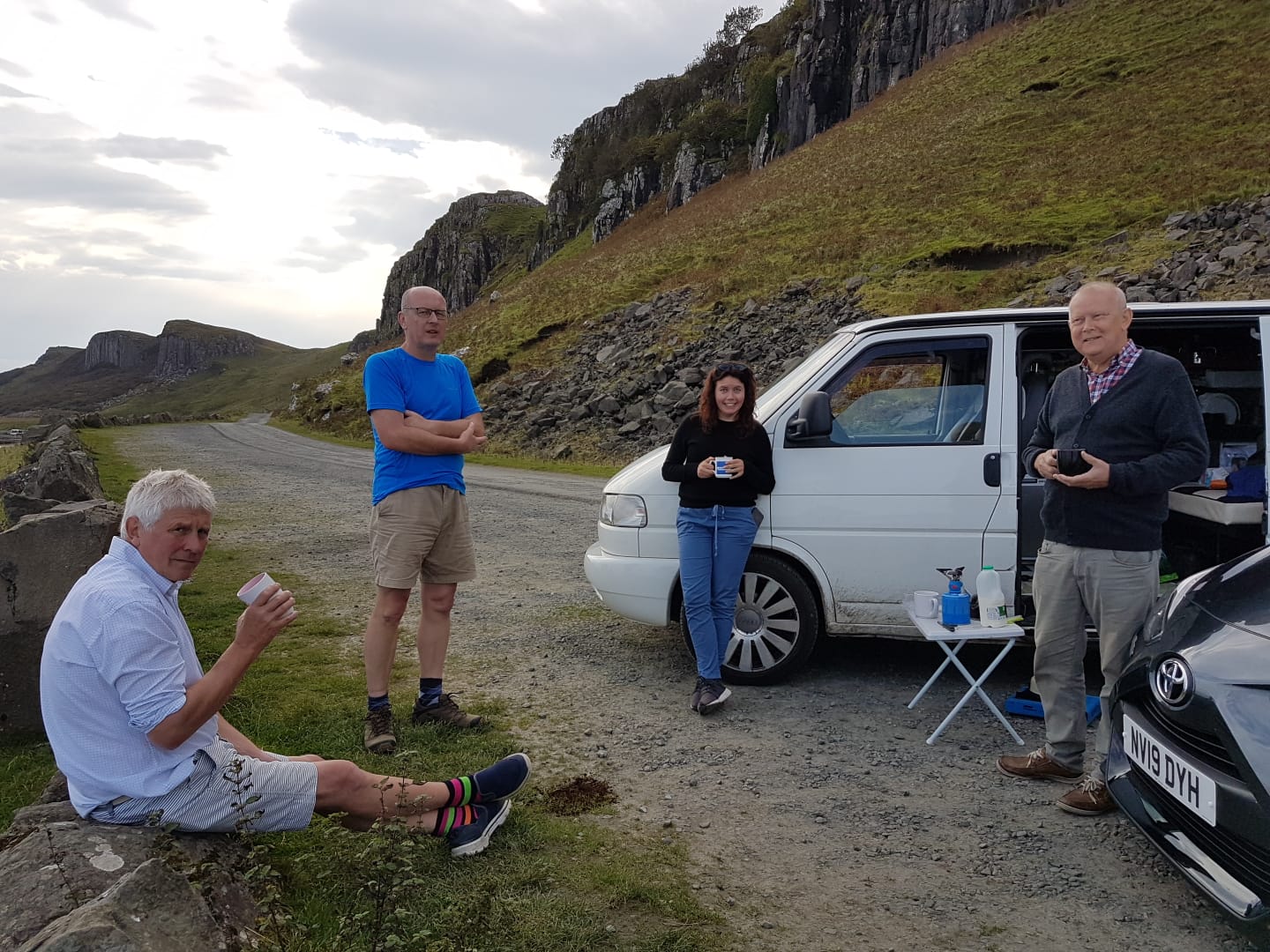
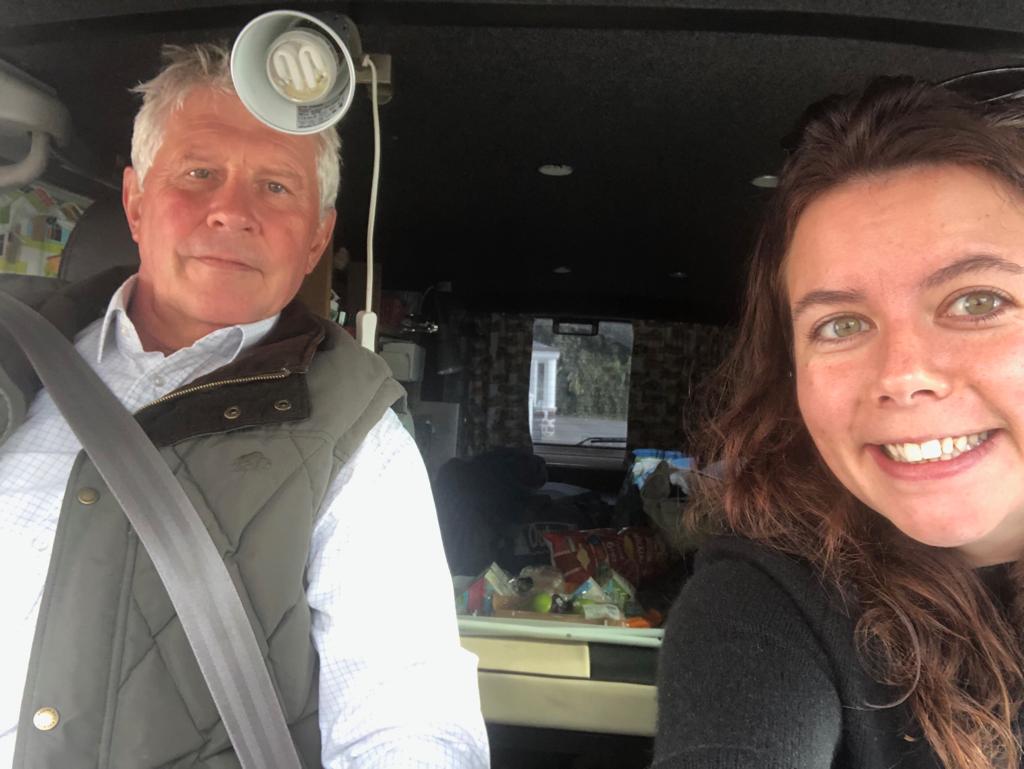
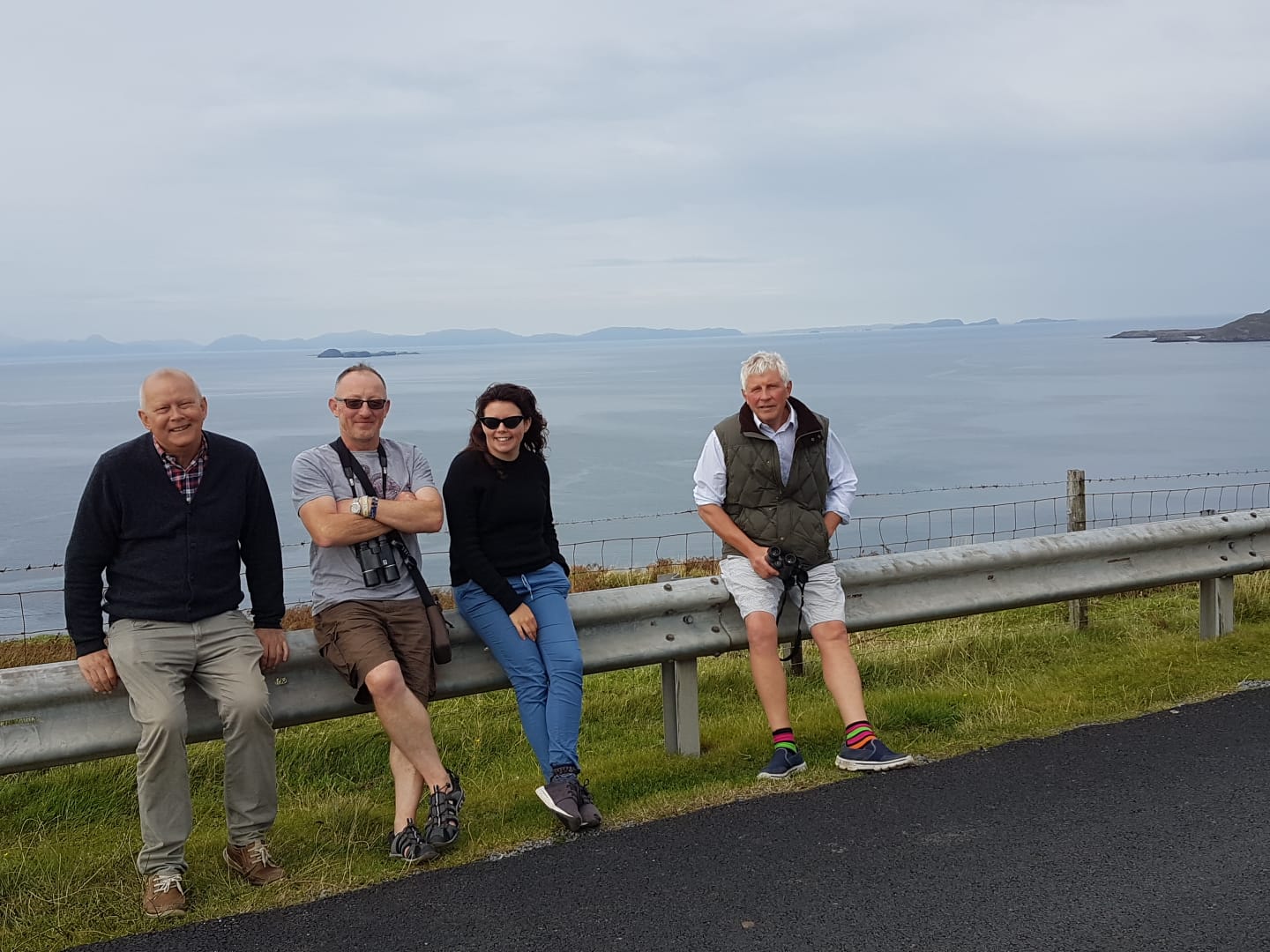
Coffee on the Road
 Van on ferry. Mallaig to Armadale on nearby Skye.
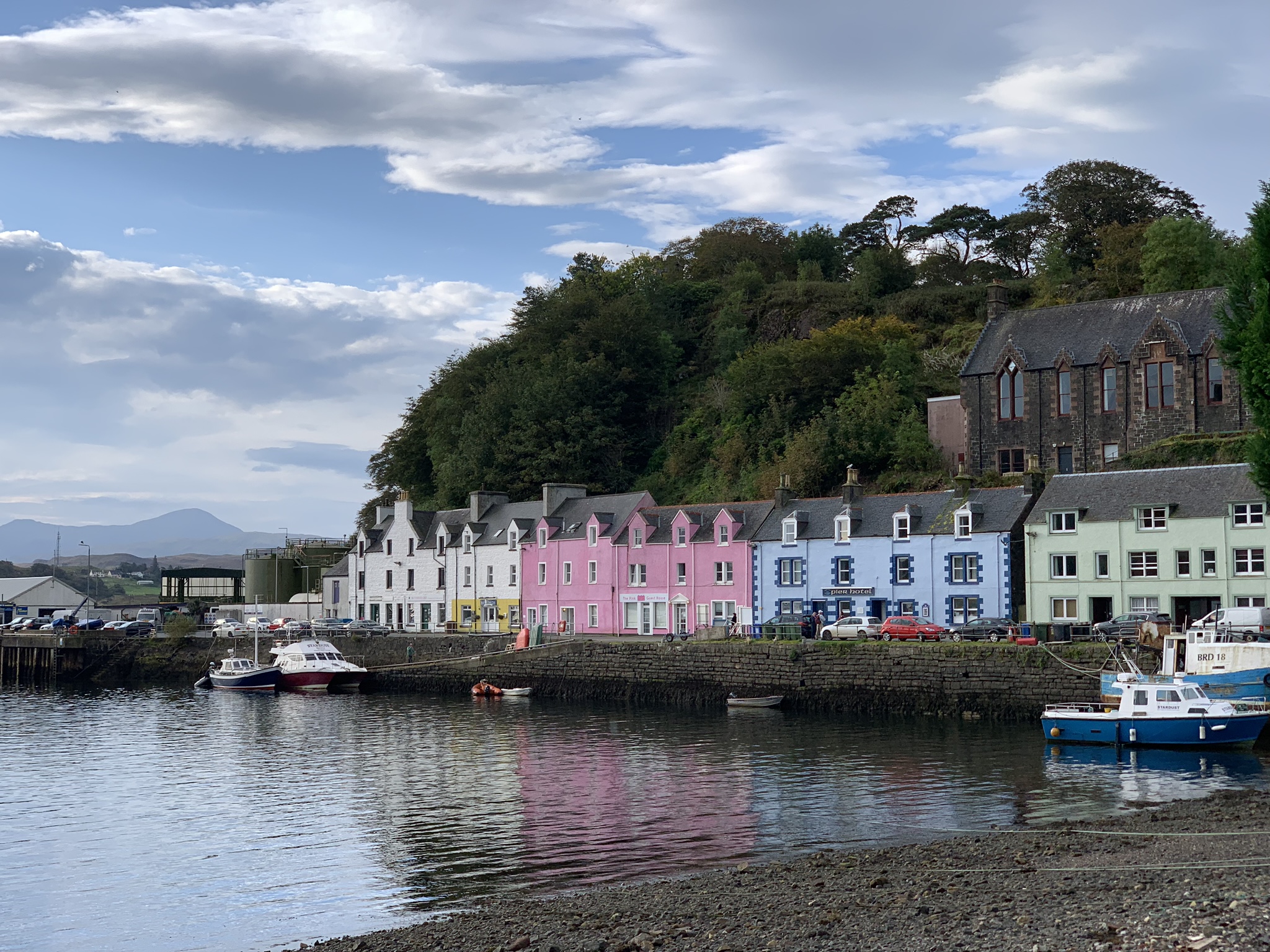
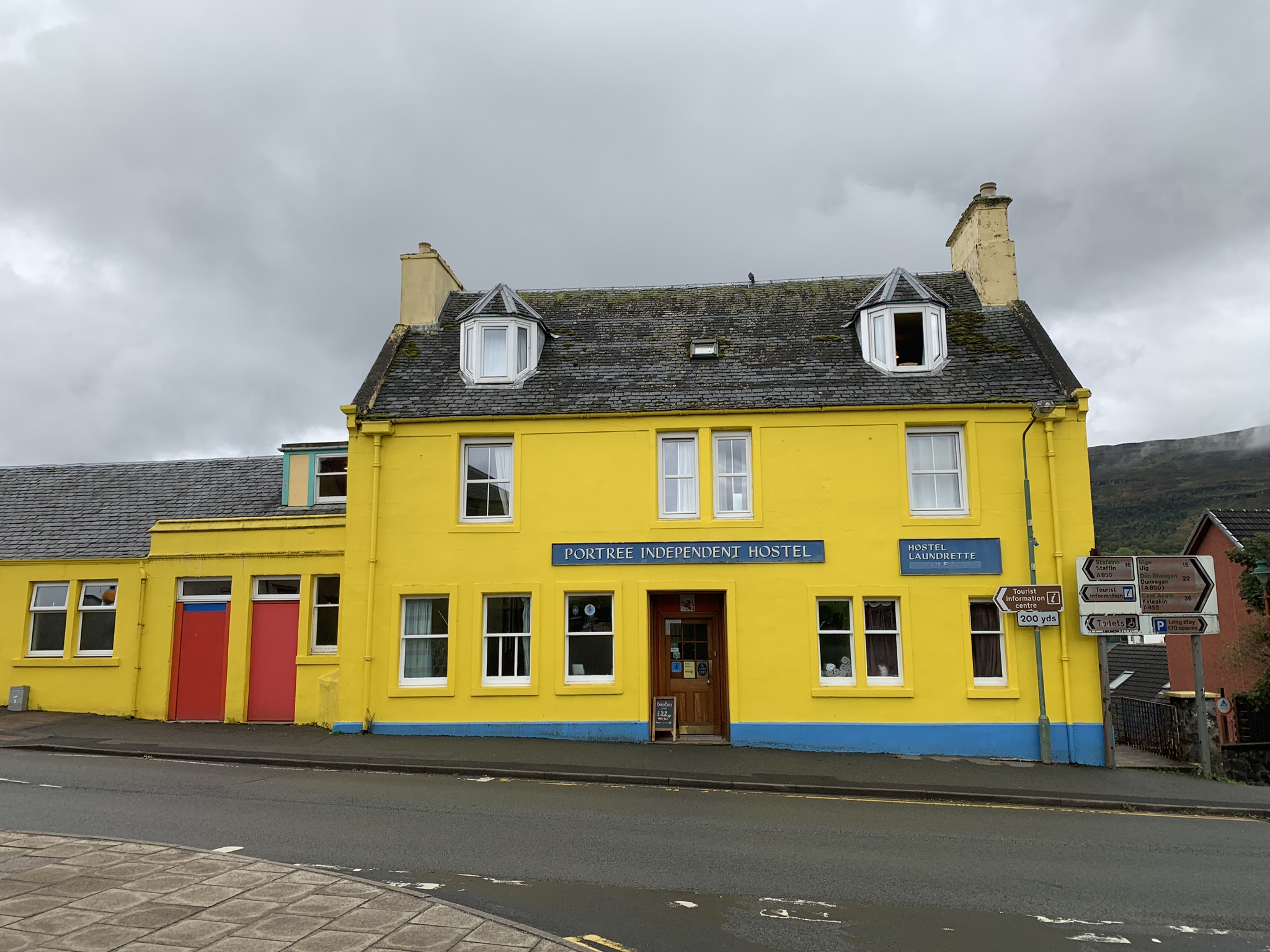
Colour in Portree. A tasteful view of the harbour front, and the garish yellow of the local Youth Hostel. £22/night for a bed in a dorm. I think those days are behind me.
 The Author looking slightly flushed in the ‘Merchant Bar’, in uptown Portree. The backdrop is a display of over 150 varieties of Whisky on sale – many of which are local.
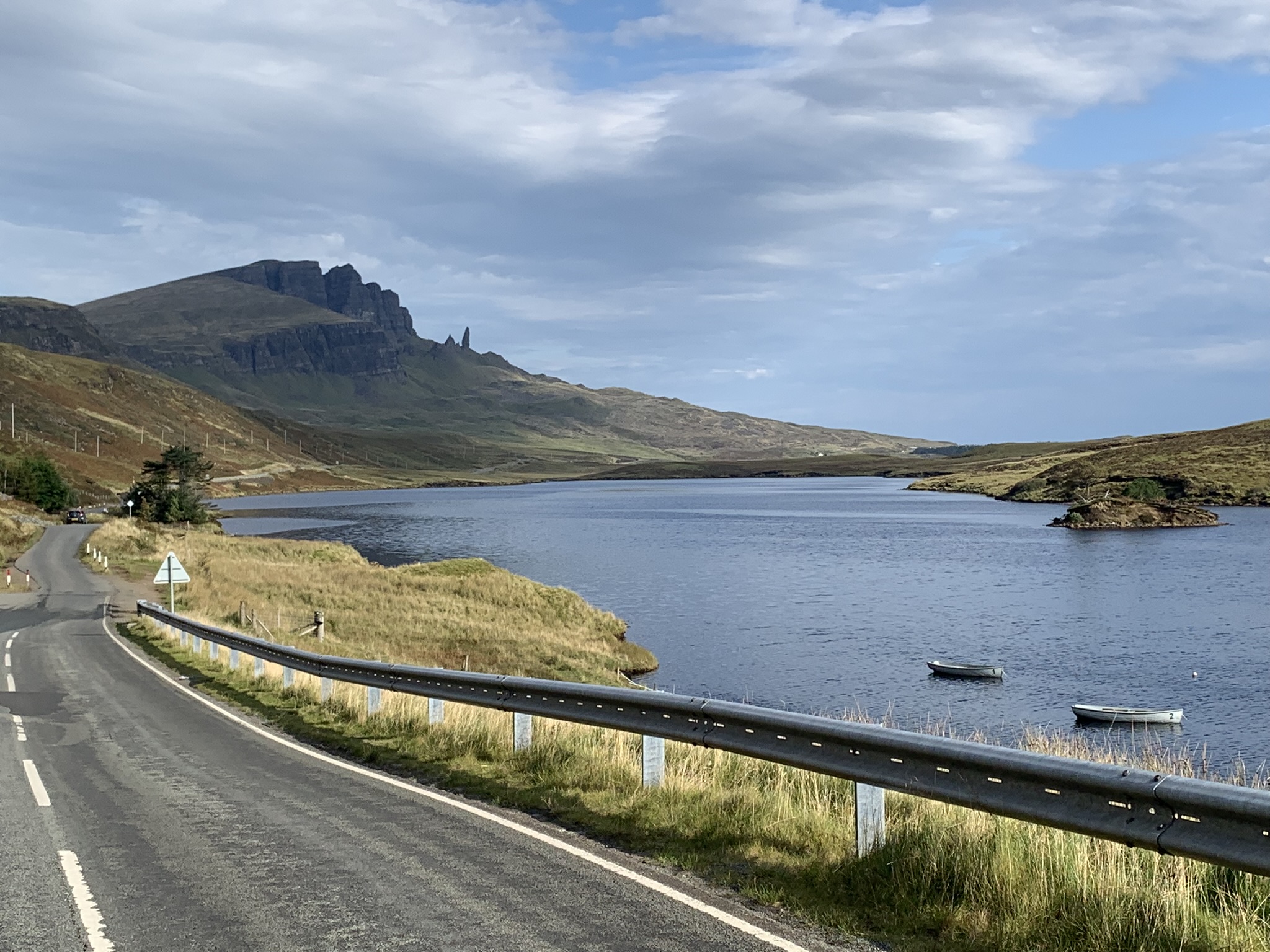 The Road North in Skye. Taken at the wheel, the picture still captures the landscape and isolation that typifies this part of Scotland. The shard on the horizon was in fact a tooth of rock called ‘The Old Man of Storr’. Much bigger when close up – and perhaps the place on Skye that drew the biggest concentration of visitors.
 Proof?
 Above: The boat that always seems to be there! Loch Duich.
Below: Eilan Donan Castle. Our tour took us past this little gem, and we didn’t have to stop – but we did. With an expanded car park, numerous coach bays, a coffee shop and of course a visitor centre, it seemed churlish to miss out on what the hordes of [Asian] tourists were clearly enjoying. It’s a 20 minute stop and nothing else unless you want to pay £10 to cross the bridge and take photos looking back at the car parks.
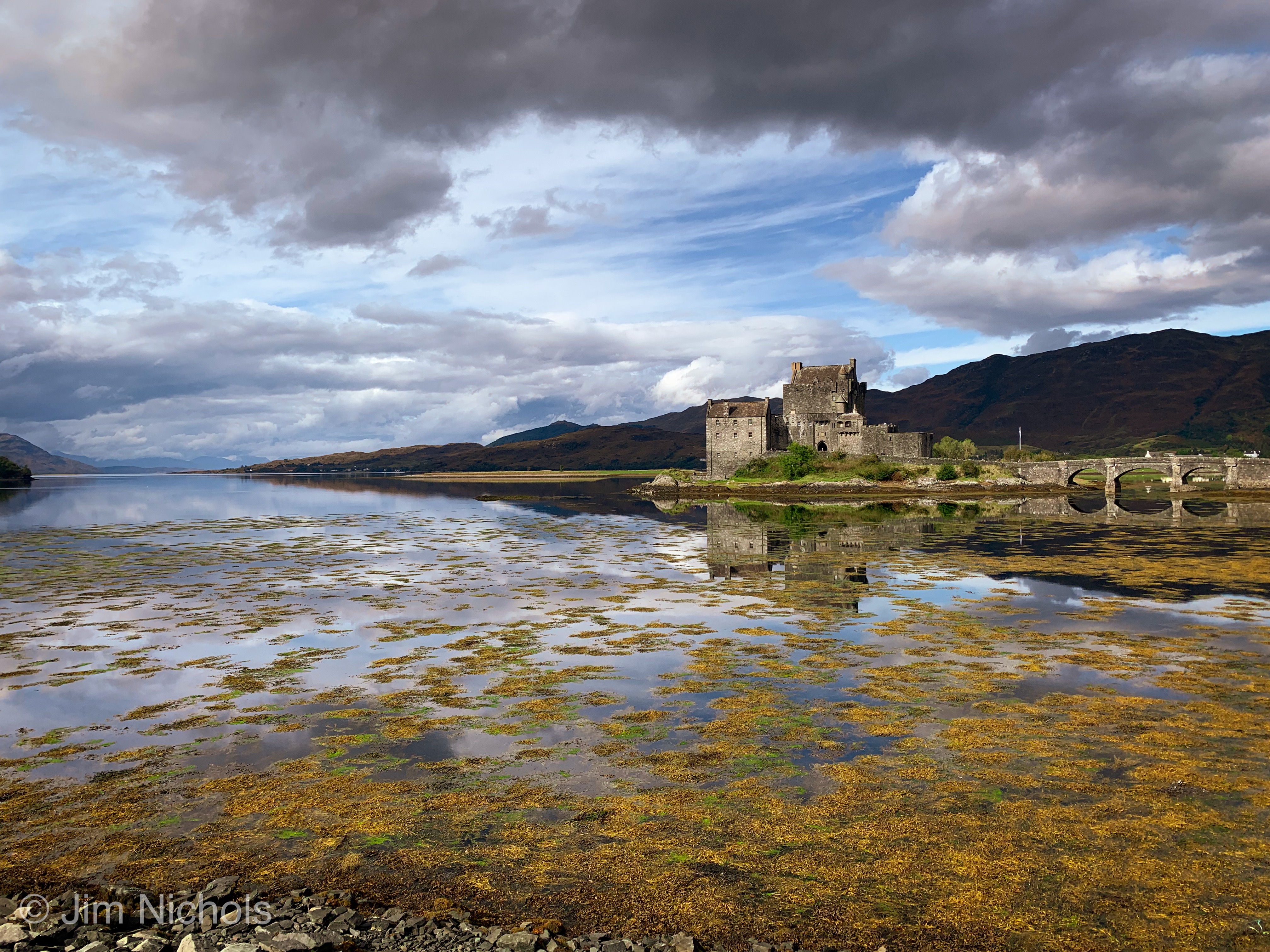 Short of Edinburgh Castle, the Tattoo and Ryder Cup events, Eilan Donan Castle must be the most photographed thing in Scotland. Usually from where I am standing…
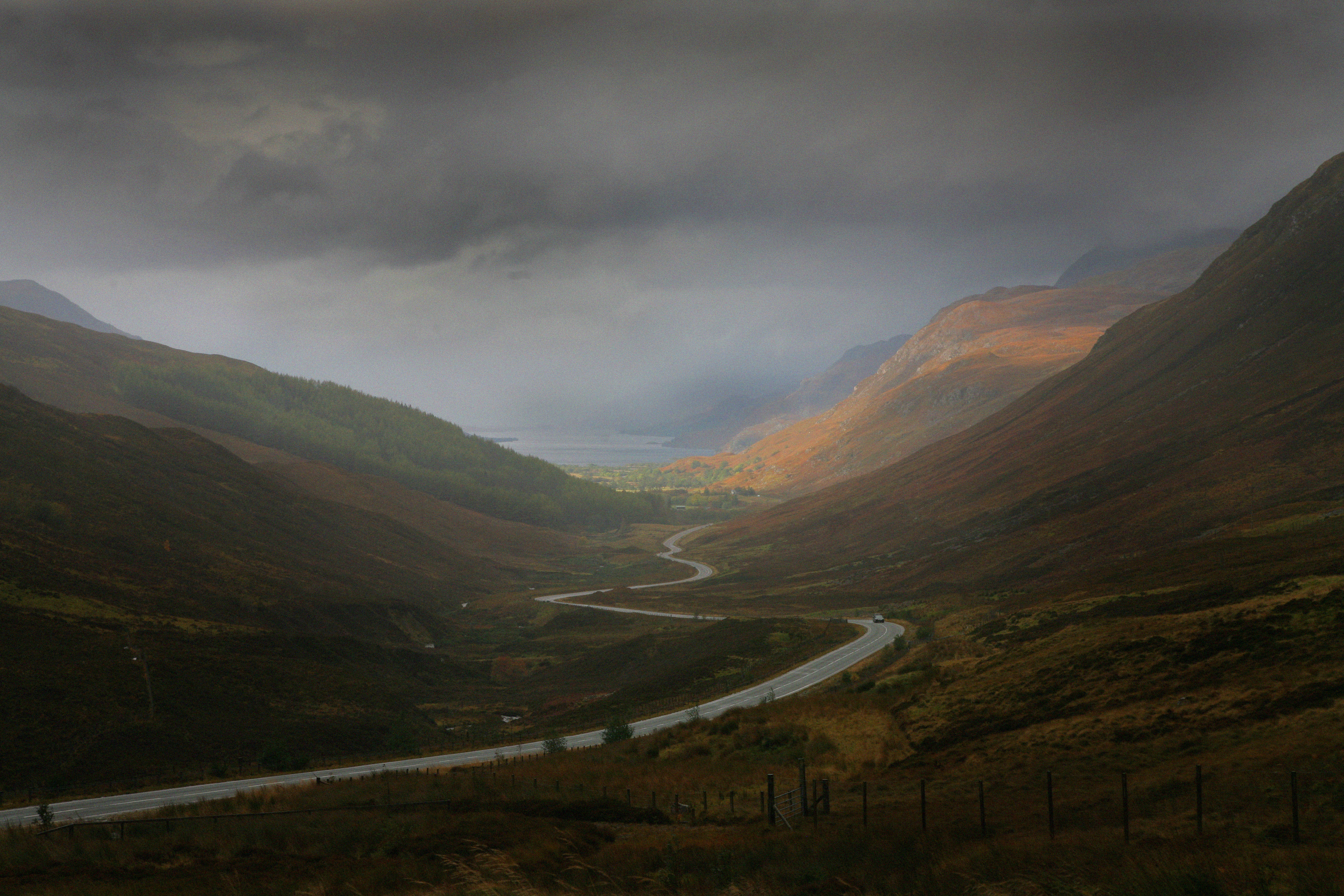
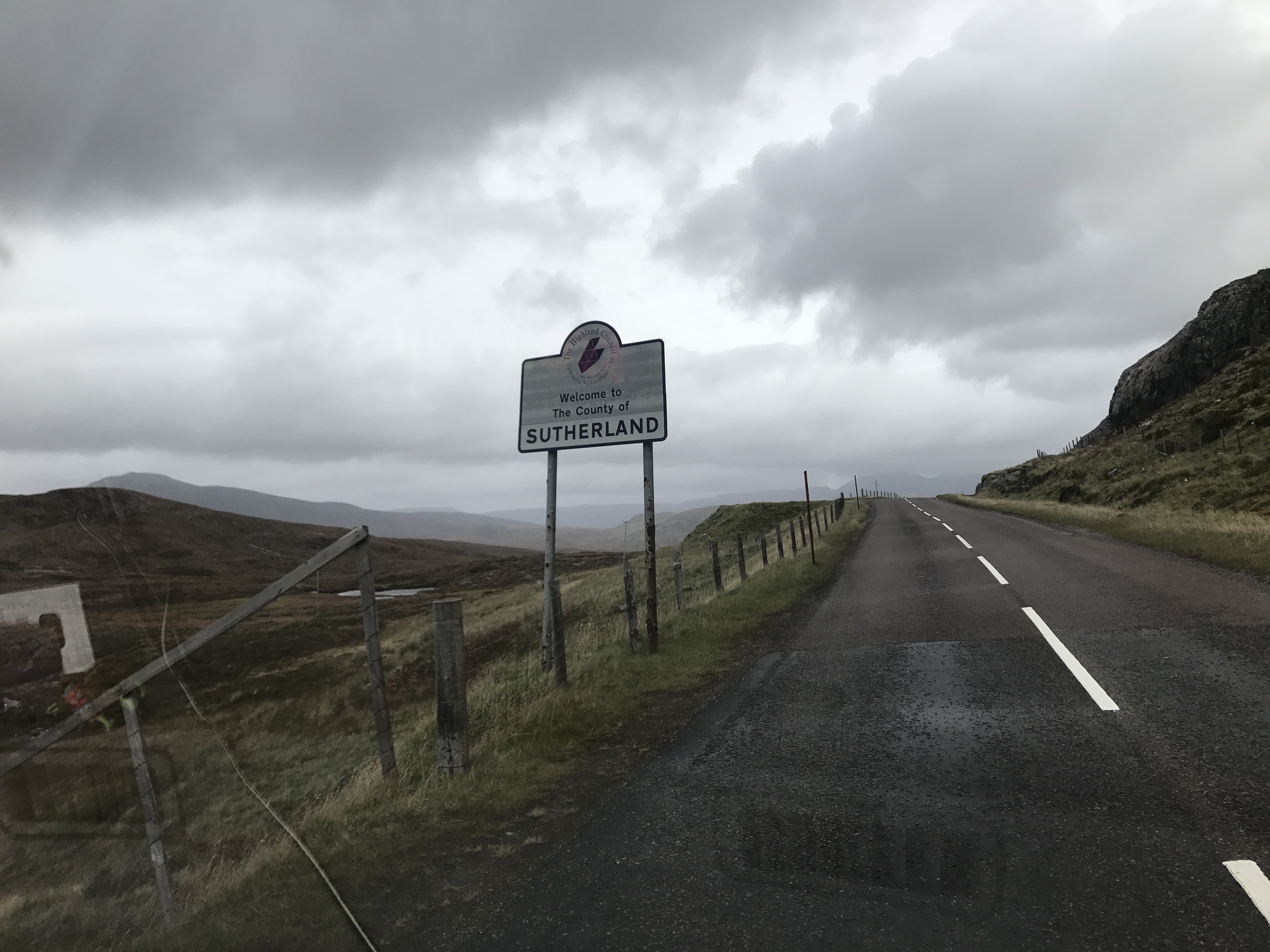 Arriving in the Remote County. Sutherland, Scotland’s outpost.
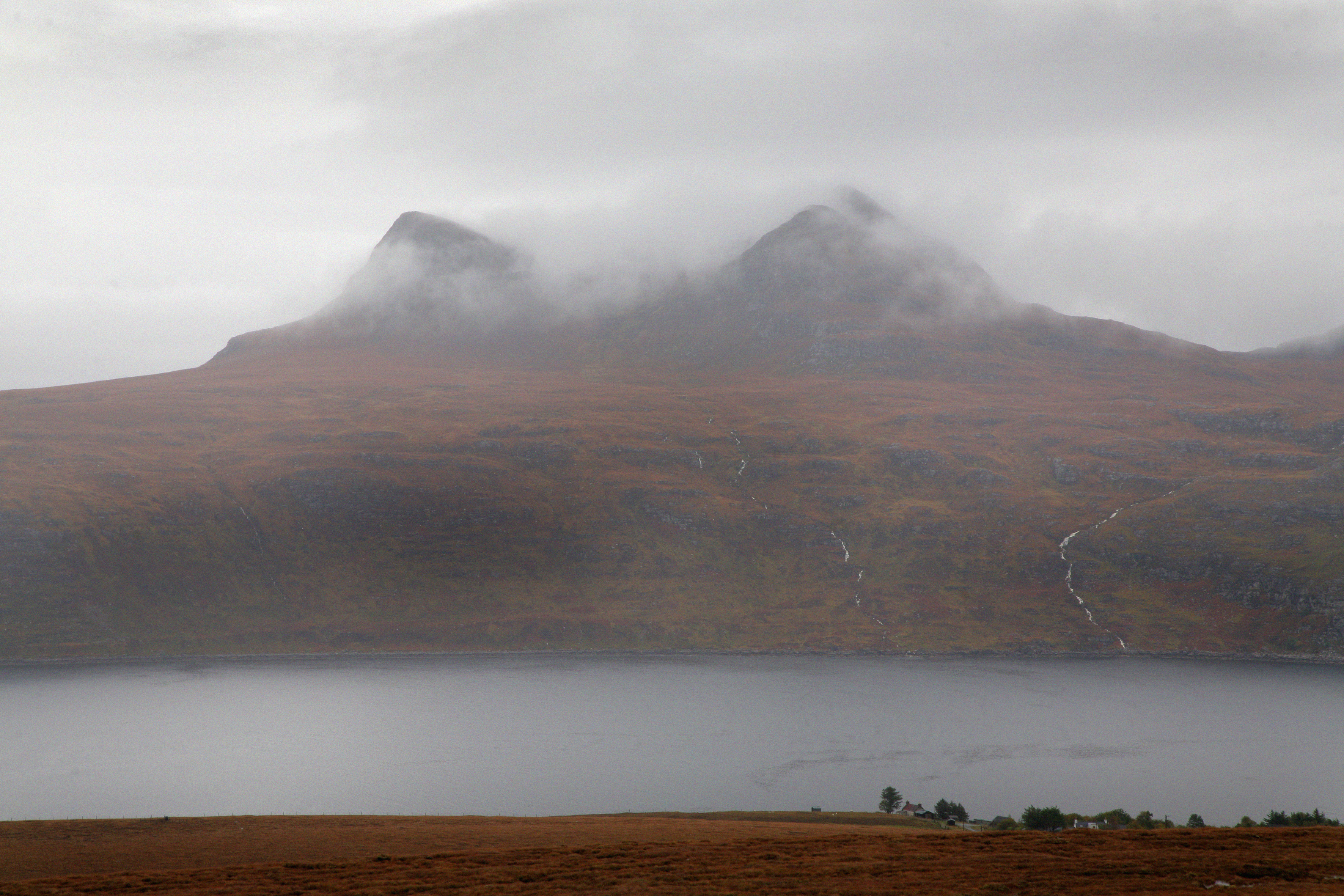 Above: The twin peaks above Loch Broome on the approach to Ullapool
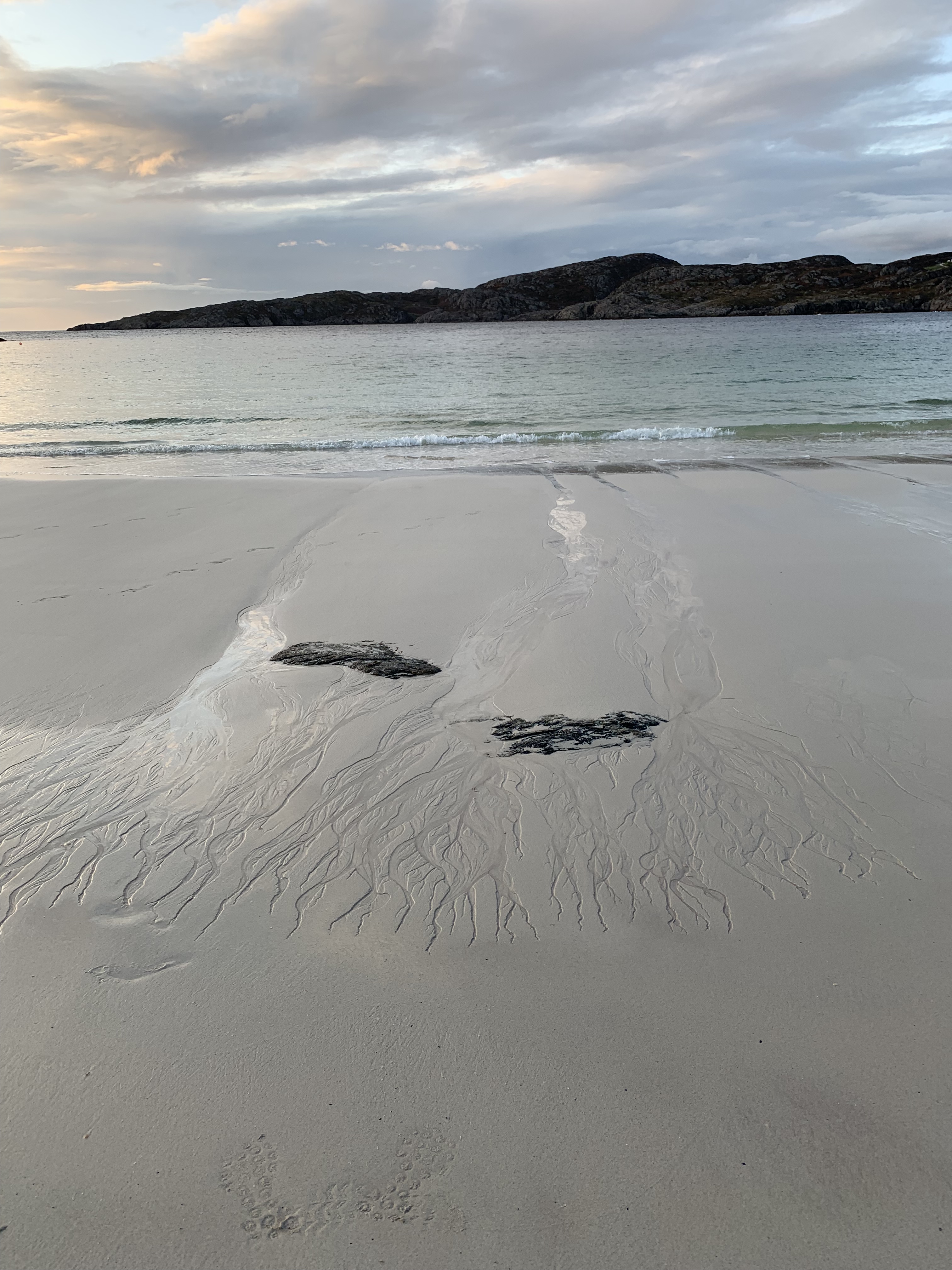 Above: The white sands of Achmelvich and its peninsula. Brochure-worthy until you read the smallprint about the ‘usual climate’ and seasonal water temperatures.
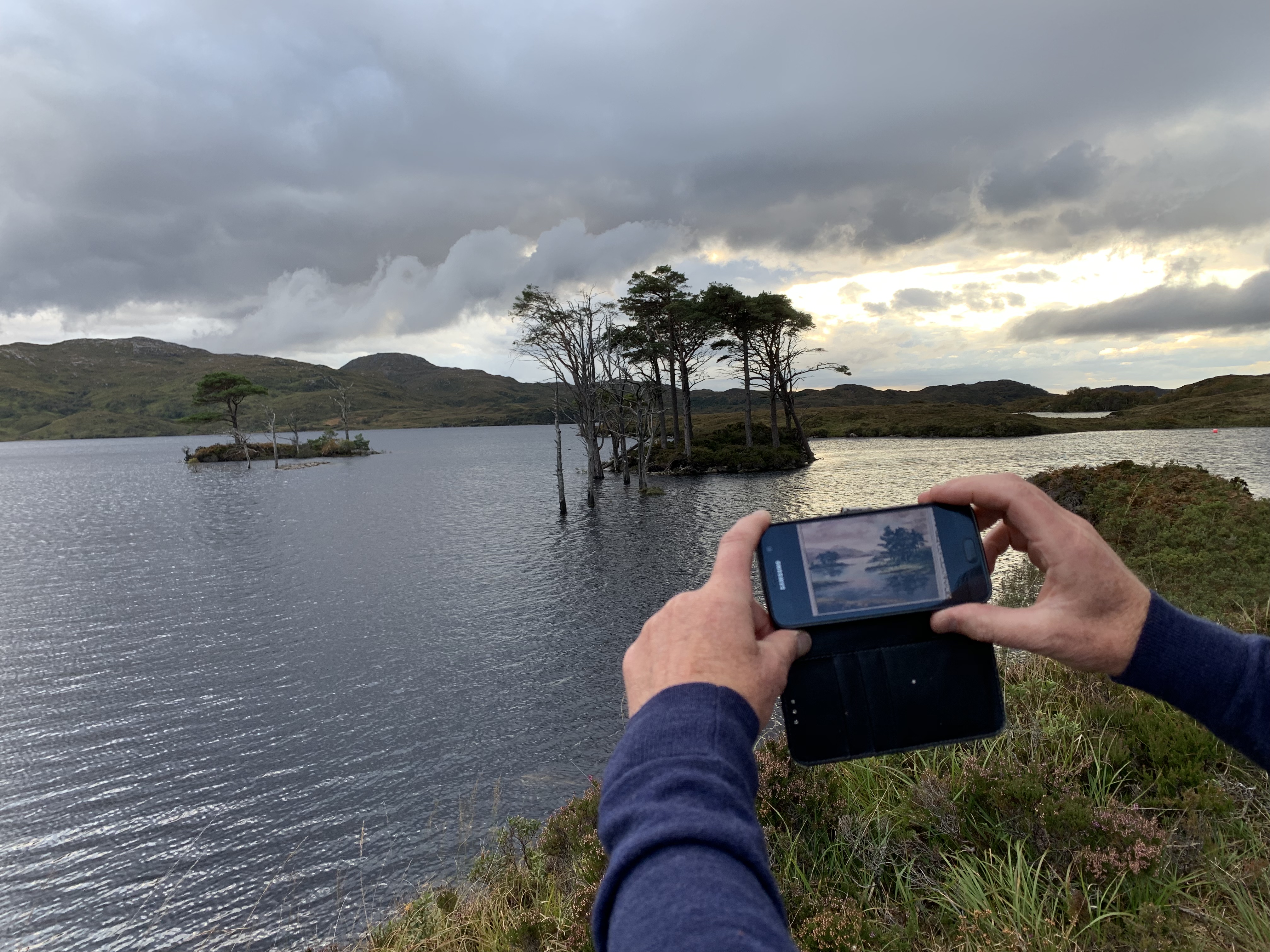 Some way up to Loch Assynt, just a wee way short of Lochinver, Terry wanted to do this… An ‘Aunt’ had painted a watercolour of an ‘Assynt View’ some 60 years ago. An image that had bewitched his family for decades as it hung in their house. Our ‘Quest’ was to find the exact spot that Aunty had sat all those years ago – and here we are – T comparing his family heirloom with the exact view?
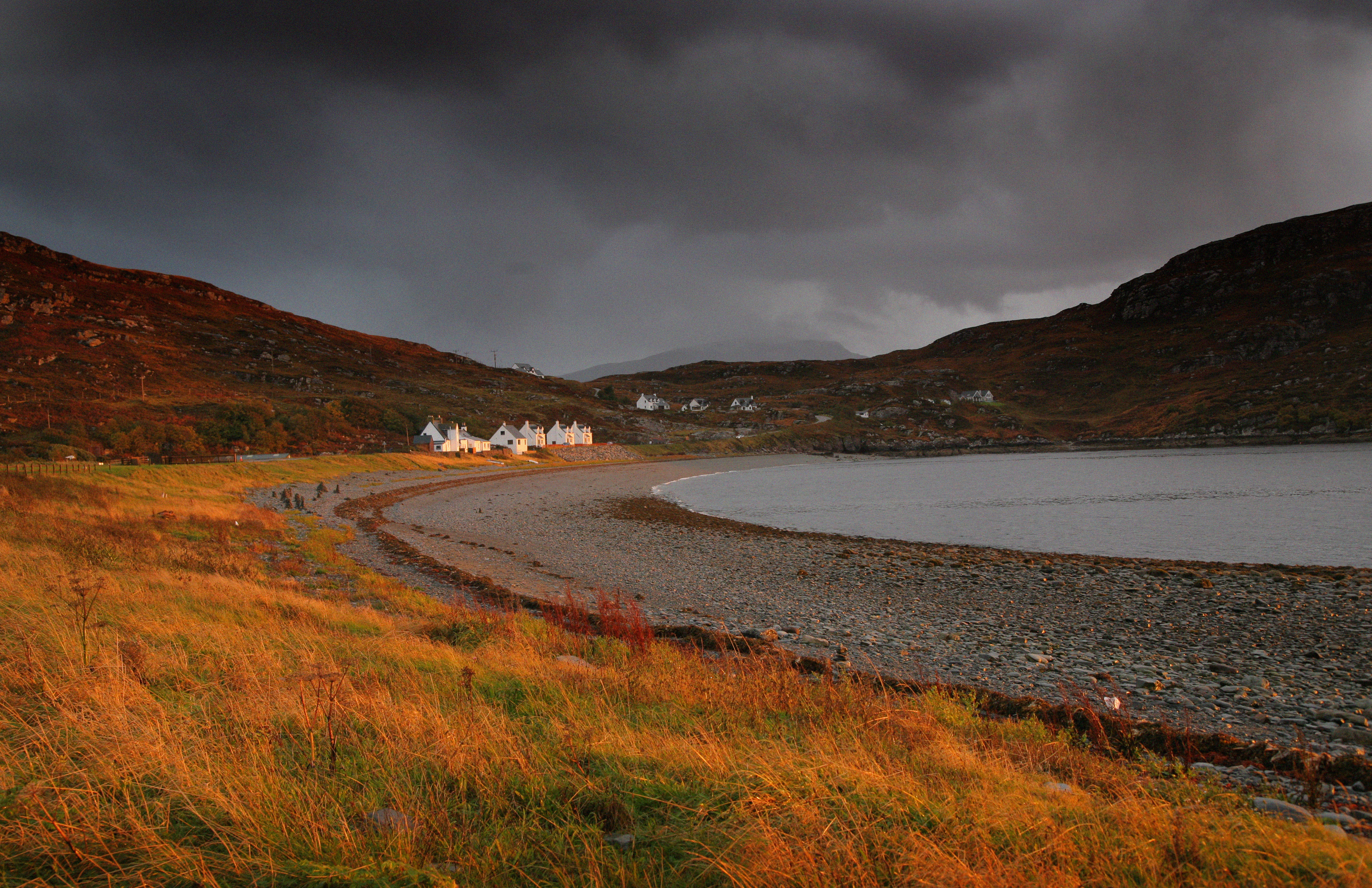 The shores of the Ardmair Peninsula 10 minutes north of Ullapool. An autumn day in 2018.
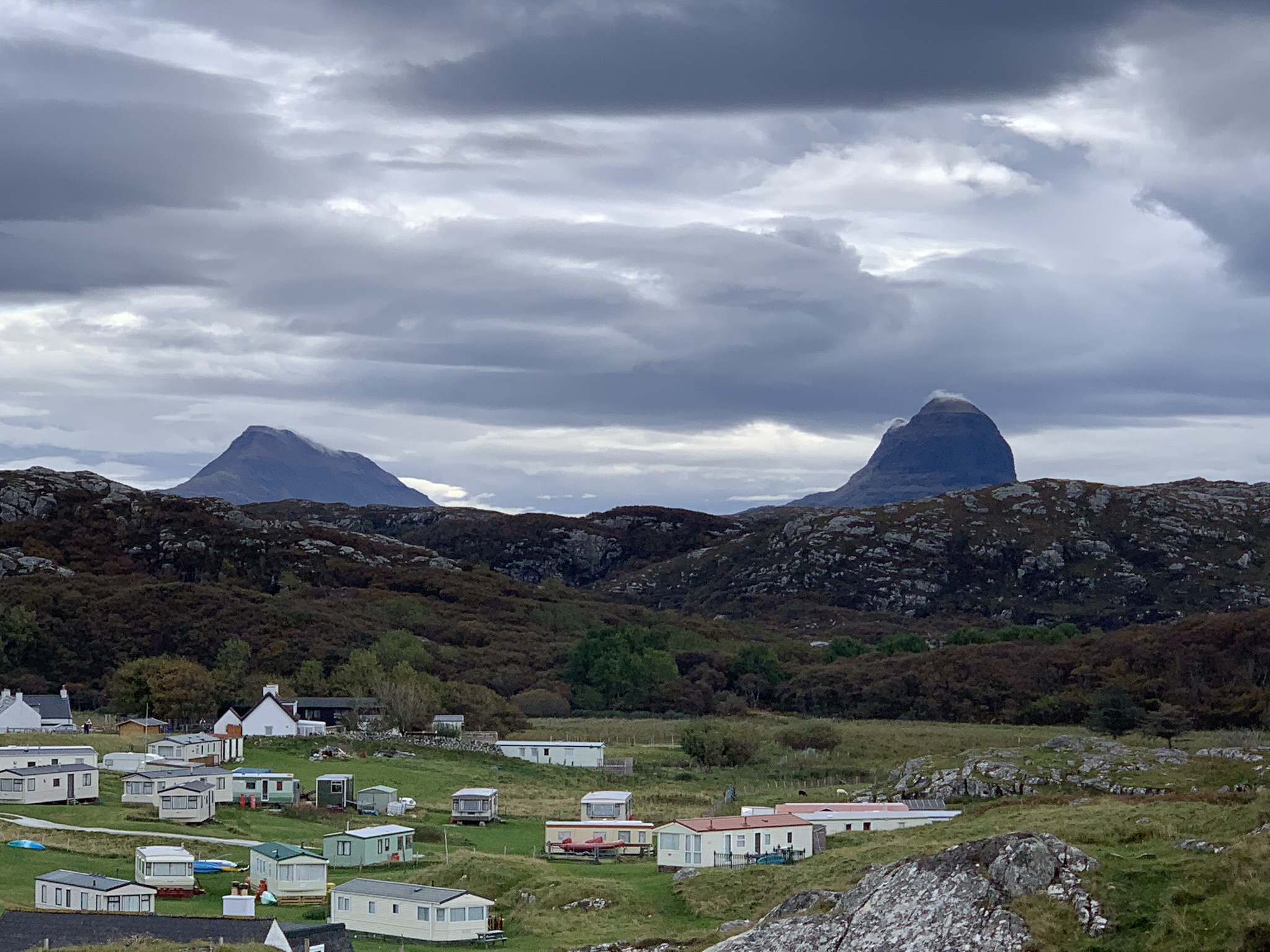
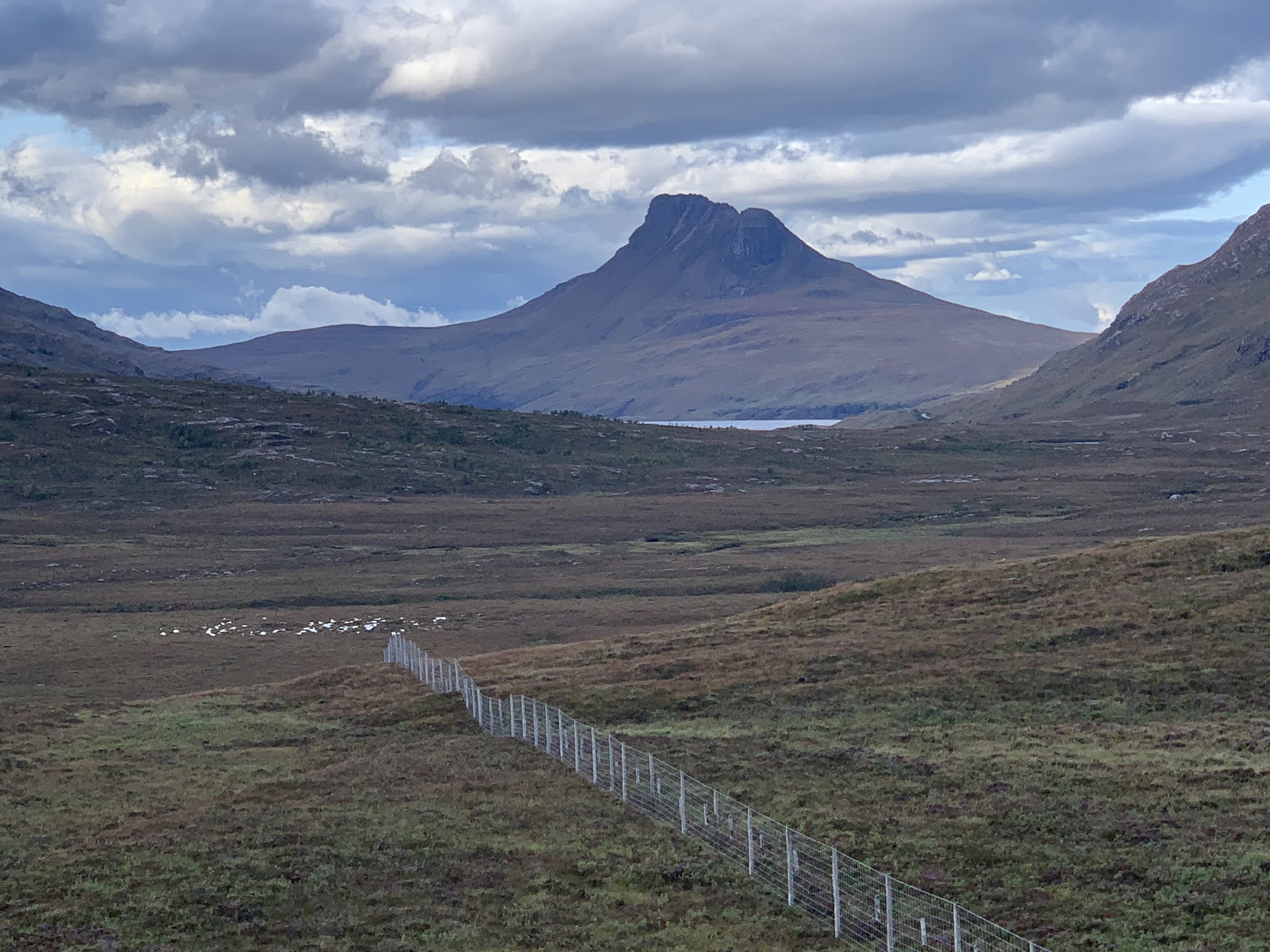 With the south well behind us now, we were staring at a landscape little changed since the end of the last Ice Age [as we learned from a lay-by stop]. In the distance Stac Pollaidh one of Sutherland’s characterful peaks. Below Right: Suilven, a real ‘one-off’ mountain that acts as a backdrop to the Caravan park at Achmelvich.
Below: Marshland and wee lochans still within sight of Suilven and Quinag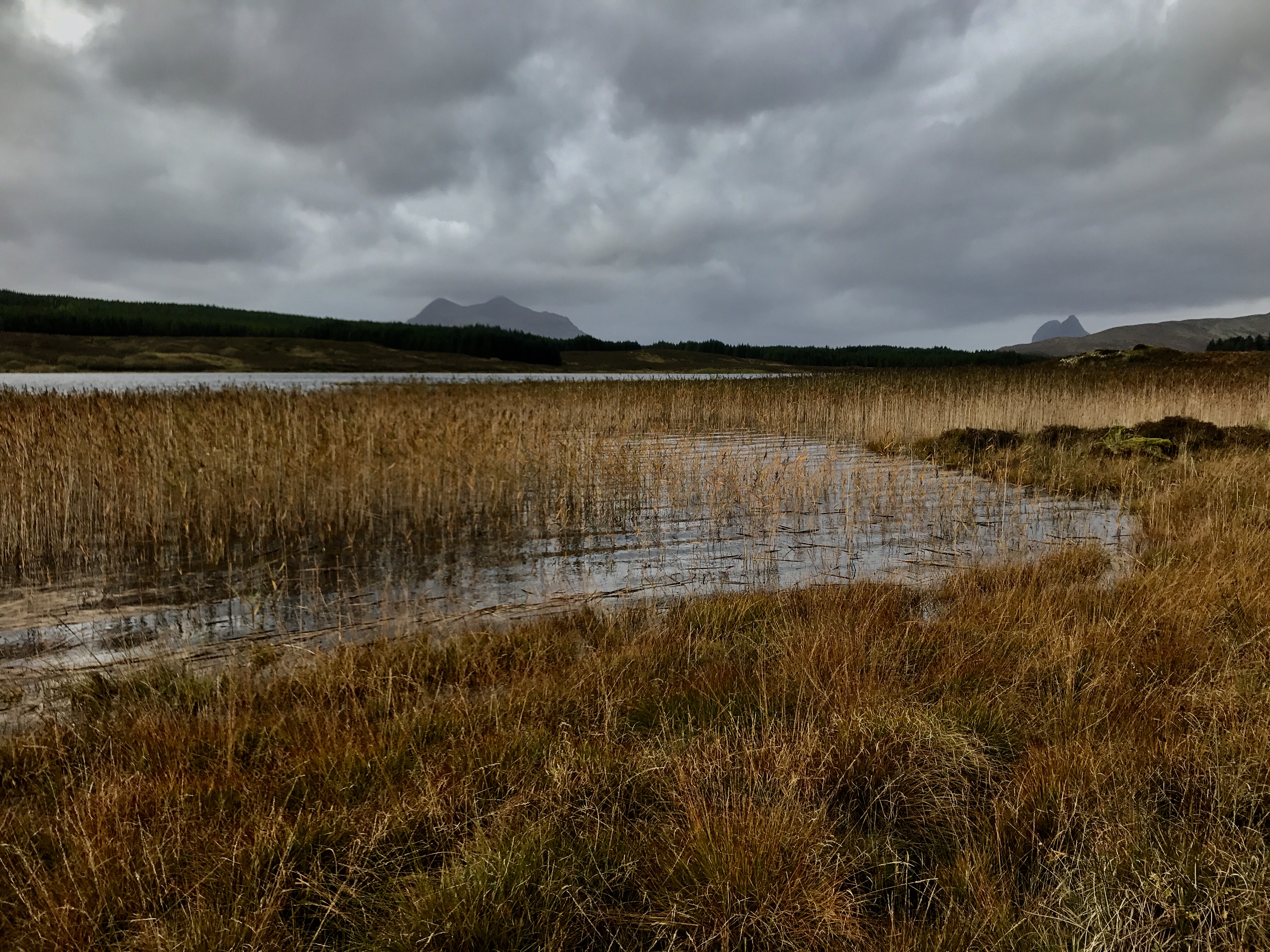
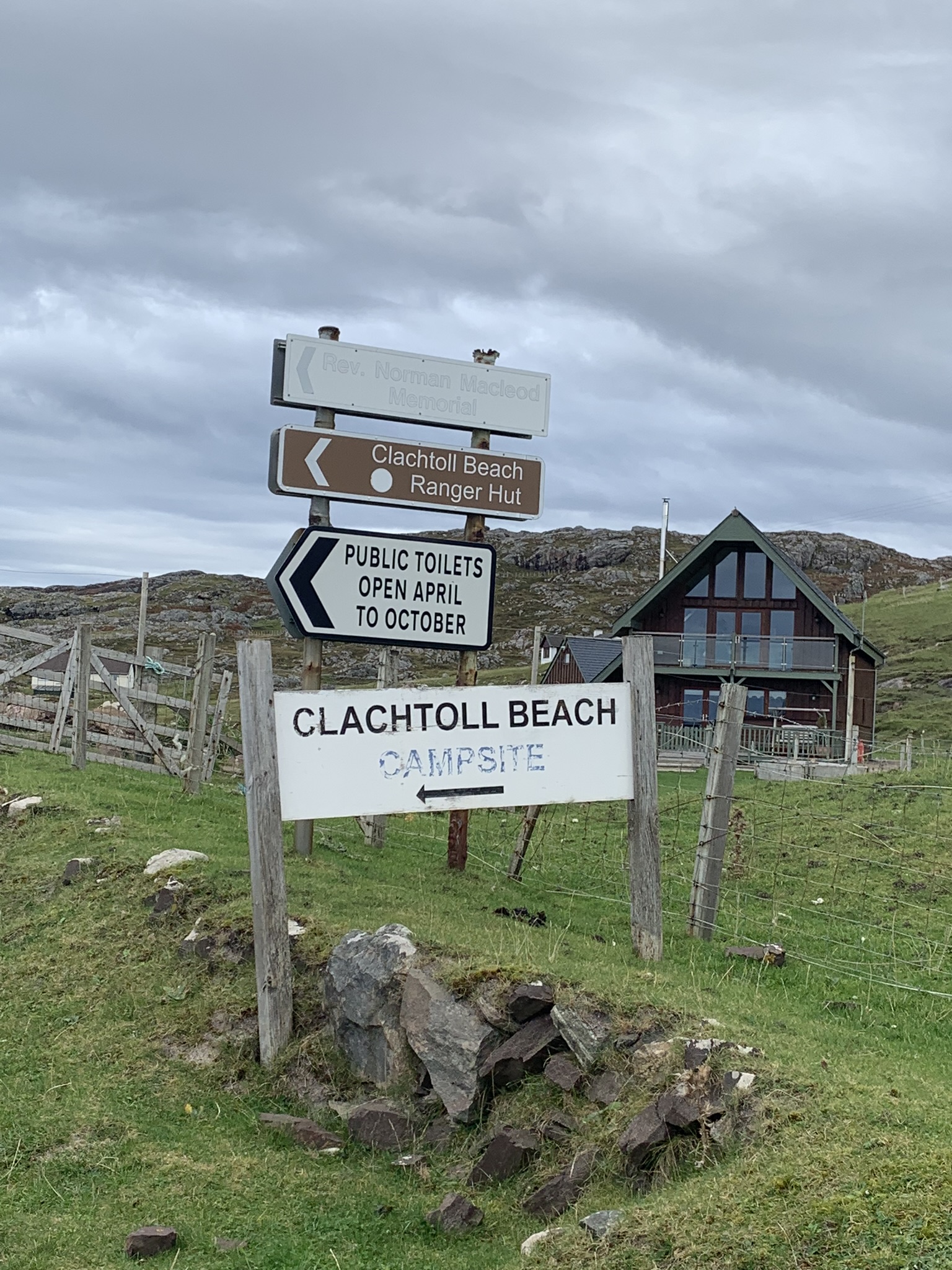
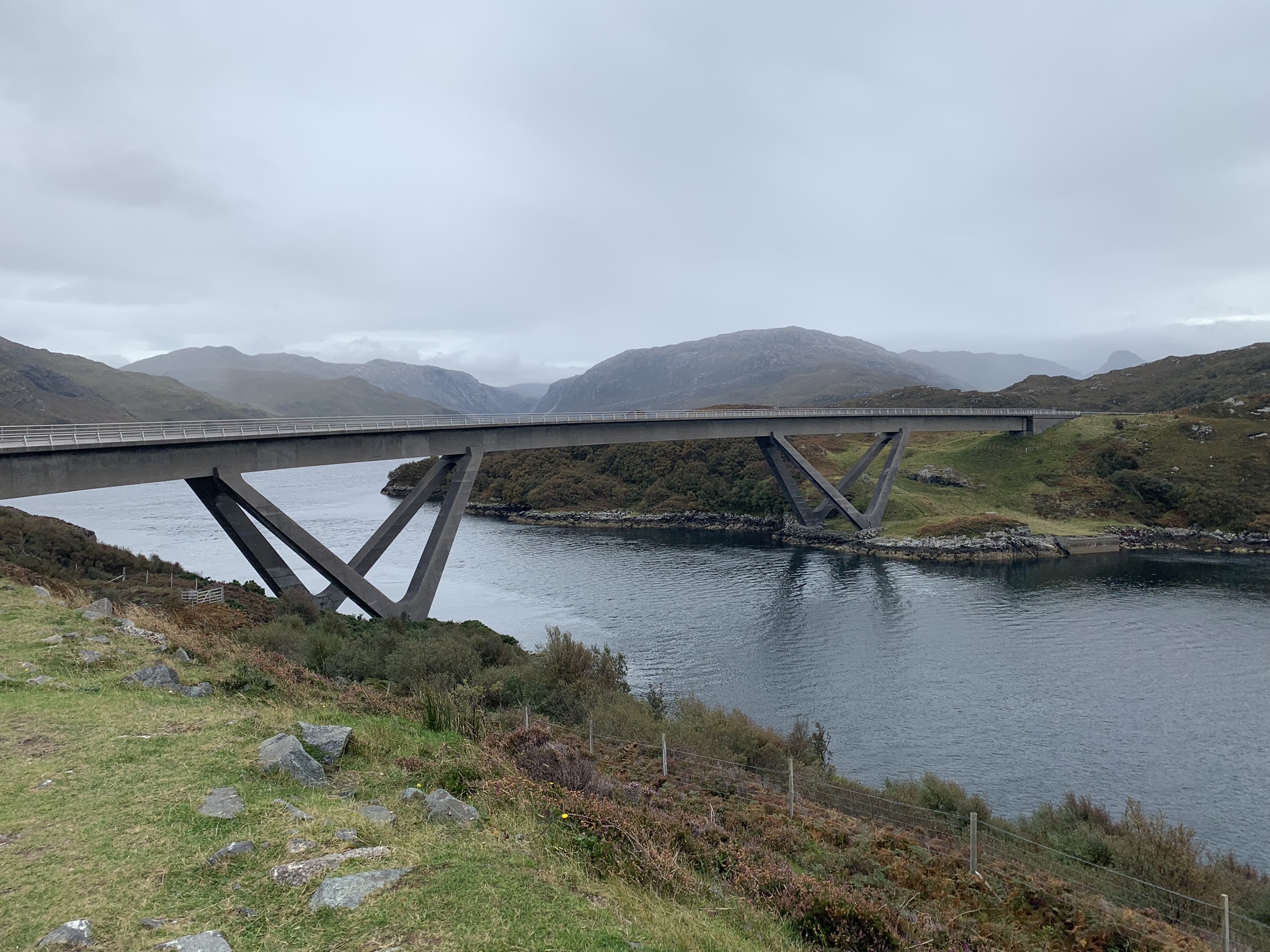
2 shots from ‘memory lane’ – Clachtoll beach where I first camped ‘en famille’ as a small boy in 1965, and the Kylesku Bridge at the north end of the Drumbeg peninsula. Back in ’65; and indeed until 1984 when the bridge was completed, the little ferry crossing under the new bridge was an infamous Scottish Bottleneck for the growing North – South route. In ’65 I remember we waited and waited for the ferry on our day trips out from nearby Clachtoll.
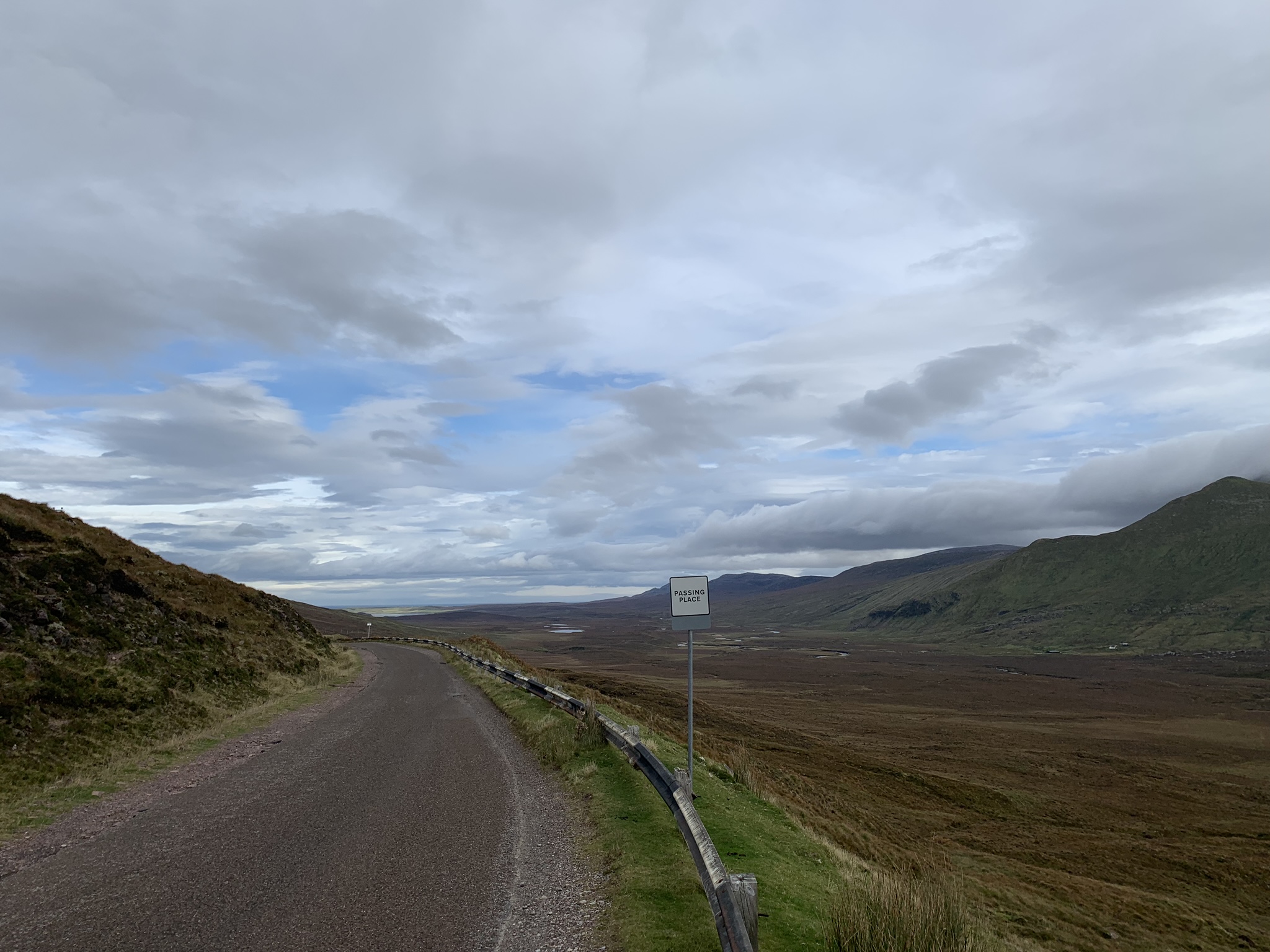 The A838 as it courses its way to UK mainland’s most northerly community. ‘Passing Places’ only would, you’d have imagined, downgraded the ‘A’ status of this 68 mile farm track but for the fact that it is the only road from the south that goes directly to Durness.
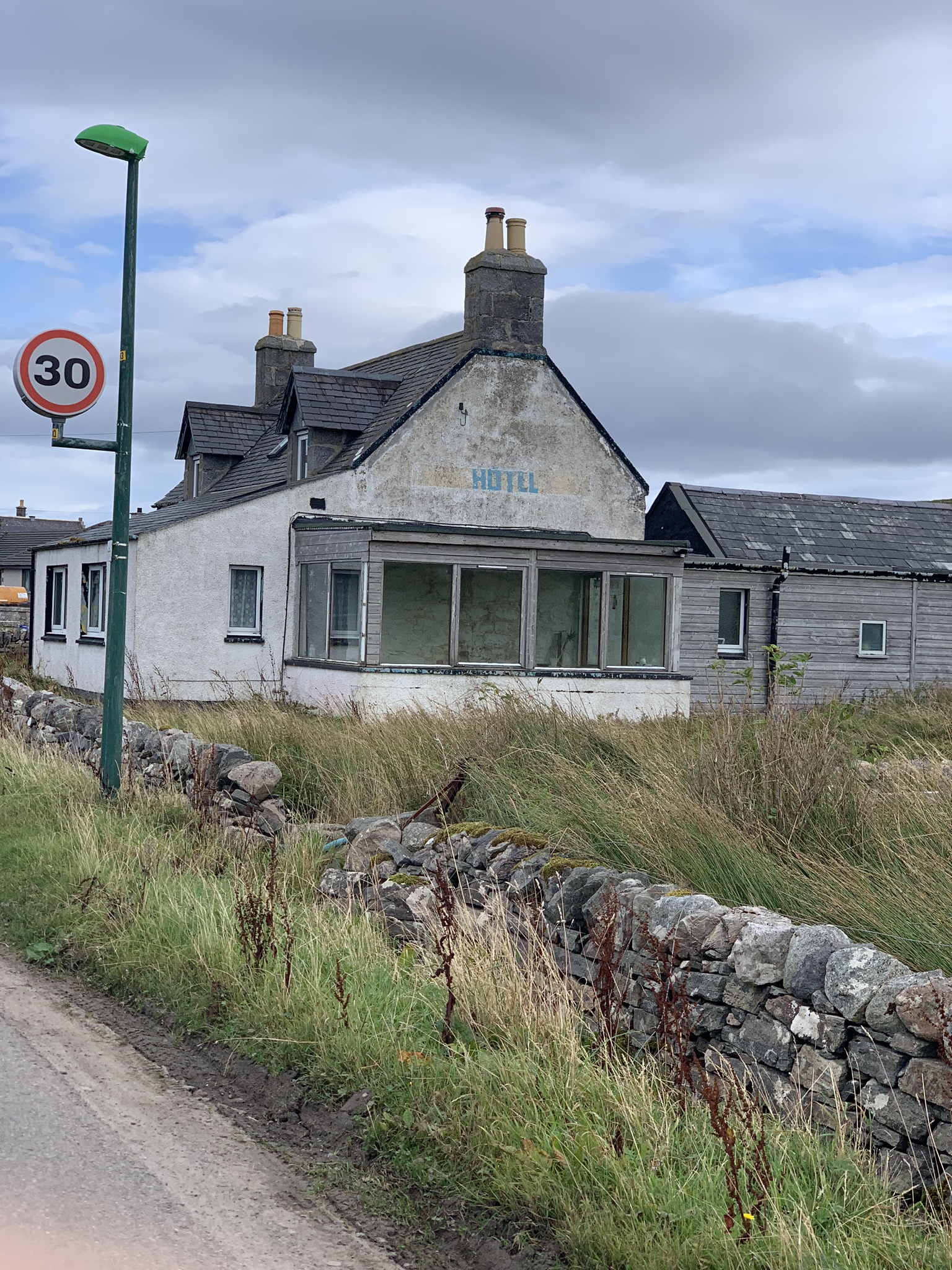
Journeys End… Signs of human habitation in the thronging village of Durness? Population 400, and the surrounding wilderness the least densely populated area in Western Europe [Wiki]. Listed as having a campsite, 8 AirBnBs, an archeologhical past, a military present, a Co-op, a petrol pump and an active ‘Young Farmers’ Club; Durness has it all.
The village also had an ‘award winning’ fish and chip shop. A common boast I realise in communities that have little else to sing about. I wondered where the competition might be, and who had awarded the prize to this ‘diner’ 68 miles from the next hamlet?
But Durness has Beaches…
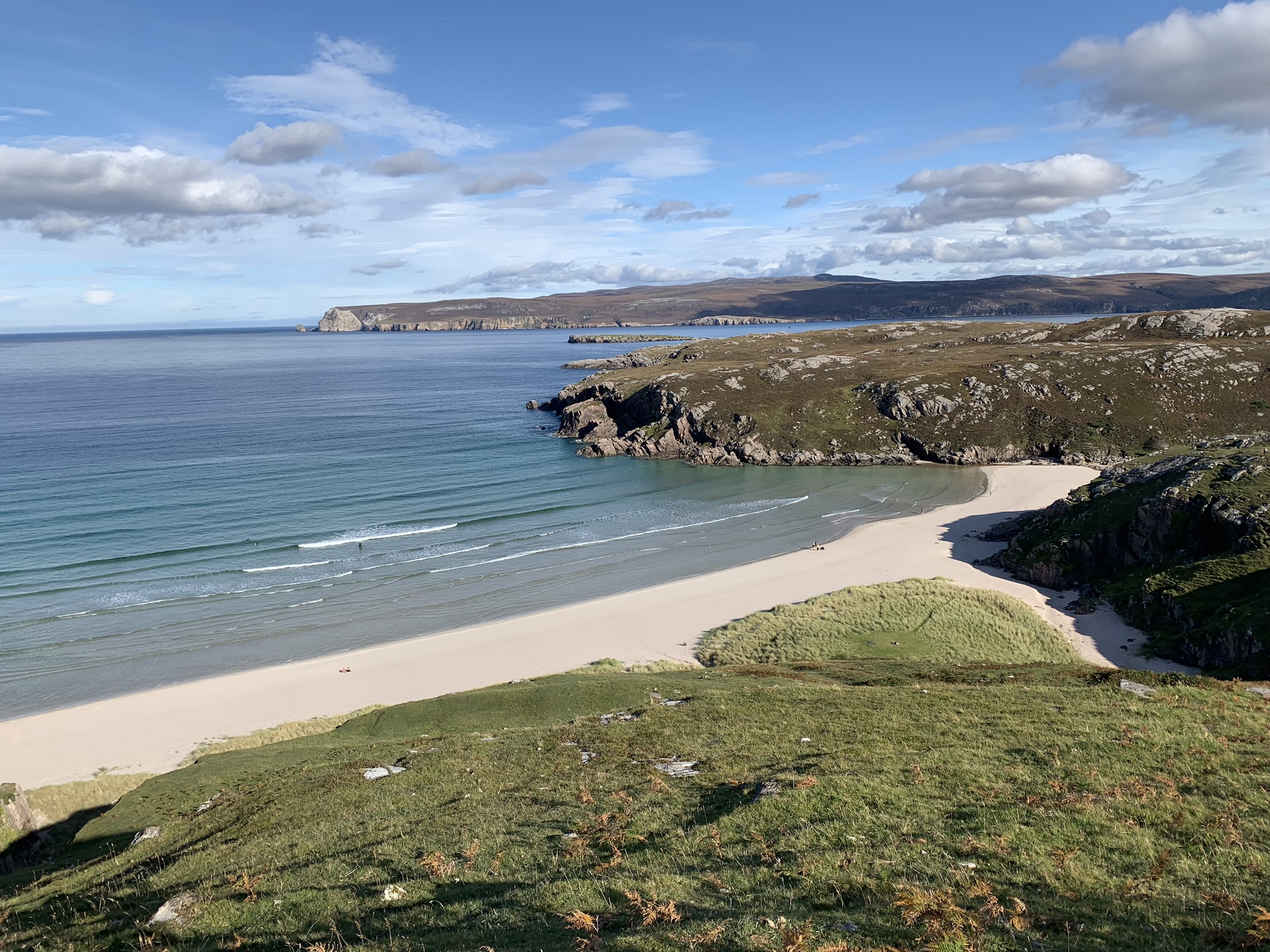 Sango Sands – Durness. Yes. Journeys End.
Next look for: ‘The Long Meander [Southbound].
 jimsoccasionalblog