The last few weeks have shown us a myriad of graphical representations of the doom ahead. The graph has never been more popular – we’re all used to reading new data without words. But reflect on the fact that as global pandemics go, this is not the first time out for large swathes of the world’s inhabitants… below is a look at some that shook the people of the time. Is it a miracle we’ve survived?
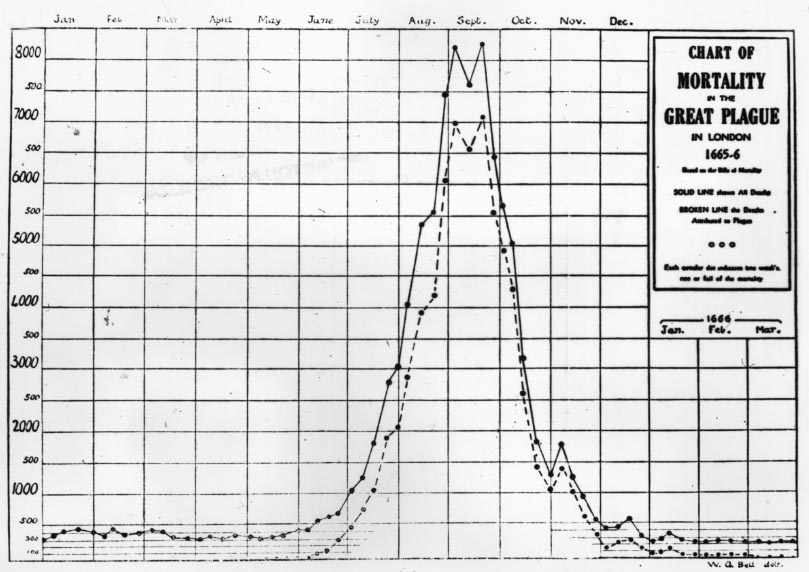
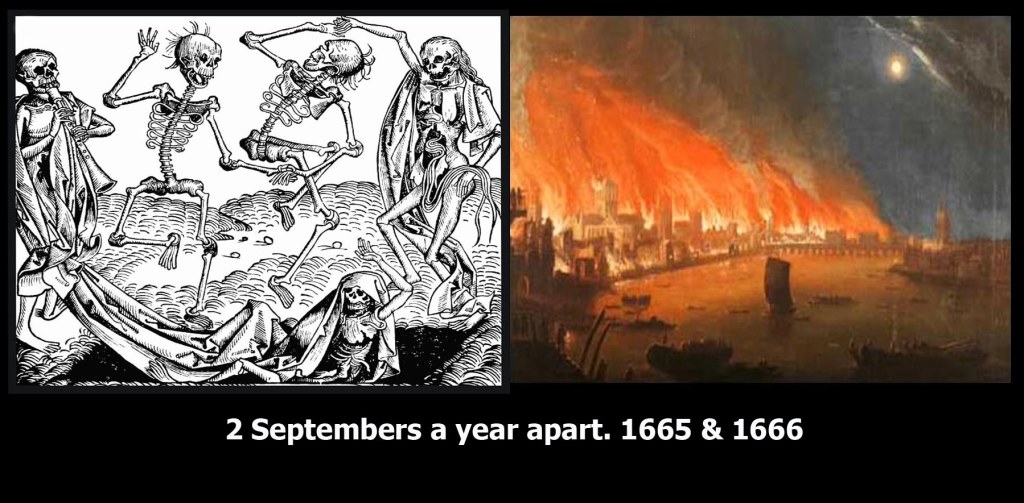
September 1665 was a bad month to be stuck in London.
Wikipedia says: ‘The Black Death, also known as the Pestilence and the Plague, was the most fatal pandemic recorded in human history, resulting in the deaths of up to 75-200 million people in Eurasia and North Africa, peaking in Europe from 1347 to 1351. It took 200 years for Europe’s population to recover to its previous level.‘
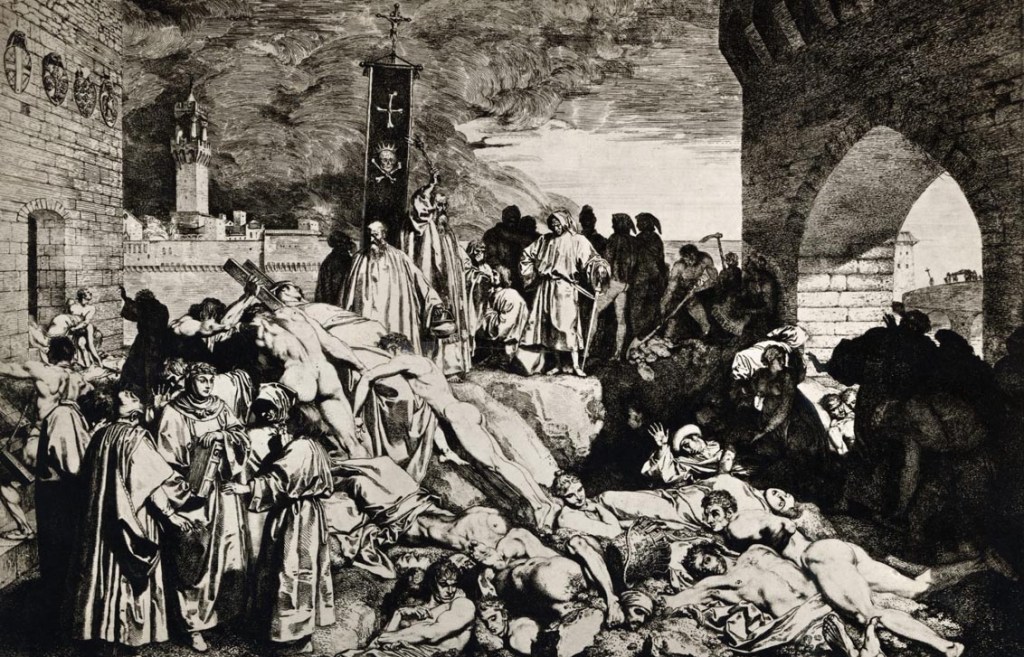
It’s reported that the Black Death reached Europe in October 1347, when 12 ships from the Black Sea docked at the Sicilian port of Messina. People gathered on the wharves were met with a horrifying surprise: Most sailors aboard the ships were dead, and those still alive were gravely ill and covered in black boils that oozed blood and pus. Sicilian authorities hastily ordered the fleet of “death ships” out of the harbour, but it was too late: Over the next five years, the Black Death would kill more than 20 million people in Europe—almost one-third of the continent’s population.
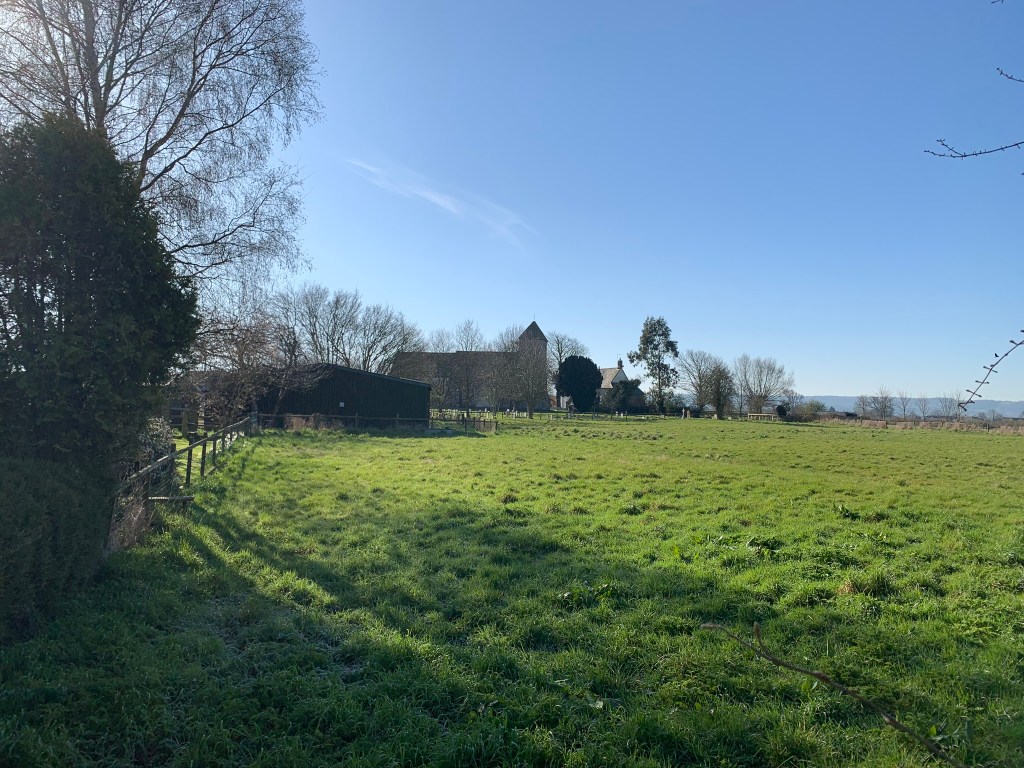
… as seen from my garden. The church had its origins in the 12th Century, but much of what you see dates from only 150 years ago. The village of Poulshot is mentioned in local history records, though precise detail is sketchy. What is recorded is that the Black Death of 1347 took its toll on this community, like every other across the country. To this day its rumoured that the grassy field in the foreground became a plague pit – probably in a convenient patch just adjacent to the graveyard. No-one rightly knows, and given the dampness of this low lying ground its almost certain that no macabre evidence could have survived.
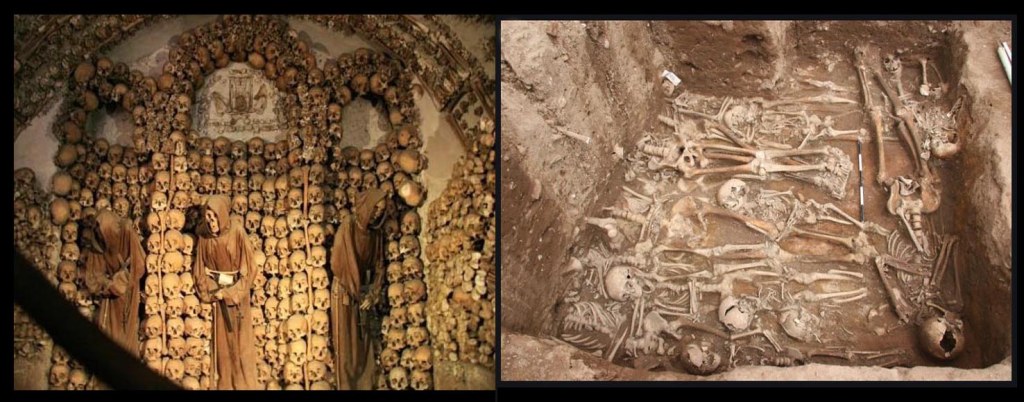
All over Europe plague remains are still kept in ossuaries – for us a grim reminder; or in the case of those recently digging the Crossrail tunnel in London, a bit of a odd day at work?
Soho, London 1854

The description of the disease that was to be named Cholera was first made in Europe in 1642. A few years before the last major bubonic plague pandemic. Although records clearly state that cholera had been around for eons before this, and traders who ventured out East were often painfully aware of the dangers it posed; another 175 years elapsed before the disease came knocking on our door.
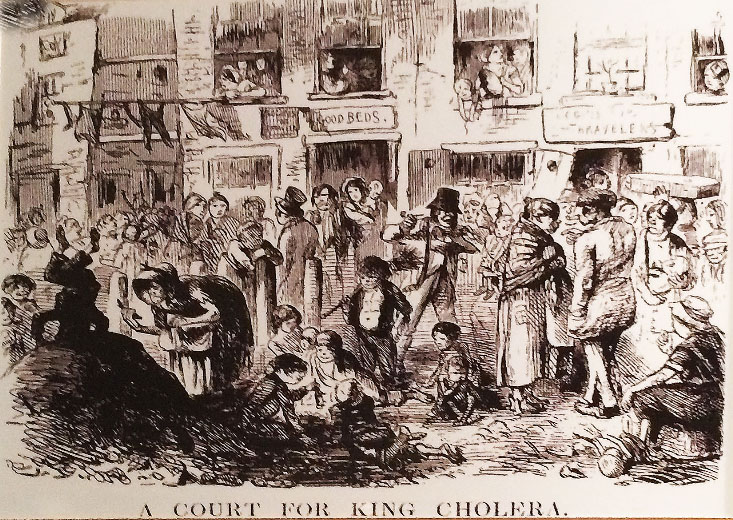
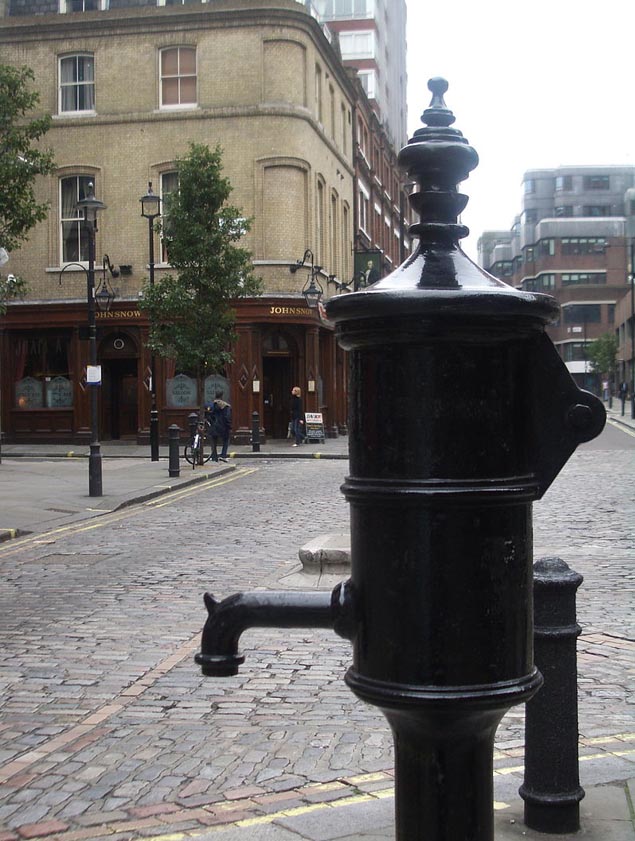
A brief history of cholera shows that it made its way from Asia to Europe by trade routes, military activity [particularly the British], and just bad luck. It took one English physician by the name of John Snow to work out how the infection was actually spread. In the Soho area of London there was an outbreak that claimed hundreds of lives in the first two weeks of September 1854. The good doctor created a street diagram marking the households that had suffered these losses and eventually came up with the one thing they all had in common. These households all got their water from the same public water pump in Broadwick Street.
Dr Snow was able to dismiss the long-held miasmatic claims; which meant that disease spread was carried out via ‘foul vapours’. He had pinpointed the fact that cholera was water-borne, and had nothing to do with your breath.
It’s listed that there were 6 pandemics of Cholera in the 19th Century alone. The first occurred in 1817, originating in India’s Calcutta region, but from there the disease dispersed Westwards, to the Middle East, Europe, and Eastern Africa. Trade and military movement, then spread the disease back across the Indian Ocean and further on to South East Asia and Japan.
John Snow’s work did not actually pinpoint the bug involved in the transmission process, but his findings improved the way in which water for human consumption was made available. As the century wore on, cautious local authorities managed to check the wild spread that was characteristic in earlier pandemics.
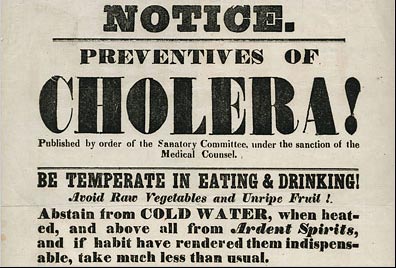
No-one knew then
Wiki says: Cholera affects an estimated 3–5 million people worldwide, with 58,000–130,000 deaths a year as of 2010. This occurs mainly in the developing world. In the early 1980s, death rates are believed to have been greater than three million a year.
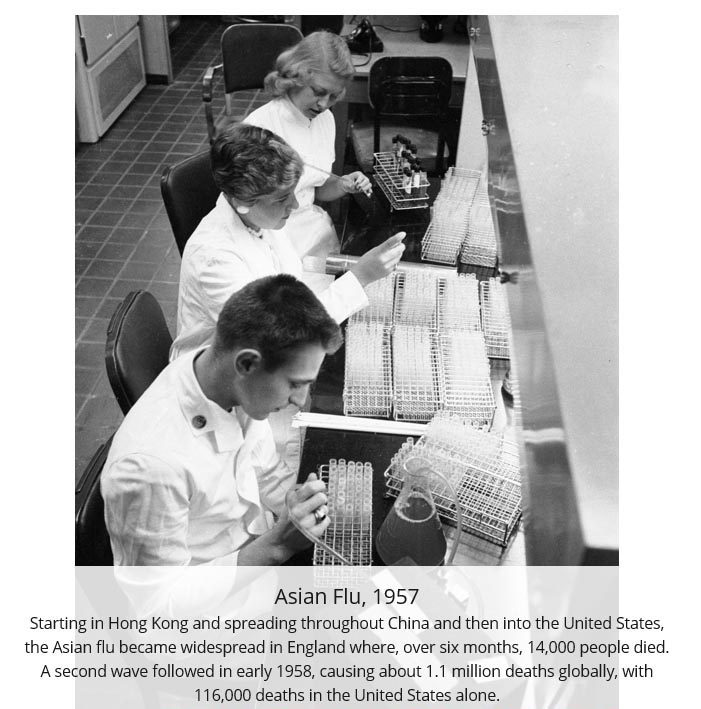
Then there was Asian Flu…
…and The Spanish Flu
The Spanish flu, also known as the 1918 flu pandemic, was an unusually deadly influenza. Lasting from January 1918 to December 1920, it infected 500 million people – about a quarter of the world’s population at the time. The death toll is estimated to have been anywhere from 17 million to 50 million, and possibly as high as 100 million, making it one of the deadliest pandemics in human history.
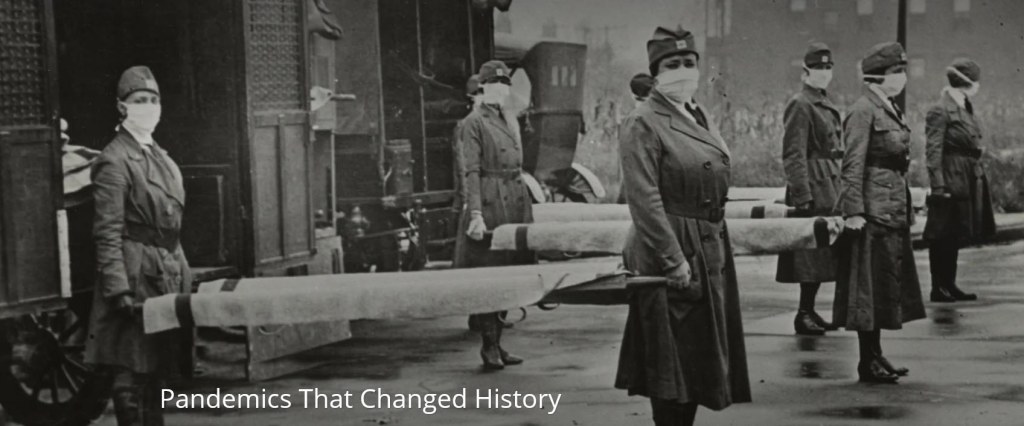
Re-read those stats – 1/4 of the world’s population, 2 years, 100 million. The bit about it being ‘Spanish’ was unfounded; more a contrived result of journalistic propaganda that was an outcome of post war [WW1] media coverage from both Germany and the Allies. Coverage that wanted to deflect the potential morale damage away from the main 2 participants in the exhausting 4 year war.

The above picture of the modern centre is called Nightingale, after the famous Victorian woman who was instrumental in implementing so many changes in nursing, care and hospital practice.

Not just the face of currency – but one of sobriety, proprietry and dedication
Florence Nightingale never saw the Spanish Flu; nor the First World War, latterly she made it to a UK £10 Banknote, and her name resonates with the existence of goodwill and healthcare. Despite this, she lived through pandemic after pandemic of 19th century cholera, ill-thought-out British military campaigns, and the nation’s ‘growing of age’ as a global industrial power. She had seen enough. What would she have made of the CV19?
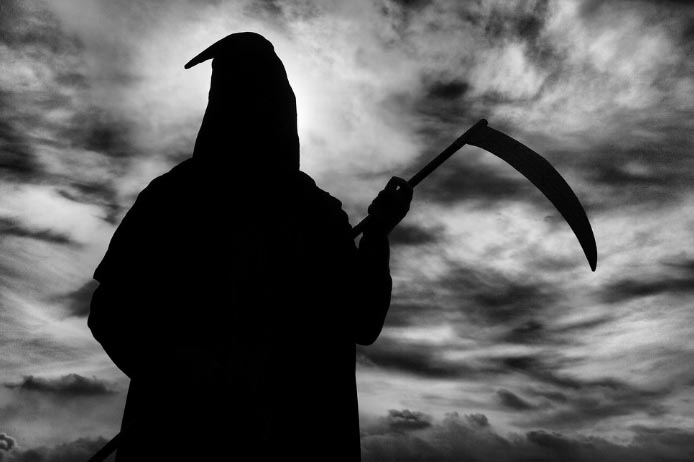
Popular held beliefs in many cultures and religions always focus on the spectre of death. For many in the West it has been the ‘Angel’ stalking in the hours of darkness or the eerie ‘Reaper’ doing the rounds. Death just ‘took’ people and there was often no understanding of the reasons why. Illness and disease were hard for the comforters to explain away – imagine being a priest in plague-torn Europe in the 1340s? Or visiting door-to-door as a pastor in Soho in 1854?
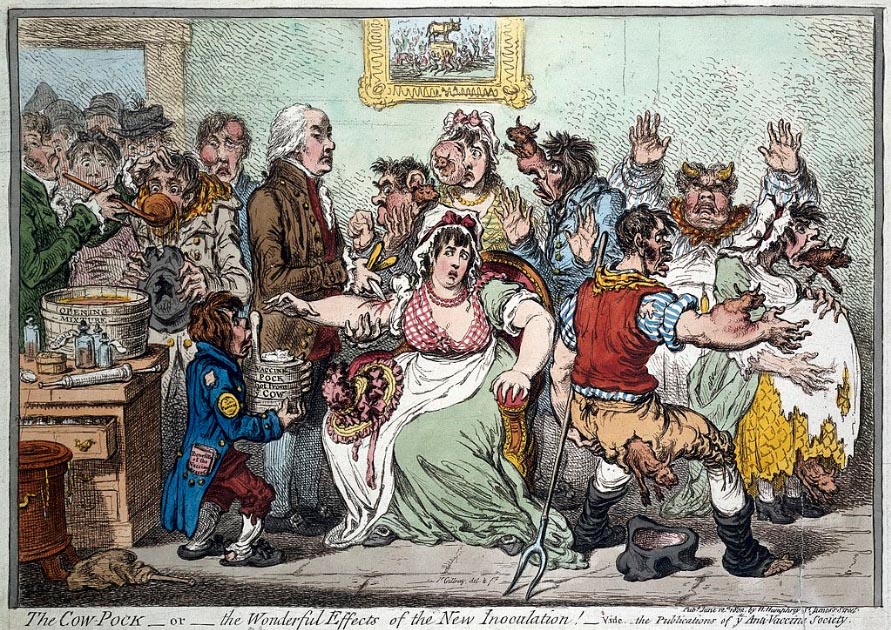
But, in 1796, things had already started to change. An English physician by the name of Edward Jenner was to make a sequence of amazing observations which led to tentative experiments at combatting the then deadly smallpox. A disease that at the time could kill as many as 20% of the population when things were bad. 1 in 5 people dead.
Jenner’s work with cows and milkmaids provided the scientific world with a rudimentary proof that there was a way to protect people from some forms of illness. Although we had to wait a considerable amount of time before medical science could take on face to face other killers, this man is lauded as the ‘father of immunisation’, and it is to him we owe our debt as the inventor of vaccination.
‘God’s Way’
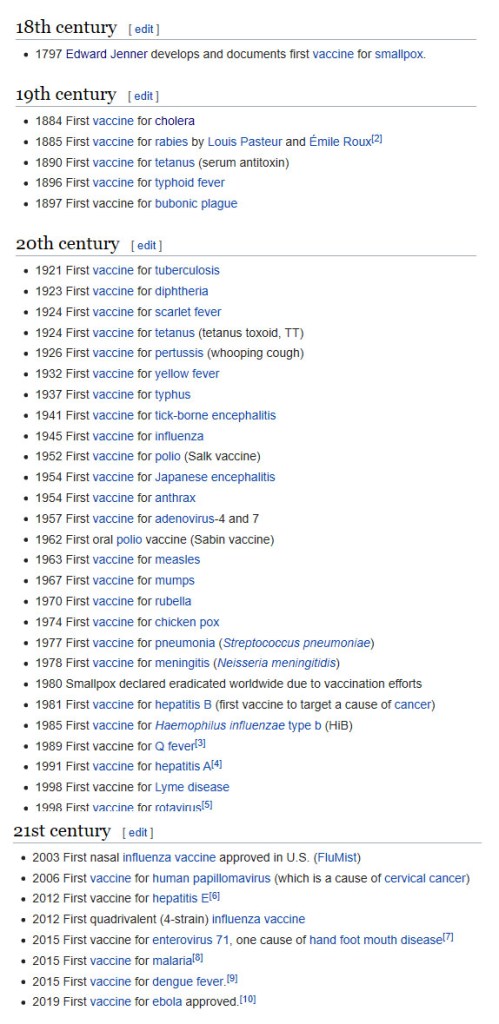
Population control by natural causes suddenly wasn’t working anymore, Was HE losing touch? Letting us mortals take control? In the last 200 years the world’s population has grown exponentially – some estimates put it at going from 1 billion to possibly 8 billion. Who knows, who can know? Is HE still counting the world’s people or now just our medical response?

Some time in 1981

The timeline shows that illnesses related to what is now known as AIDS stretches back many years before the medical world agreed on describing the condition in the same way. Efforts to trace back the origins of this mystery virus point to ‘Darkest Africa’; and possibly the crossover of human and animal food-chains. The world was aghast at the thought of this kind of malpractice – albeit in parts of the world that no-one seemed to care about. That was in the 80s.

January 14, 1983: “One million Americans have already been infected with the virus and that this number will jump to at least 2 million or 3 million within 5 to 10 years…” – NIAID Director Anthony Fauci – New York Times.

Heard that name recently? Anthony Fauci? A 79 year old who has devoted his life to the study and understanding of infectious diseases. Since his ‘accurate’ predictions about HIV/AIDS in the early ’80s he has been a senior Government advisor on many things.
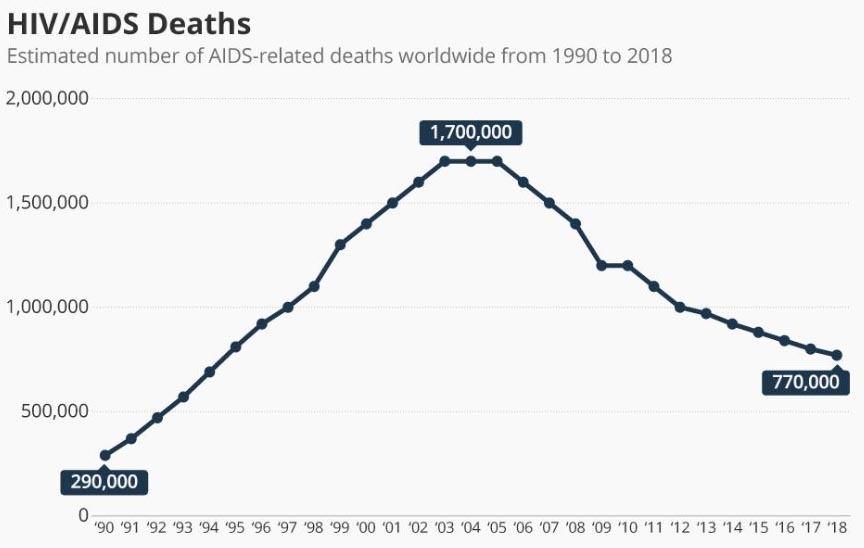
Today Mr Fauci is part of Trump’s COVID19 team and has become [amongst other things], USA’s chief advocate of social distancing and isolation. It’s hard to tell if he wanted to do the job…

Media would have it that he’s working for someone who still doesn’t get it…
Whilst the world is in overdrive to create a CV vaccine, we are continually told that it’s not an overnight job. My friend Dr Mark Fife sent me an article that he said was ‘a good explanation of progress so far on the development of a CV Vaccine’. It started with a picture of what to me looked like a close-up of a bit of Granola breakfast cereal.
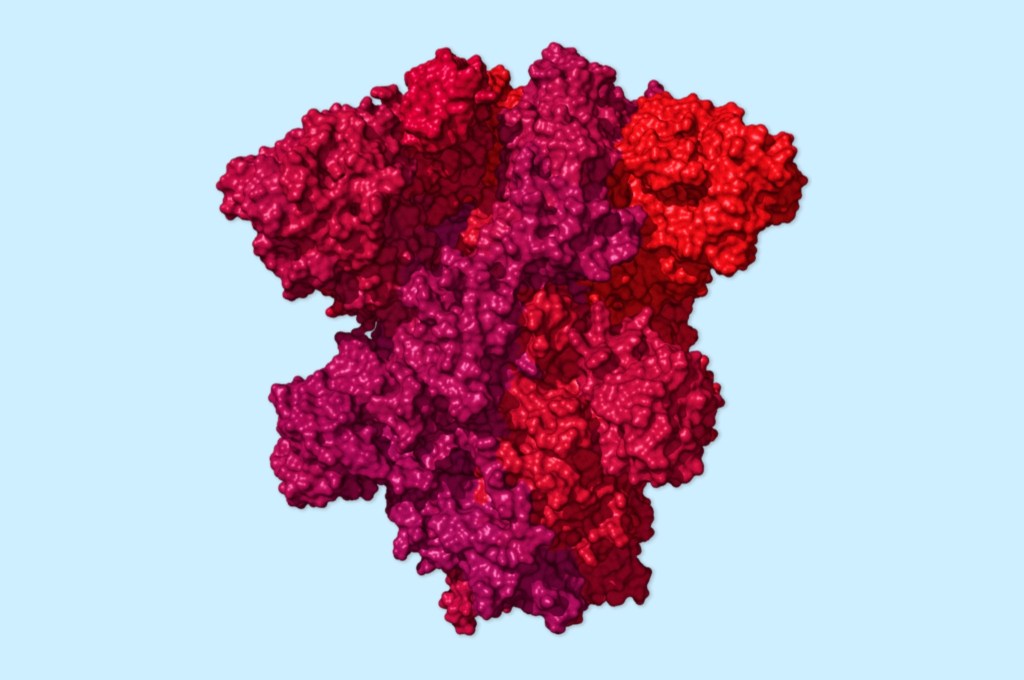
A lot of RNA and DNA in this little nugget

Above: Part of the COVID sequencing that will make sense to only about 500 people in the world. Mark’s one of them, but unfortunately I can’t go round to his to chat about it. If you think this is complicated – the Human Sequence has 3 billion bits; COVID an estimated 30 million. The human sequencing took thirteen years; we cant wait for news on CV.

By now, if you haven’t already realised, virtually all of this piece is lifted from other sources. If I was to submit it for academic marking I’m sure it would be riddled with inconsistencies and inaccuracies. I’m not in any way academically qualified to make anything other than a personal ‘view’; but I hope what’s here is enough to make you think about ‘our’ pandemic and realise that this has all happened before – with consequences just as grave. Graver even. History repeats itself so to speak.

Remember at the start of this blog I said that London in September 1665 was no place to be; A year on, and in September 1666, the Capital was burning out of control. Still no place to be.
 jimsoccasionalblog