The door in the great kitchen at Pembroke castle

The door through which the 13 year old Henry Tudor escaped as a boy after being held captive in his own family ‘castle’ by the invading Yorkists during the latter years of the Wars of the Roses. 1470.
The door led to a massive cavern and tidal wharf under the castle where he was to meet a waiting oarsman who caught the estuarine tide allowing them speedy deliverance from the arrows fired at them by the castle guards.

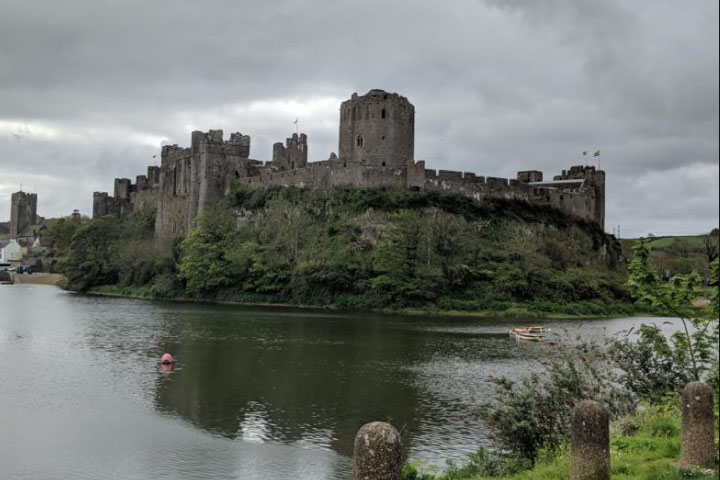
The cavern is said to have been the site of human activity for the last 12,000 years. By the time that the castle proper was built, it was incorporated into the secure part of Pembroke’s defences, and aside from water access, it was used as a cool room for the kitchen above. Young Henry – a captive here for years, must have known this – and every inch of the darkness it held.


There are few accounts of Henry’s flight, though historians must agree that its success was the product of no little amount of organising. In those days money had to pass hands at every juncture, and that money was often easily forfeited if someone was prepared to offer more. Silence was difficult to secure, and anyone who thought there was something to be made of an escape plan might have compromised the whole operation. It’s therefore more than just a miracle that the escape took place without any hitches.

Henry made it to Brittany in northern France where he lived under French protection for the next 15 years. Sanctuary in France was made all the more ‘appropriate’ because at the time the French Court was still smarting at the English Royal snub that had taken place when Edward IV of England had married the ‘commoner’ Elizabeth Woodville instead of a proposed marriage to King Louis’ daughter. Relations were made worse when Edward had sided with the Duke of Burgundy who was in a territorial war against the French.
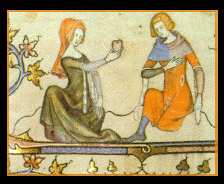
… History will show that this chapter had other consequences, when The Earl of Warwick – Edward’s most trusted and loyal supporter, lost faith in his king when he discovered that Edward had married a commoner in secret. Warwick had other peacetime aspirations and had spent a long period negotiating with the French over a prized marriage to one of their Royalty. When it transpired that his efforts were in vain, Warwick distanced himself from the king and eventually sided with his lifelong opponents – the Lancastrians.
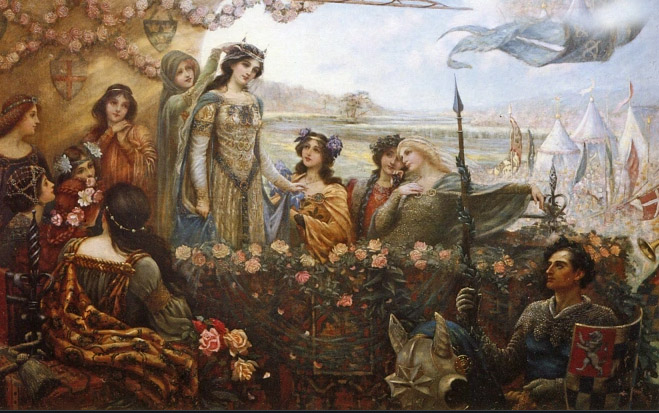
‘The Kingmaker’ was to then try and re-establish Henry VI as the monarch after a brief struggle in 1469. Warwick has forever been known by his epithet ‘Kingmaker’, for it was his driving force that had given Edward his original victories over the Lancastrians in the earlier years of the Wars of the Roses. It was Warwick that stood at Edward’s side at the Battle of Towton when Edward was declared King of England. Many say Warwick made this triumph happen...
So elapsed 15 long and uncertain years before Tudor’s avowed return brought him back to Pembroke with French troops in August 1485. Much had changed in England since his departure. King Edward had died suddenly at the young age of 41; and immediately after this one of the great unsolved mysteries of English history took place. Known to us as merely ‘the Princes in the Tower’ story; the then rightful heir to the throne, Edward’s 12 year old son – also an Edward, had been brought to London on that very pretence. To be crowned King.
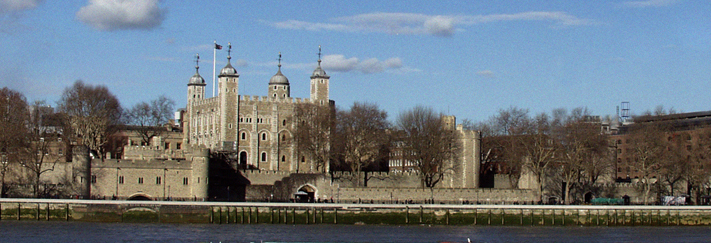
In a kingdom where there was ever political uncertainty, Young Edward’s Protector, Richard of Gloucester [younger brother of the now deceased Edward IV] had taken control of the situation by placing young Prince Edward and his even younger brother Prince Richard in the Tower of London. ‘For their own safety’.
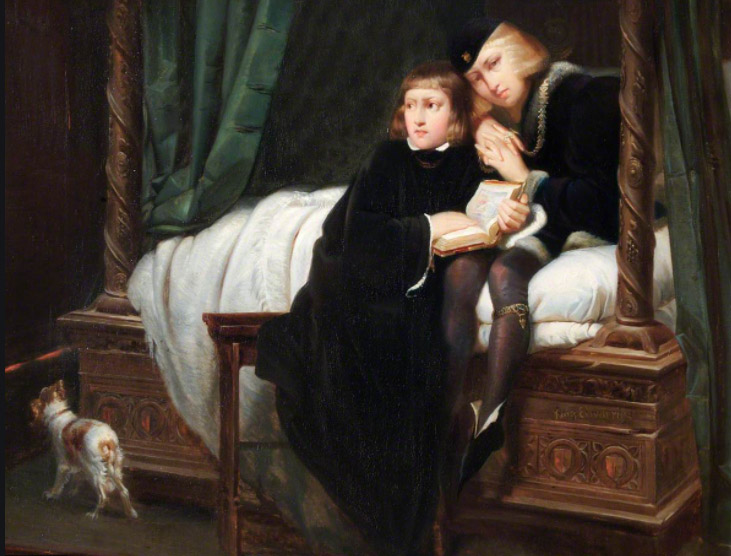
What unfolded in the few weeks after their incarceration was also to change the direction our history. Richard and his supporters found reason to annul his brother’s 1464 marriage to the commoner Elizabeth Woodville meaning that all Edward IV’s children were deemed illegitimate. Suddenly the Protector became a Controller. The Princes in the Tower were never seen again, and no-one rightly knows of their fate. What is certain is that it was all done at the behest of the newly crowned King of England, the last Plantagenet, Richard of Gloucester, Richard III.
History will always debate Richard’s motivation and allegiances. Shakespeare had him as a tyrant in a deformed frame: others have tried to put a brighter light on him as a character tormented through his life but always a devout supporter of the Yorkist’s cause. Living descendants [and DNA profiling has proved there are many], have him as a more kindly and heroic figure who was undone by misfortune.
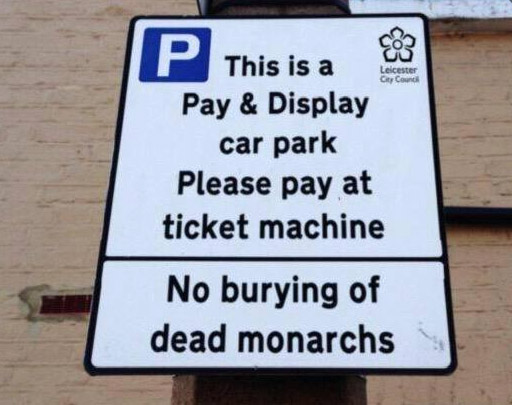
Richard’s tenure as King was not to last long – indeed of the 40 or so monarchs since the arrival of the Normans, he managed the shortest reign – with the exception of the questionable ‘Lady Jane Grey’ case in 1553 and of course Edward VIII’s [300 odd day] abdication in 1936. By 1485, just 2 years after his succession Richard was already gathering forces to defend his Crown. Young Tudor had arrived, and with him French support and a growing army of dissatisfied Welsh. Almost unchallenged, Henry picked his route through Wales and into the Midlands at Shrewsbury. Shortly after a move into what is now Leicestershire, the rival armies met. The Battle of Bosworth proved to be a decisive victory for the invading forces. Richard was killed and the Tudor era was to begin. August 1485.

Richard had been killed and with him went the last of the Plantagenets who had ruled England for 340 years.

Bosworth had thrown up a clear winner. Henry, the young boy from Pembroke castle. Young Henry Tudor’s credentials were fitting for him to succeed to the English throne – despite being partly Welsh, and a grandson of the rebellious Owayn Tudur, who had, in years before, been a thorn in the side of the English Yorkist cause. Grandad Owayn had been clever, and lucky; he had married Catherine de Valois, the widow of the Lancastrian Henry V, shortly after the Agincourt hero’s death. They had had two sons, Edmund and Jasper, who, by marriage, were the half brothers of England’s King Henry VI.
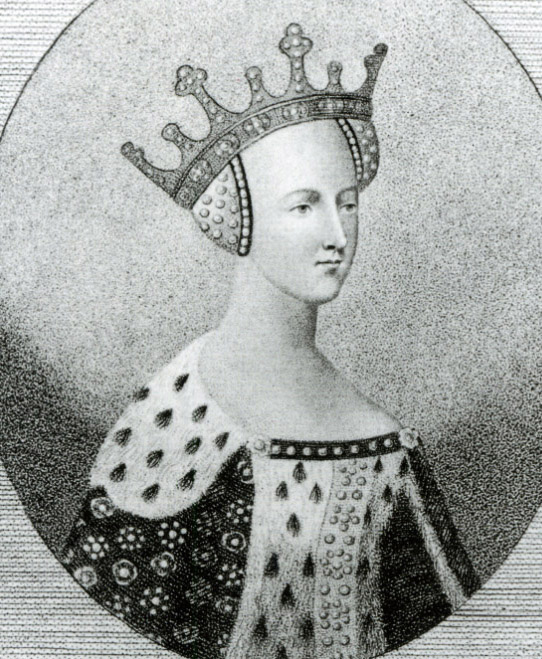
Hardly in the spotlight and avoiding the constant gains and losses of the Roses struggle, Edmund and Jasper survived to adulthood. An already complicated family tree would show that young Henry Tudor was the son of Edmund and a Lady called Margaret Beaufort. Lady Margaret was actually a direct descendant of Edward III [and also a cousin of the Bolingbroke family who had ‘grabbed’ the English crown from a rightful line of descendants] In a society where marriage and status had to be maintained – where bloodlines were measured for generations, Margaret was a serious name to have in your ancestry. She did marry 4 times as was the way for smart women in difficult times.

And so in 1457 was born this boy called Henry, who’d scuttle through that unnoticeable door and on to freedom and the gambit of changing his [and our] world. It’s here that history unfolds; lucky outcomes, freak events, happenchance and sheer pluck. Consequences. What else would have happened if the unpopular and heirless Richard had lingered on? The country was in no state to face more war, but who would seize the chance. It was down to pluck and mettle.

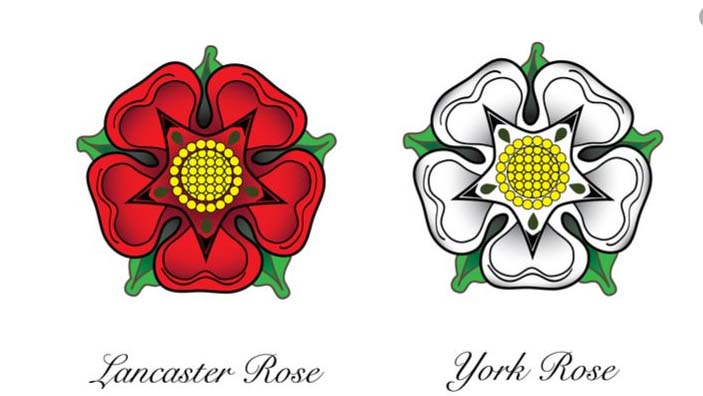
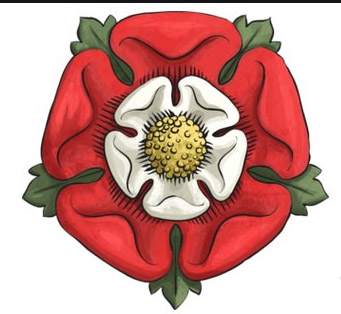
The victor at Bosworth, Henry VII, the new King of England, was quick to consolidate his position in an unstable world – he courted and married Yorkist King Edward IV’s eldest daughter, thereby cementing a bond between the two Roses. A diplomatic masterstroke, and clearly they made a good couple, producing heirs a plenty. Those children, by luck or fate were to shape history in waiting.
So commenced the Tudor period.
Henry VII ruled until his death in 1509. He had 6 children, with 4 reaching adulthood, 2 boys and 2 girls. The girls, by marriage, would influence things to come in no little way, although at the time this was hardly evident; whilst England’s heir presumptive – Prince Arthur, died unexpectedly after his arranged marriage to Catherine of Aragon. It was Arthur’s younger brother, Henry that was to become the centre-piece of the Tudor chapter.
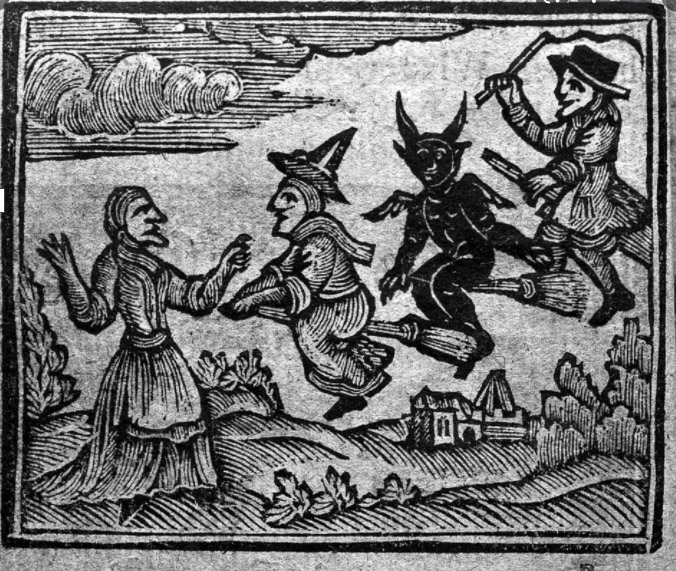
The then king’s younger daughter, Mary, married into French nobility and briefly became the Queen of France. In doing this, she was to become the Grandmother of Lady Jane Grey, who, in 1553 would become the official/unofficial Queen of the Realm in the turbulent ‘take-over’ after the death of Henry VIII’s sickly son Edward. She became known as ‘The 9 Day Queen’; but Privy Council wisdom suddenly decided this was not to be. As was the way in these days of fickle accountability, they chopped off her head and those of people who seemed to be even remotely involved. Nonetheless the world lost a genuine Protestant contender in a time when likely candidates were in short supply.

Mary’s older sister, Margaret, was steered Northwards and married King James IV of Scotland. Their bloodline was to produce ‘Mary Queen of Scots’, and therefore the future King of England, James I. Historians would be quick to point out the significance of this and the later repercussions of the Stuart bloodline eventually drying up with the death of Anne in 1714.
But back to Tudor Times… we all know about Henry VIII, the son of Henry VII. It was fate that he became King after his teenage brother’s untimely death; it was fate the deceased Arthur’s marriage arrangements were merely passed down to Henry, and it fate that the question of whether that marriage had been consummated would become the focal point of political and theological things to come.
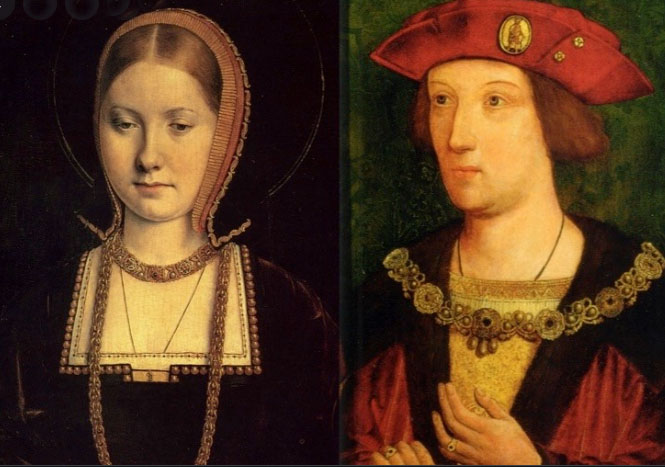

Years later when the now king of England – Henry VIII, was frustrated with first wife Catherine’s inability to produce a son (she had already had had a daughter who was to become ‘Bloody Queen Mary’), Henry came up with the idea that he could be ‘rid’ of her in exchange for a younger ‘model’ by claiming his brother, Arthur, those years back HAD consummated their marriage thereby invalidating his. The logic was too much for the English catholic hierarchy and the proposal of divorce was left to the pope in Rome. ‘No way’ came back the diplomatic reply.
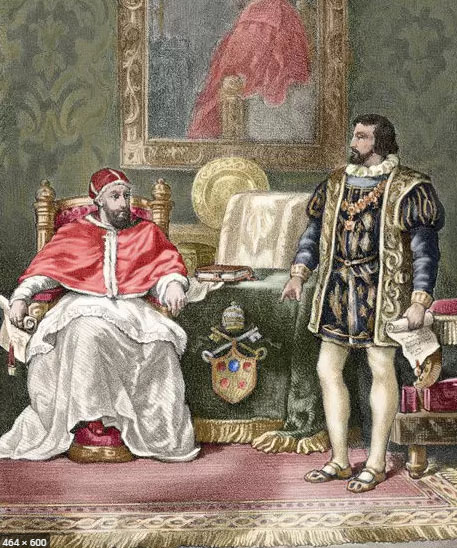
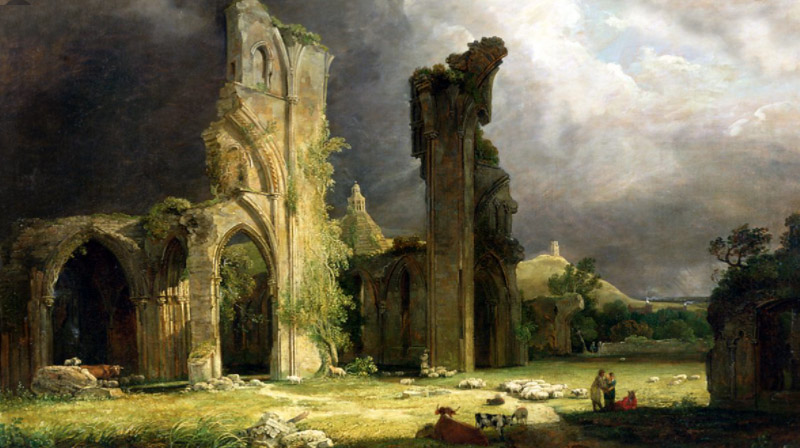
The man who couldn’t get his own way, merely ‘took his ball back’ (in kids football speak) and the English church split from Rome – leaving the English monarch the leader of the Church of England. Henry set about destroying the monastic power of Catholics throughout his kingdom and history will show that he did a pretty good job.
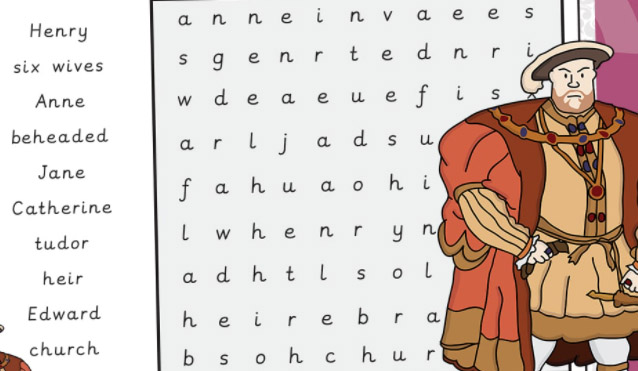
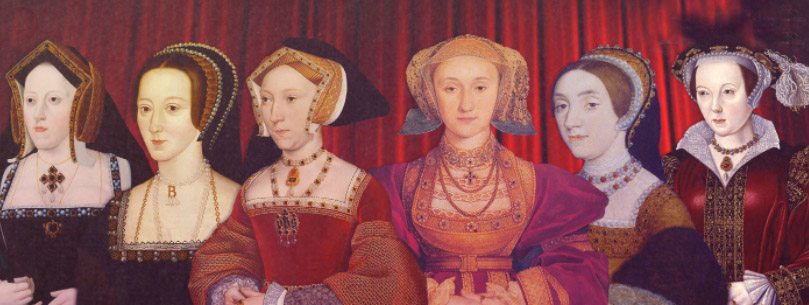
Henry VIII died in 1547, and so was borne the schoolchild image of the fat man with many Wives, the Mnemonics, the Paintings, the curly chimneys and much more. His adolescent son Edward succeeded him, and whilst popular, and a supporter of the New Church, it was not long before he was on his deathbed. Logic would have it that Henry VIII’s eldest child, Mary, should succeed him – but she had remained staunchly Catholic. Not a good option, and so briefly the solution was to put forward the dying Edward’s cousin Jane Grey. History will show that that option didn’t have ‘legs’, and the Privy Council, [the advisers – and very probably the schemers of the time], thought better of this and so the Kingdom was suddenly plunged back into Catholic rule as Mary became Queen.
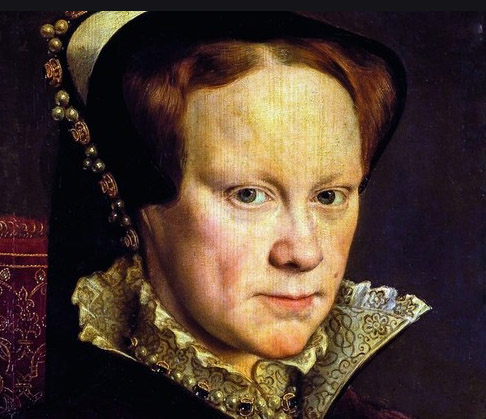
The succession of Mary ensured years of religious turmoil, persecutions and the most spiteful killings and reprisals – all in the name of God. Despite the stabilising reign of protestant Elizabeth after Mary’s death, one hundred years later the country went through its Civil War, in part, fuelled by the partisan hatred of ‘Damned Papists’ that were deemed to be part of the force behind the Royalist cause. The Catholic influence was to be a long legacy that Henry had fought to avoid.

It wasn’t until 1701 with Parliament’s Act of Settlement that it was made illegal for the succession of a Catholic monarch. Throughout the reigns of Charles I and his sons Charles II and James II the establishment had constantly wavered at the doubts surrounding the religious leanings of these monarchs. Settlement in 1701 was to end this for future monarchs.

One hundred years before the Settlement Act, in the twilight years of the Tudor era, the prospect of finding a suitable monarch loomed large during the long and successful reign of Elizabeth. She had remained childless, but likely successors were numerous through familial ties in Europe – however they were of course Catholic and the queen couldn’t countenance that after 40 plus years as the Head of the Church.

How ironical it was then that the answer to the crisis was to allow King James of Scotland to succeed to the English throne after the death of heirless Elizabeth. James was the Protestant son of the executed life-long threat to the English throne, Mary Queen of Scots, BUT more importantly he was the great grandson of that boy who had escaped the kitchen 133 years earlier.
The preventative Act hardly quashed the disquiet with Scottish pretenders (via James 2nd’s catholic second wife’s offspring) with a ‘Prince Charlie’ popping up to declare himself the ‘chosen one’ and marching on the recently established German monarchy. The rising of 1745 saw the last of that, English brutally killing every Scot that had had anything to do with the Bonnie Prince or his accomplices. Battle of Culloden 1746.
No-one can know what might have happened to England, Scotland and Wales if that teenager had found the door in the kitchen unexpectedly locked, the oarsman a doubler crosser or one of the castle’s bowmen had scored a hit?

 jimsoccasionalblog